

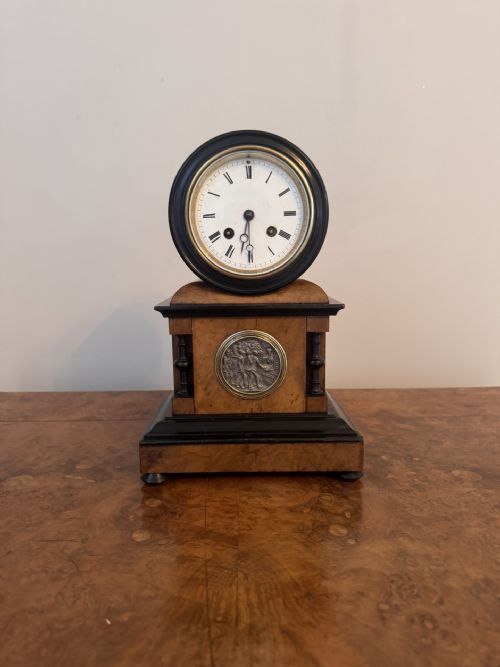
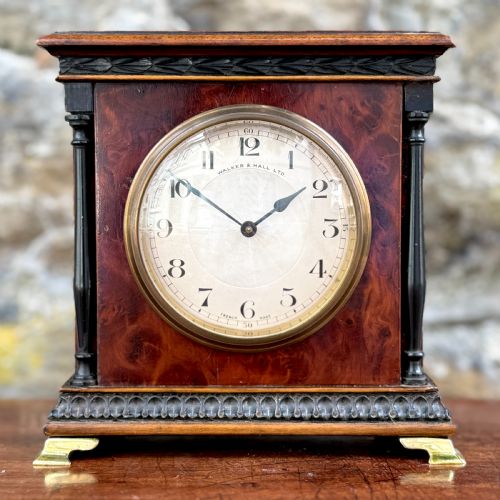


Carved Walnut Bracket Clock
A carved walnut bracket clock brings architectural timber and precise movement together on a shelf.
Carved Walnut Bracket Clock
A carved walnut bracket clock is a timepiece designed for domestic interiors, appearing mainly in Victorian and Edwardian forms. These items span the nineteenth and early twentieth centuries, drawing on French Rococo, German Historicism and Georgian styles.
The objects here include mantel clocks, wall clocks and dedicated bracket clock configurations. Most examples date from the nineteenth century, utilising figured walnut, burr walnut and ebonised wood alongside traditional dial faces.
How they were made
Maker workshops constructed these timepieces using walnut and burr walnut timbers, often shaped with hand carving. Cabinetmakers housed mechanical movements behind glass doors and glazed bezels.
Carved Walnut Bracket Clock Retail Price Guide 2026
Typical asking prices for carved walnut bracket clock among the pieces listed under this phrase on Sellingantiques today, from the lower quarter to the upper quarter. They describe what is for sale here now, not the wider market.
Listings feature nineteenth and early twentieth century items, spanning Victorian and Edwardian periods with German and British origins.
What varies in quality
The standard of a carved walnut bracket clock depends on the depth and definition of its timber carving. Figured and burr walnut surfaces display distinct grain patterns that elevate the visual weight of the case.
Mechanical complexity separates standard timepieces from higher-tier examples. Triple fusee movements and musical capabilities indicate advanced horological output from established makers.
Walker and Hall·Connell of London·Lenzkirch
The Carved Walnut Bracket Clock Glossary
- Bracket clock
- A portable timepiece originally designed to sit upon a wall bracket or table. These clocks often feature architectural wooden cases and carrying handles.
- Fusee
- A conical pulley used in mechanical clocks to maintain even tension on the gear train as the mainspring unwinds. This mechanism improves timekeeping accuracy over the running period.
- Ormolu
- Gilded bronze ornamentation applied to clock cases for decorative contrast. This French technique adds metallic highlights to the timber surface.
- Burr walnut
- Timber taken from a tree growth that produces complex, swirling grain patterns. Cabinetmakers prize this wood for decorative veneering on clock facades.
Carved Walnut Bracket Clock: Frequently Asked Questions
What is a bracket clock?
A bracket clock is a portable mechanical timepiece enclosed in a timber case. These units were made to rest on furniture or wall shelves.
Many examples include brass handles for carrying between rooms. The term remains used even when the clock sits directly on a mantelpiece.
How do I wind the clock?
Winding requires a specific key inserted into arbors on the dial face. Each train controls either timekeeping, striking or musical functions.
Careful turning prevents over-winding the mainsprings inside. Different movements require weekly or daily attention.
Where were these clocks made?
Production locations span Britain, Germany and Switzerland during the nineteenth century. British retailers often retailed movements imported from continental makers.
Cabinet styles reflect regional preferences such as French Rococo or German Historicism. Local workshops added specific carved details to the walnut cases.
How do I date a walnut clock?
Dating relies on stylistic clues, dial construction and movement signatures. Victorian pieces often incorporate heavy carving and dark timber finishes.
Maker marks on the backplate provide specific production windows. Comparing case designs with archive records narrows the era of manufacture.