
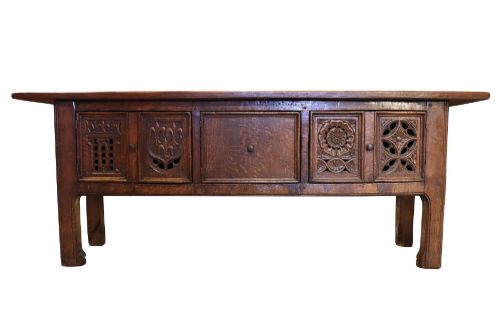
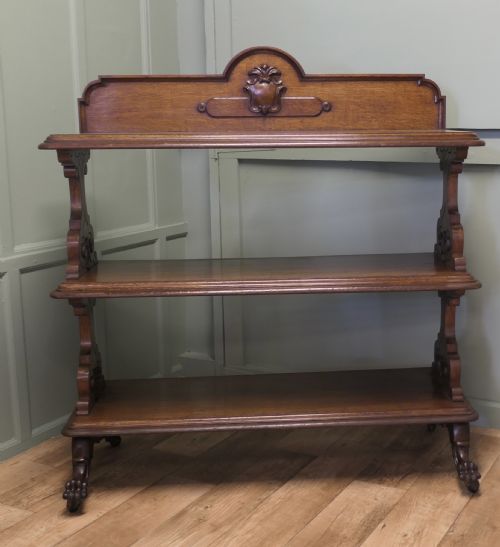
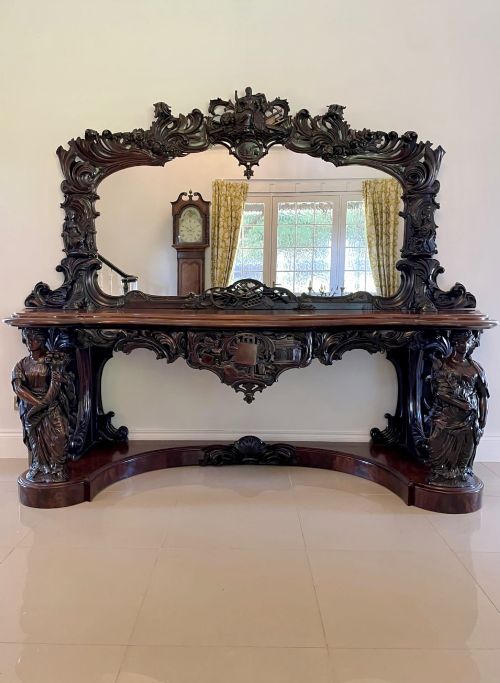
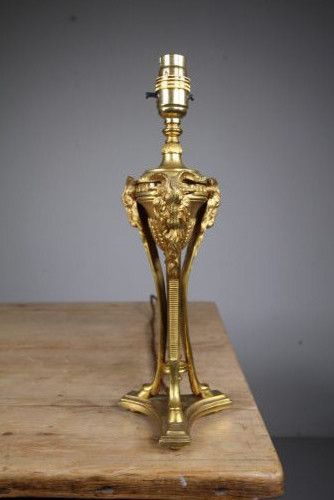

Victorian Carved Sideboard Table
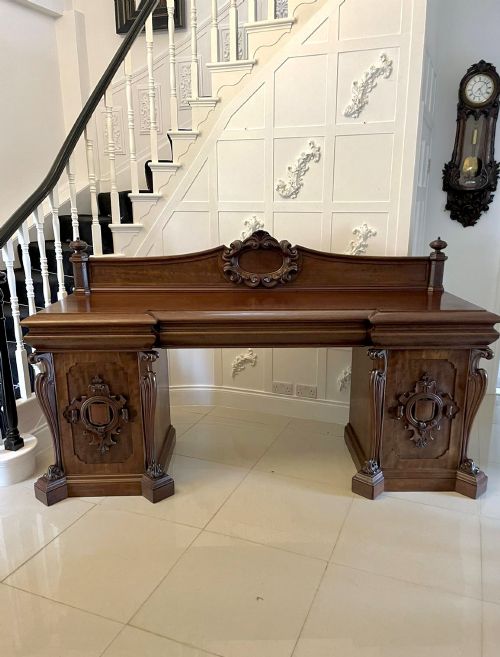
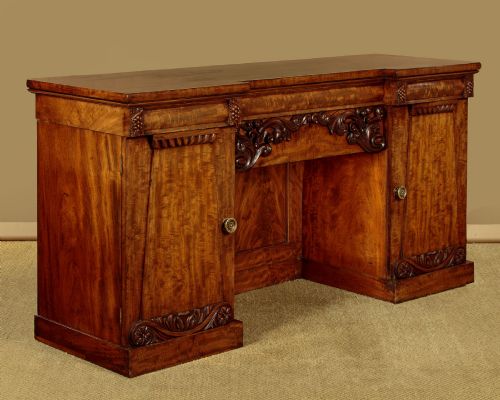
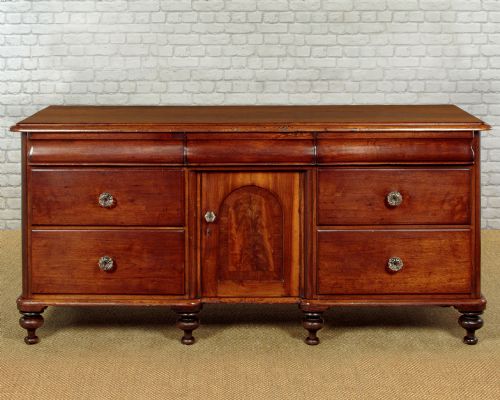
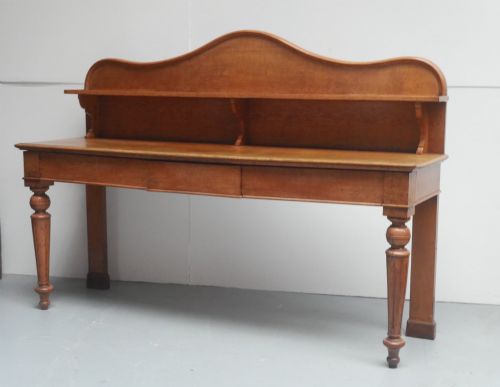
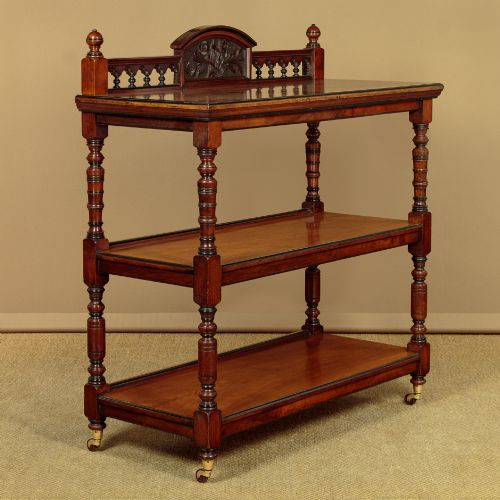
A victorian carved sideboard table brings heavy timber, deep relief work and practical surface space directly into a dining room or hall.
Victorian Carved Sideboard Table
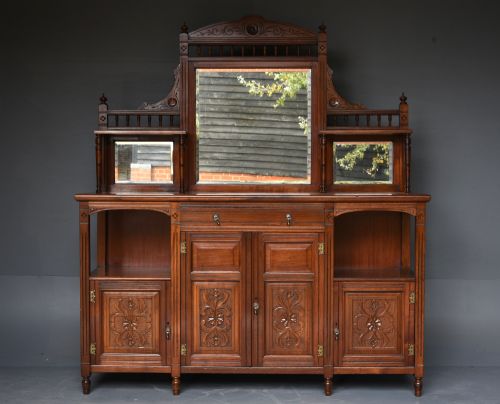
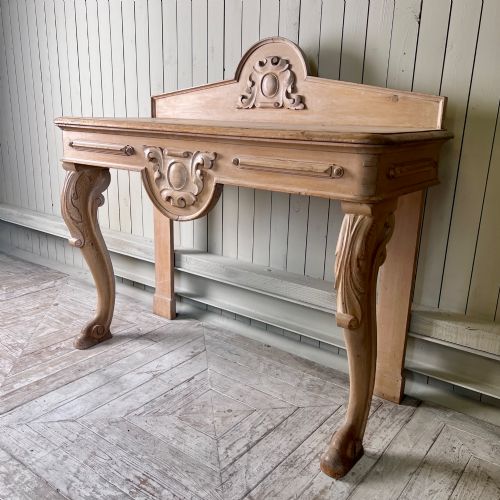
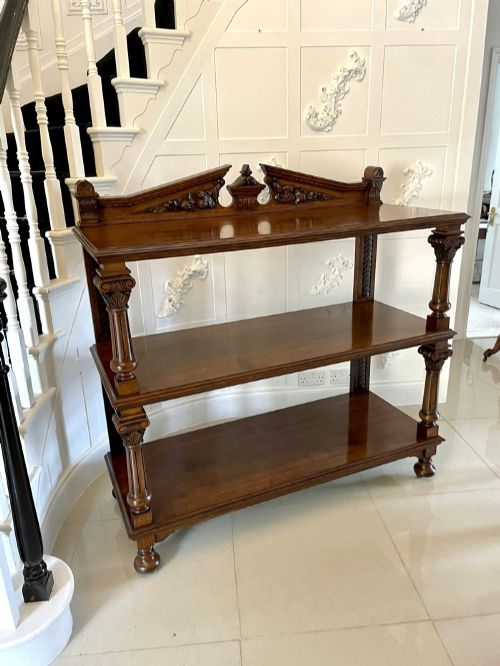
A victorian carved sideboard table sits at the intersection of heavy dining room storage and decorative hall display. When searching this phrase, buyers encounter console tables, serving tables, and multi-tiered buffets rooted primarily in the 19th century.
The prevailing form on this page takes shape in solid oak or rich mahogany, frequently bearing the deep mouldings and structural heft characteristic of the Victorian era. Many pieces bridge the gap between utilitarian serving furniture and sculptural room centrepieces.
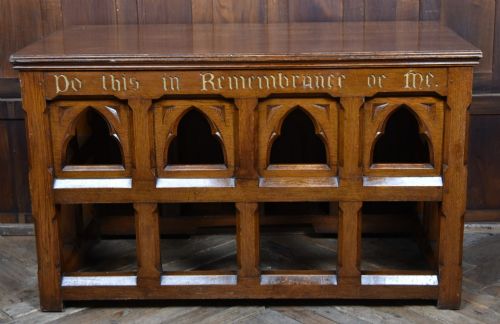
Makers and designers of the period drew on diverse influences, producing items ranging from Gothic Revival heavyweights to lighter Chippendale Revival serving surfaces. These forms reflect the changing domestic requirements of Victorian households for hosting and display.
Materials and construction methods
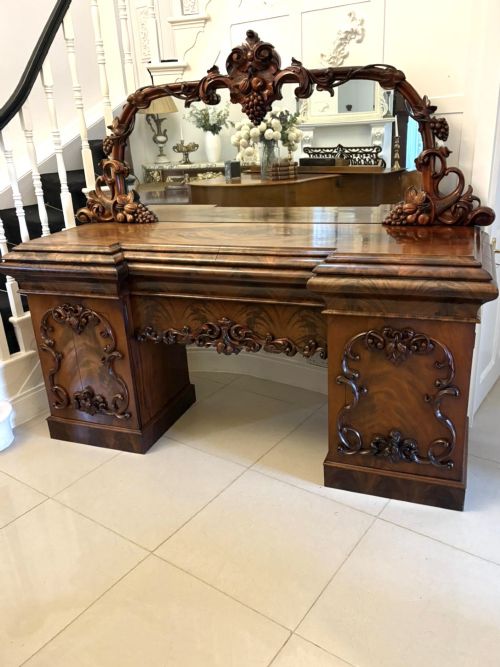
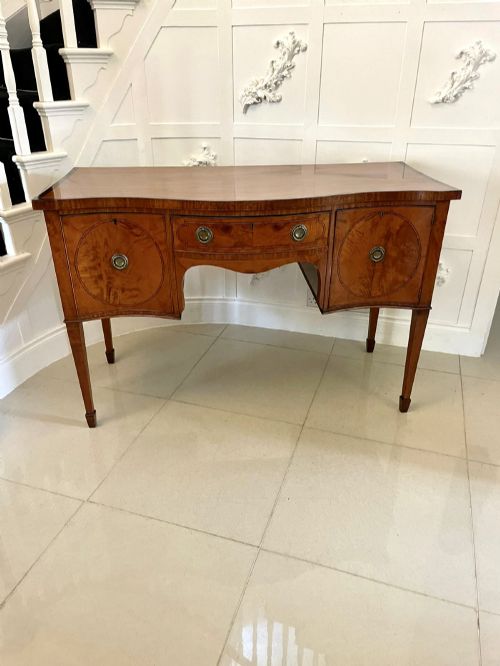
Cabinet makers relied heavily on dense hardwoods, selecting mahogany and figured oak as primary structural foundations. Workshops frequently integrated flame mahogany veneers and pollard oak to introduce contrasting grain patterns across large door panels and drawer fronts.
Manual carving defined the ornamentation, with craftsmen cutting deep relief motifs directly into the solid timber framing. Structural rigidity relied on traditional joinery, complemented on select items by inset rouge marble tops and cast brass hardware.
Listings feature 19th-century materials spanning solid mahogany, figured oak, padauk wood, and inset rouge marble.
Distinctions in construction and design
The calibre of a victorian carved sideboard table rests upon the crispness of the hand carving and the selection of the timber grain. Pieces originating from prominent workshops display sharper relief work and more coherent stylistic unity than standard commercial outputs.
Superior examples maintain structural integrity through dense primary timbers and well-matched veneer work on secondary surfaces. The integration of auxiliary materials, such as heavy marble tops or quality brass mounts, further separates standard functional items from exhibition pieces.
Gillows of Lancaster and London·Robert Strahan and Co
The Victorian Carved Sideboard Table Glossary
- Console table
- A table designed to stand flat against a wall, often secured to it with brackets. These surfaces frequently carry marble tops and elaborate front legs.
- Pollard oak
- Timber taken from trees pollarded at a height above grazing animals, yielding a gnarled grain pattern with dense clusters of small knots. Cabinet makers prized this wood for distinctive veneering.
- Pediment
- The triangular or curved upper gable decorating the top shelf or mirror back of large sideboards. It acts as a focal point for the primary carved ornamentation.
- Serpentine
- A curved line of furniture fronts or tabletops that swells outward in the centre and recedes toward the ends. This contour requires precise timber shaping.
Victorian Carved Sideboard Table: Frequently Asked Questions
Where did these tables stand?
Dining rooms and grand hallways formed the primary locations for these large serving surfaces. Households utilised them to hold dishes during meals or to display decorative objects.
Their robust construction allowed them to bear the weight of heavy silverware and ceramics without structural strain.
How do I spot Gothic Revival influence?
Gothic Revival pieces display architectural motifs borrowed from medieval stone buildings, including pointed arches and trefoil panels. Carvers translated these cathedral details directly into heavy oak and walnut.
Heavy chamfering and strapwork ornamentation further distinguish this specific stylistic stream from standard Victorian production.
What maintenance do timber surfaces need?
Routine dusting with a dry lint-free cloth preserves the polished finish of mahogany and oak timbers. Avoid placing wooden tables near direct heat sources to prevent the timber from splitting.
Occasional applications of suitable wax feed the grain without building up a sticky surface residue.
How do I date a 19th-century sideboard?
Examination of the drawer linings, backboards and secondary timbers reveals manufacturing methods specific to particular decades. Machine-cut screws and standardised fixings point toward later production dates.
Stylistic shifts, such as the transition from heavy scrolling to Aesthetic Movement simplicity, provide additional chronological markers.