


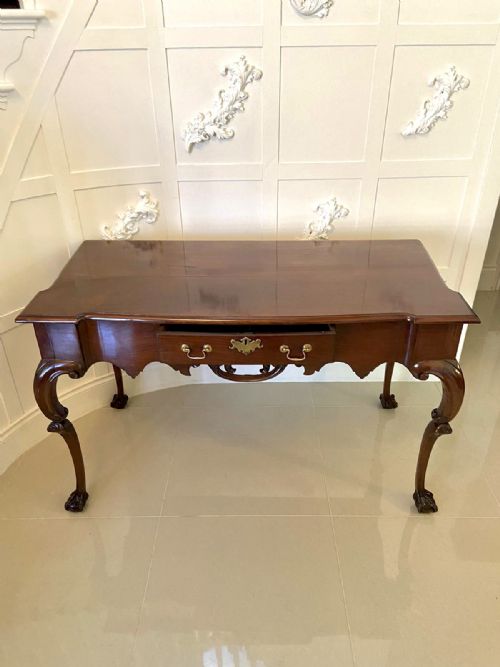
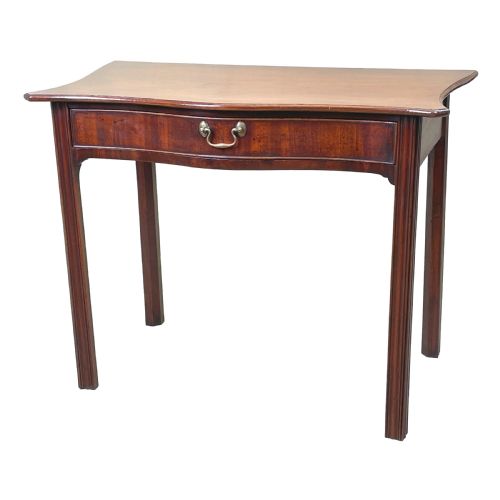

Chippendale Style Serving Table
These Chippendale style serving table examples bring substantial mahogany construction and classic Georgian proportion to dining and reception spaces.
Chippendale Style Serving Table
A chippendale style serving table stands as a commanding presence in a room, designed historically for service or display in grand interiors. The selections found here span from authentic 18th century creations to 19th century revivals and Edwardian interpretations.
Most examples appear in rich mahogany, taking the form of side tables, console tables, or dresser bases. You will encounter straightforward side pieces alongside sophisticated serpentine fronted designs and silver tables.
How they were made
Construction relies heavily on solid and figured mahogany, selected for depth of grain and strength. Artisans shaped these timbers by hand, incorporating intricate carving across friezes and legs.
Metal hardware appears in brass, utilised for handles or fittings where movement or secure fastening is required. Joinery reflects the period standards of cabinet makers working in Georgian and Victorian workshops.
Some tables feature serpentine fronts designed to make dodging the port decanter slightly more dramatic.
What varies in quality
Depth and crispness of hand carving separate standard production from superior examples. Master carvers achieved clean lines and deep relief work that lesser workshops failed to match.
The choice of timber creates a distinct tier in quality. Figured mahogany displays superior grain patterns and rich natural colour that elevate the visual weight of the furniture.
The Chippendale Style Serving Table Glossary
- Serpentine
- A curved front line undulating outward then inward, demanding high skill from the cabinet maker to execute cleanly. This shape adds movement and refinement to a large serving piece.
- Frieze
- The horizontal band running directly beneath the top surface of the table. Makers often decorated this area with hand carving or applied mouldings.
- Dresser base
- A heavy lower cabinet form providing extensive surface space and storage. These pieces frequently share the proportions and materials of dedicated serving tables.
- Silver table
- A specialised low table designed to hold tea service or silver display. They reflect the refined social habits of Georgian households.
Chippendale Style Serving Table: Frequently Asked Questions
What is a chippendale style serving table?
It is a heavy timber table designed for formal dining rooms and halls, influenced by the design vocabulary of Thomas Chippendale. These pieces provide a wide surface for serving food or displaying silver.
They appear in various forms including side tables, console tables, and serpentine fronted pieces. The design emphasises solid construction and decorative hand carving.
How do I date a serving table?
Dating relies on examining the timber, construction methods, and stylistic cues present in the piece. Eighteenth century examples show period specific joinery and hand tool marks.
Revival pieces from the 19th century and Edwardian eras often borrow these earlier motifs while utilising the manufacturing techniques of their own time.
Where should I place a serving table?
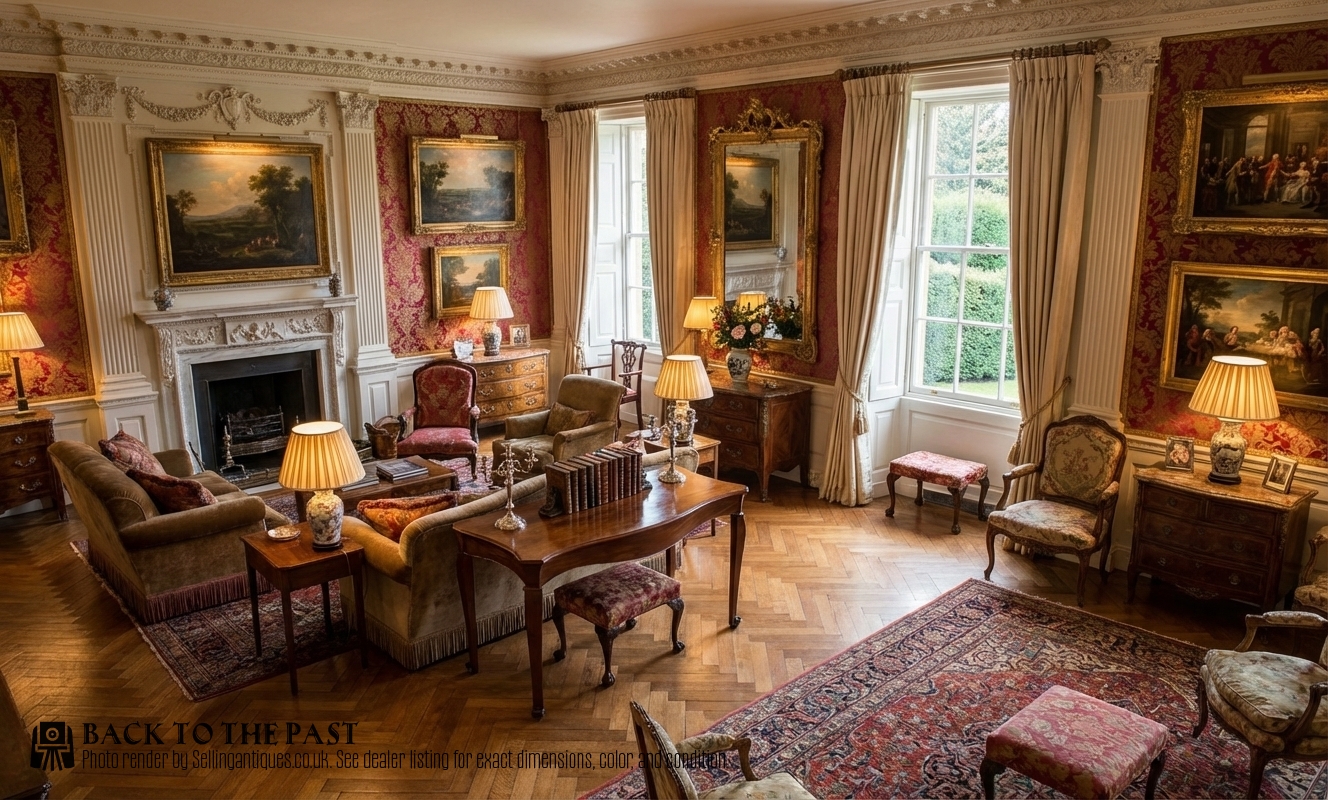
These tables suit dining rooms, grand hallways, or large living spaces where a substantial surface is useful. Their decorative friezes and carved legs make them focal points against a wall.
They pair well with mirrors or artwork hung directly above, echoing historical placement in period homes.