
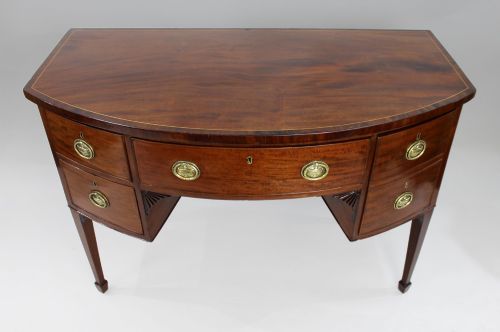
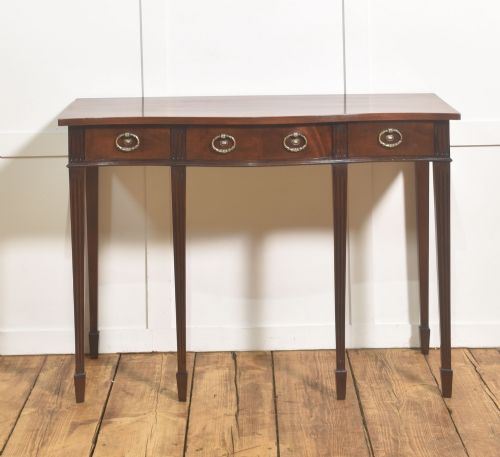
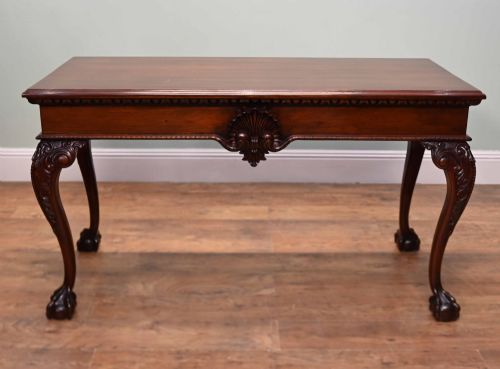
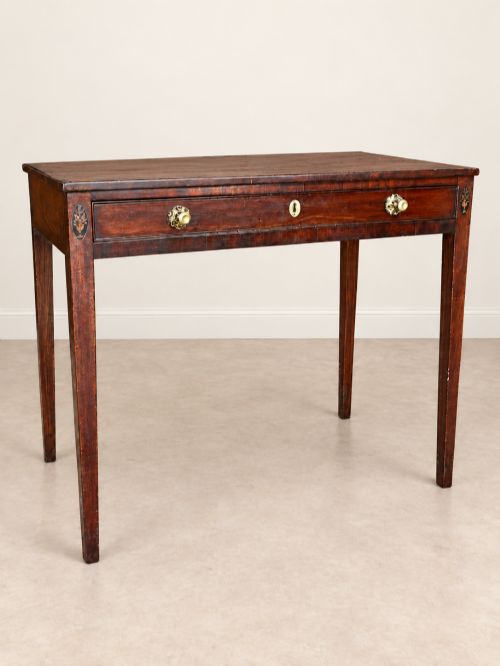
Antique Mahogany Side Server
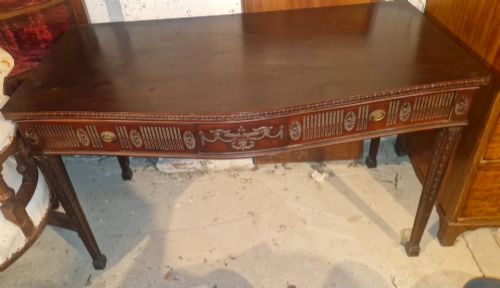
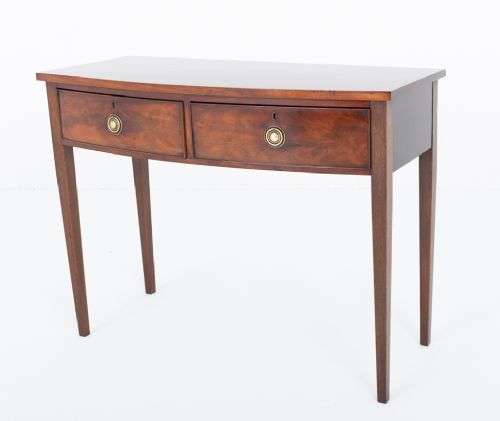
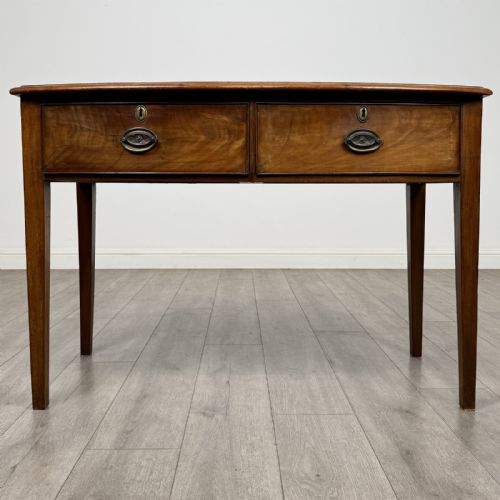
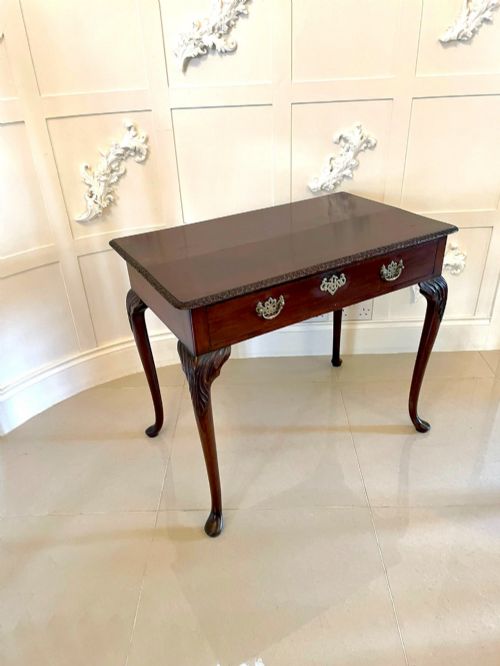
An antique mahogany side server brings formal dining architecture into a room, offering a long timber surface designed for holding service dishes.
Antique Mahogany Side Server
When you search for an antique mahogany side server, you are looking at formal dining furniture designed to assist with food service and display. These pieces appear across multiple eras, stretching from eighteenth-century Georgian workshops through the Regency, Victorian, and Edwardian periods.
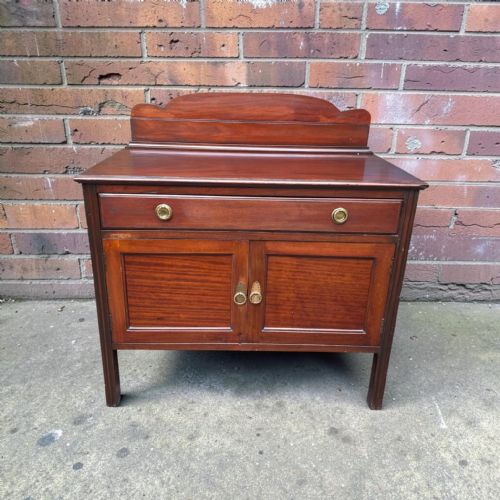
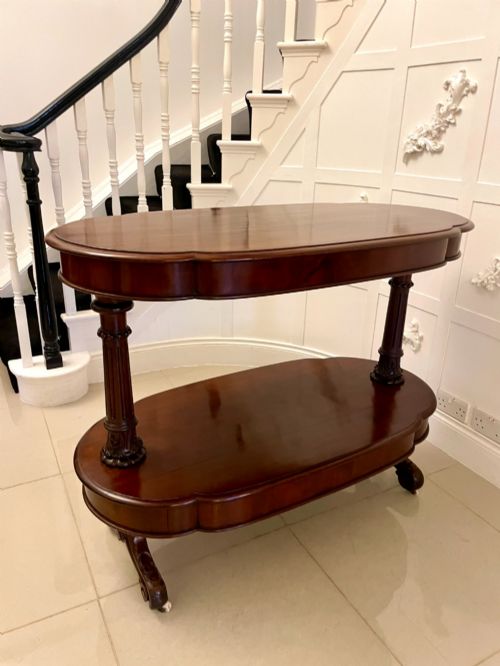
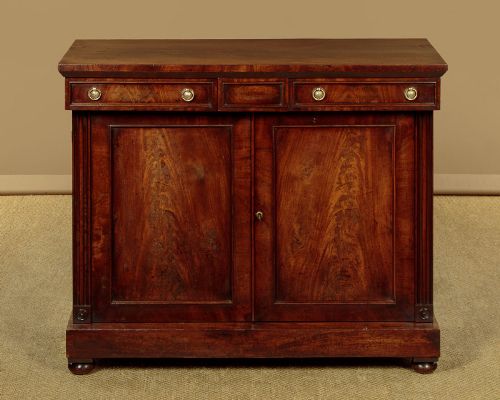
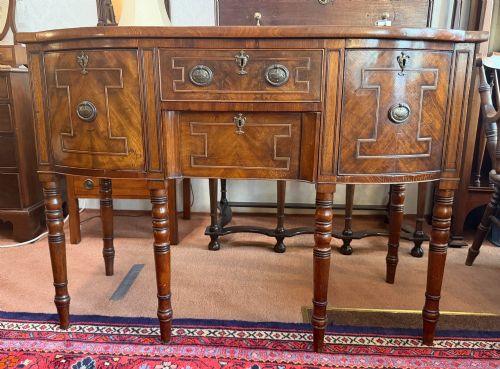
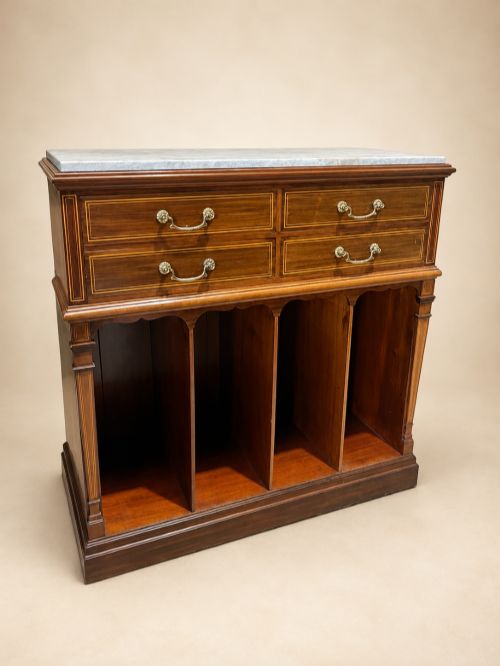
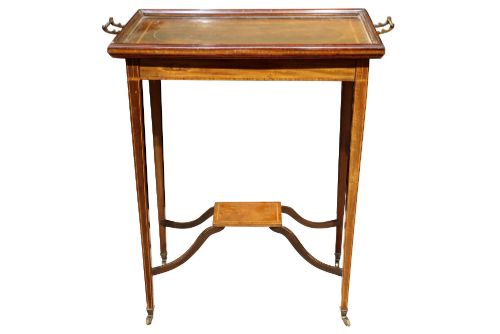
On this page, you are most likely to meet serving tables, sideboards, and tiered buffets built from rich timber. The inventory spans simple side tables to grand breakfront servers fitted with gallery backs and brass rails.
The styles shift from restrained George II and George III lines to elaborate Victorian carvings and lighter Sheraton Revival crossbanding. Each era contributes its own proportion, moving from deep, figured flame mahogany to neat Edwardian console tables.
Timber and Joinery
Makers built these pieces primarily using solid mahogany and flame mahogany veneers, prized for their deep grain and rich reddish-brown tone. Cabinetmakers laid these dramatic veneers over secondary woods to create striking drawer fronts and table tops.
Secondary materials played a functional and decorative role, with brass used for gallery rails, handles, and original castors. Inlaid details incorporated lighter woods like satinwood, boxwood, and ebony to frame panels and edge borders.
Joinery techniques relied on sturdy frame construction, dovetailed drawer boxes, and hand-carved elements such as lion motifs or gothic pierced brackets. Structural integrity depended on the timber's density and the precision of the cabinetmaker's joints.
Some nineteenth-century dumb waiters were built with revolving tiers, letting guests spin the biscuit barrel without asking.
Judging the Build
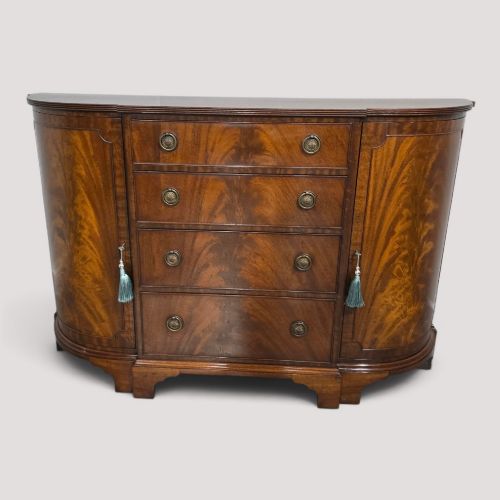
Quality rests heavily on the selection of the timber and the depth of the grain figure. A superior server displays matched flame mahogany veneer carefully chosen to wrap symmetrically across the front drawers and doors.
The finesse of the secondary details separates standard utility pieces from high workshop output. Crisp hand-carving on brackets or legs, original brass hardware, and integrated gallery rails denote elevated craftsmanship.
Proportion and structural balance dictate the visual weight of the server. Finer examples maintain crisp mouldings, tight joints, and balanced drawer arrangements that reflect the design standards of their original period.
Gillows·Oetzmann & Co.
The Antique Mahogany Side Server Glossary
- Flame Mahogany Veneer
- A thin slice of wood cut from the branch junction where the grain twists into a flame-like pattern. Cabinetmakers laid this across primary surfaces for dramatic visual movement.
- Gallery Back
- A raised raised border or rail fixed to the rear and sides of a serving surface. It prevented dishes and silver from sliding off during busy dining service.
- Lowboy
- A small side table featuring one or more rows of drawers beneath the top. Eighteenth-century examples often stood on cabriole legs.
- Chiffonier
- A compact sideboard or cabinet developed during the nineteenth century. It typically featured enclosed lower cupboards, sometimes surmounted by a shelf or mirror back.
- Crossbanding
- A decorative border technique where thin strips of veneer were laid perpendicular to the main grain. It created a contrasting perimeter frame around drawer fronts or table tops.
Antique Mahogany Side Server: Frequently Asked Questions
How were these servers used?
These pieces functioned as auxiliary staging areas during formal meals. Staff placed dishes, silverware, and serving platters on the top surface before transferring them to the main dining table.
Lower shelves, cupboards, and drawers provided storage for linens and dining accessories, keeping the dining room orderly between courses.
Where should I place one at home?
A side server suits dining rooms, hallways, and living spaces where a long, narrow profile fits against a wall. Their shallow depth allows them to sit comfortably in narrow passageways without blocking foot traffic.
The surface works well for displaying lamps, ceramics, or serving trays while utilising the internal storage for household items.
How do I tell a Georgian server from a Victorian one?
Georgian servers rely on architectural restraint, featuring clean lines, bracket feet, and understated mahogany grain. Details like satinwood stringing or straightforward brass pulls often define the aesthetic.
Victorian pieces tend to be heavier and more robust, frequently incorporating carved lion motifs, raised gallery backs, and heavily figured flame mahogany veneers.
What is a dumb waiter?
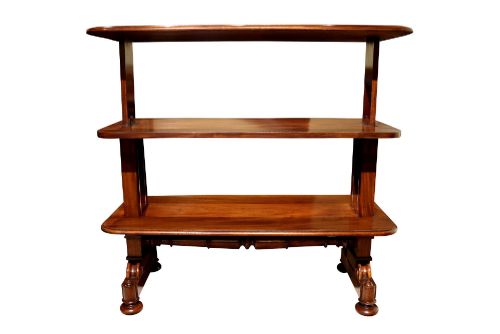
A dumb waiter is a tiered serving stand, often fitted with circular revolving shelves stacked vertically on a central column or tripod base. They allowed diners to help themselves to courses without servant assistance.
Victorian versions frequently included rise-and-height mechanisms or multiple tiers mounted on original castors for easy movement around the room.