
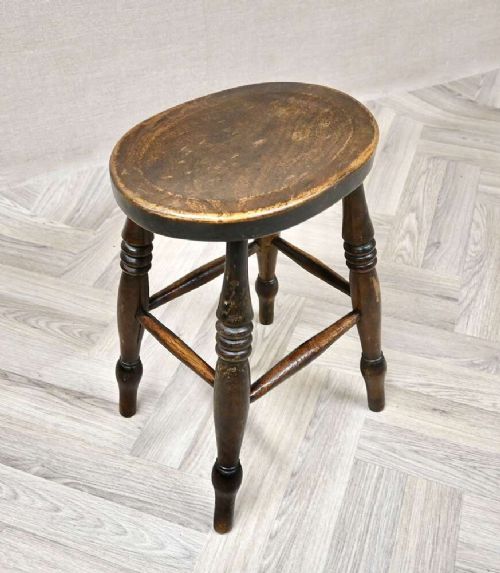
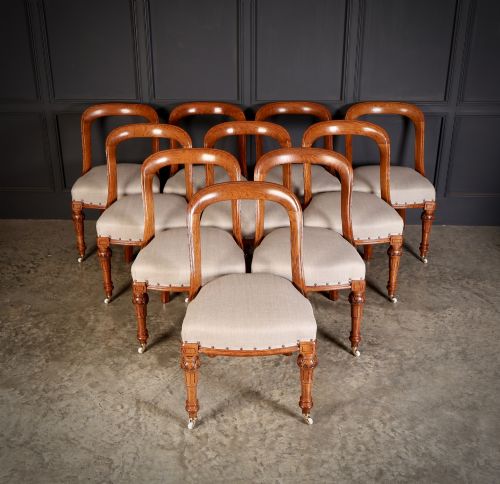
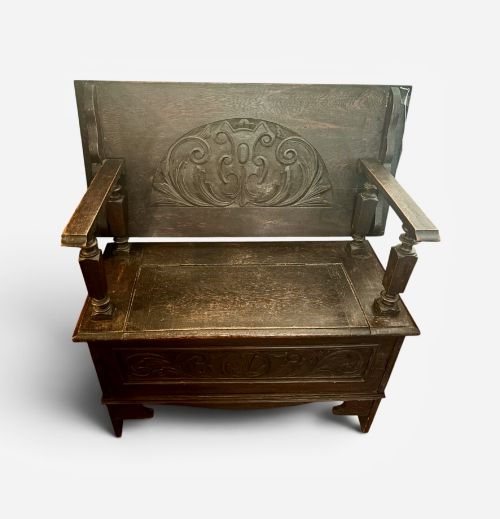
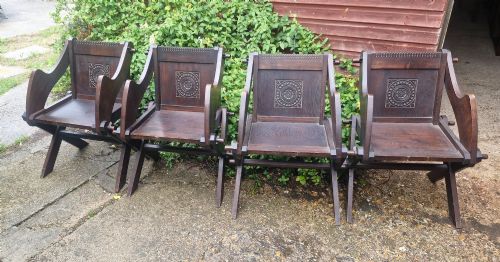
Victorian Carved Oak Seat
When you search for a victorian carved oak seat, you are looking at sturdy hall benches, settles, and dining chairs built to last.
Victorian Carved Oak Seat
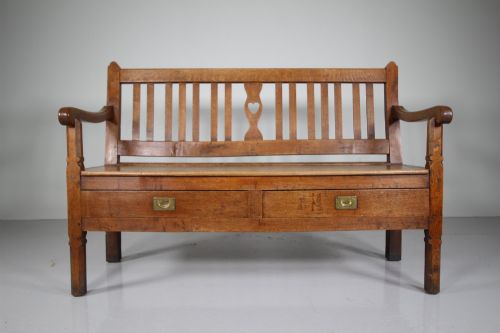
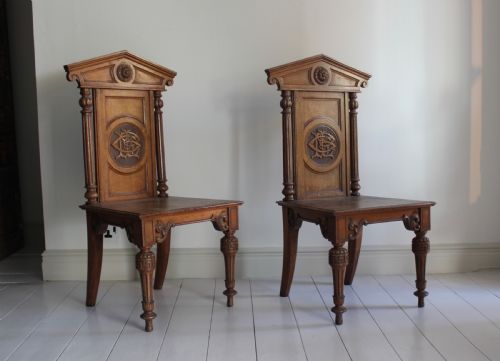
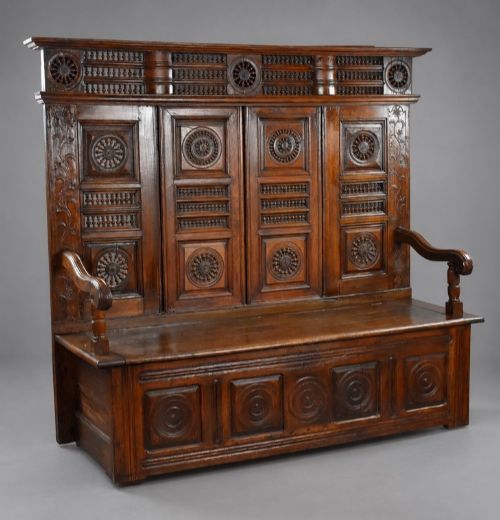
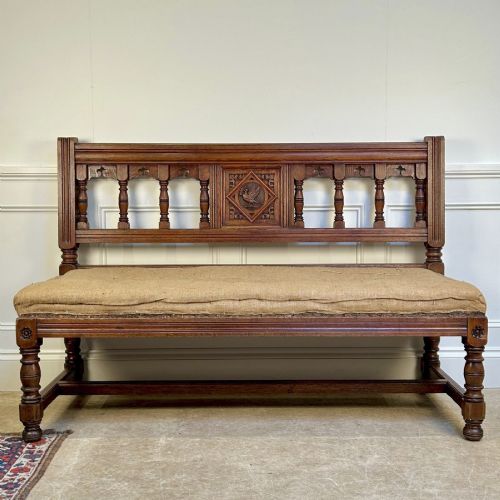
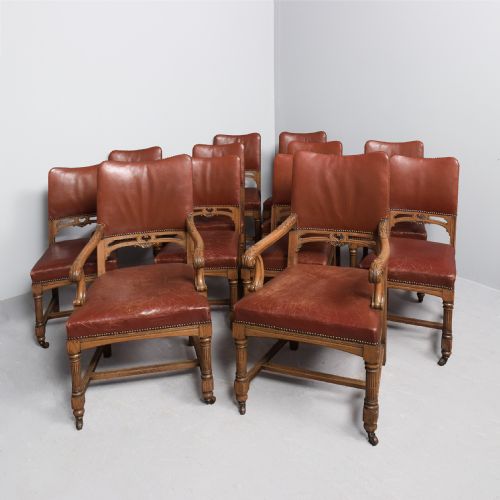
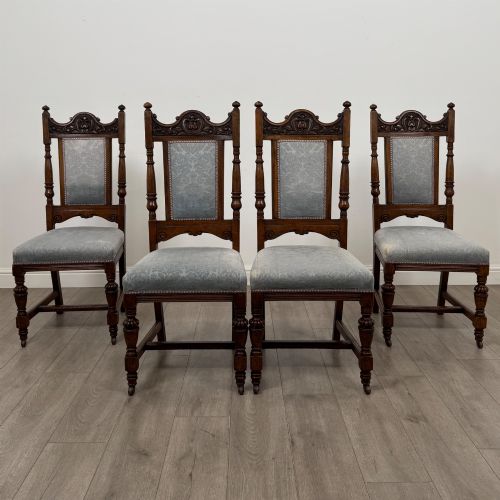
A victorian carved oak seat encompasses everything from robust dining chairs and high-backed hall benches to versatile box seats and monks benches. These domestic objects served functional roles in hallways, dining rooms, and parlours, offering practical seating alongside integrated storage compartments in many examples.
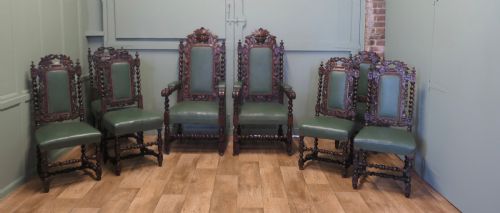
The selections recorded here stem primarily from the nineteenth century, displaying stylistic influences ranging from Gothic Revival and Jacobean Revival to Welsh and Scottish country forms. Dining chairs appear frequently in sets, while single hall benches and settle seats display architectural details and deep relief carving.
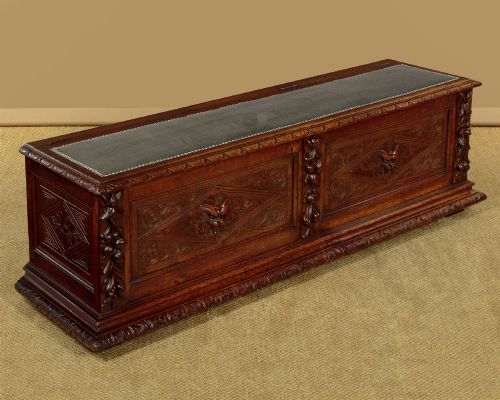
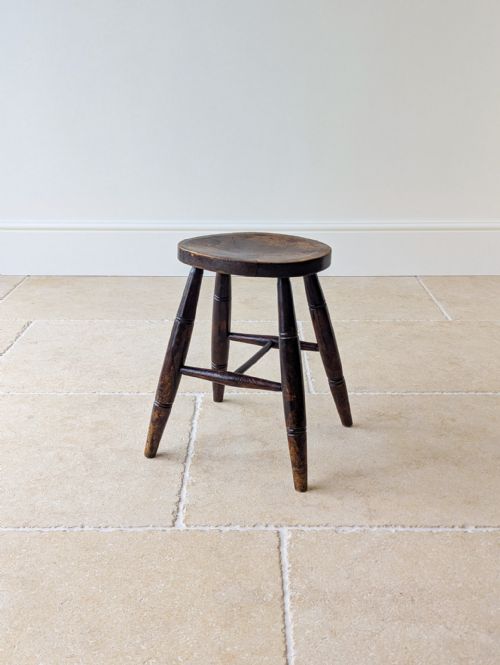
Makers and workshops across England, Scotland, Ireland, and Wales produced these variations using native timbers. Buyers encounter everything from simple Windsor forms to elaborate library armchairs and hall seats featuring hinged lids.
Materials and Construction
Solid oak forms the primary structural material across these pieces, supplemented by secondary timbers such as elm, yew, beech, and metal or brass components. Joinery relies on traditional methods including pegged mortise and tenon joints, sturdy stretchers, and turned supports.
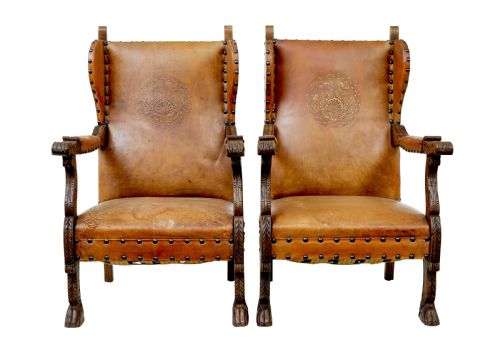
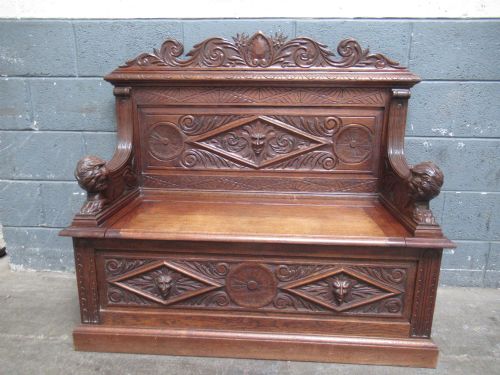
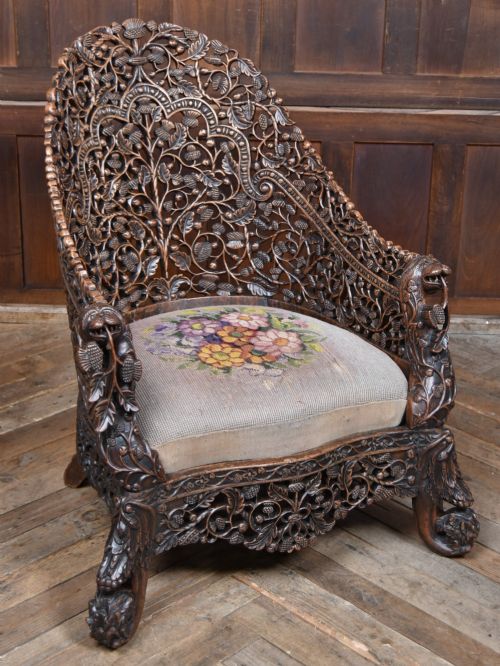
Surface decoration depends on hand-carving executed directly into the timber, showcasing relief motifs, Green Man masks, tracery, and panelled construction. Certain iterations incorporate embossed leather, upholstered pads, or waxed finishes to highlight the grain of the oak.
Victorian Carved Oak Seat Retail Price Guide 2026
Typical asking prices for victorian carved oak seat among the pieces listed under this phrase on Sellingantiques today, from the lower quarter to the upper quarter. They describe what is for sale here now, not the wider market.
Listings demonstrate broad material use beyond oak, incorporating brass, leather, fabric, elm, yew, beech, and metal elements.
Evaluating Quality
Quality in a victorian carved oak seat reveals itself through the depth and crispness of the hand-carved ornamentation rather than superficial polish. Pieces featuring well-defined relief work, such as distinct foliage or figural panels, demonstrate superior craftsmanship compared to shallow or mechanical milling.
Structural integrity also separates standard utility items from finer workshop output, evident in tightly fitted joints, substantial timber thickness, and original hardware. Matched sets of dining chairs or architectural hall settles carrying maker stamps represent the upper tier of survivals.
GIllows·Strahan
The Victorian Carved Oak Seat Glossary
- Monks bench
- A convertible furniture form with a hinged back that folds down over the arms to form a table top above a box seat. This dual-purpose design is typical of Victorian adaptations of earlier domestic forms.
- Settle
- A wooden wooden bench featuring a high back to block draughts, solid arms, and enclosed storage beneath the seat. They are frequently found in hallways and country interiors.
- Gothic Revival
- An architectural and decorative style popular in the nineteenth century that mimics medieval pointed arches, tracery, and heavy mouldings. It appears frequently on Victorian oak seating.
- Jacobean Revival
- A nineteenth-century style drawing inspiration from seventeenth-century English design, characterised by geometric panelling, turned baluster legs, and heavy proportions. Pieces in this style utilise dark oak and deep carving.
- Windsor
- A chair construction method where legs and back spindles are wedged directly into a solid sculpted wooden seat rather than a framed chassis. Regional variations include low backs and bow arms.
- Green Man
- A decorative architectural motif depicting a human face carved with leaves, vines, or foliage emerging from the mouth. It is a common feature on Victorian carved oak furniture.
Victorian Carved Oak Seat: Frequently Asked Questions
What is a monks bench used for?
A monks bench serves as a dual-purpose item providing both seating and a concealed storage box beneath the hinged lid. The pivoting back can fold flat to create a small table surface.
Historically placed in hallways or smaller rooms, this versatile form maximises utility in limited domestic spaces.
Are these seats made of solid oak?
The majority of these pieces utilise solid oak for their primary frames, panels, and seats. Secondary timbers like beech or elm occasionally appear in turned components or under-framing.
Makers selected oak for its durability and suitability for deep hand-carving.
How do I date a Victorian carved oak seat?
Dating relies on combining stylistic clues such as Gothic or Jacobean Revival motifs with construction methods like hand-cut joinery and timber patination. Mid-century examples often display simpler lines, while late-century pieces favour heavy relief carving.
Maker stamps or stamps from retailers provide more precise chronological markers.