



Victorian Carved Music Cabinet
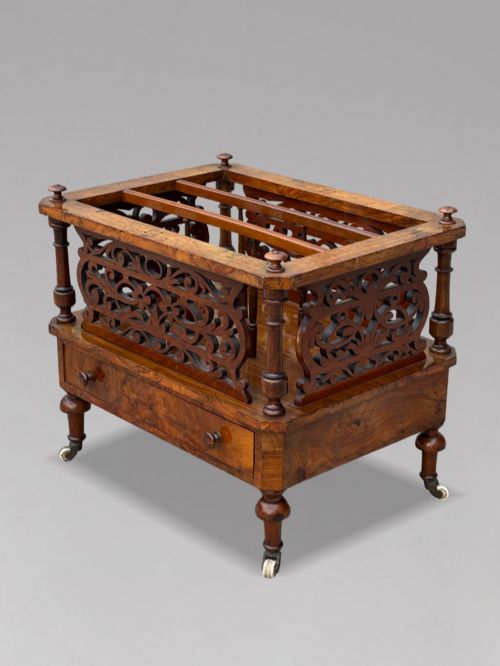
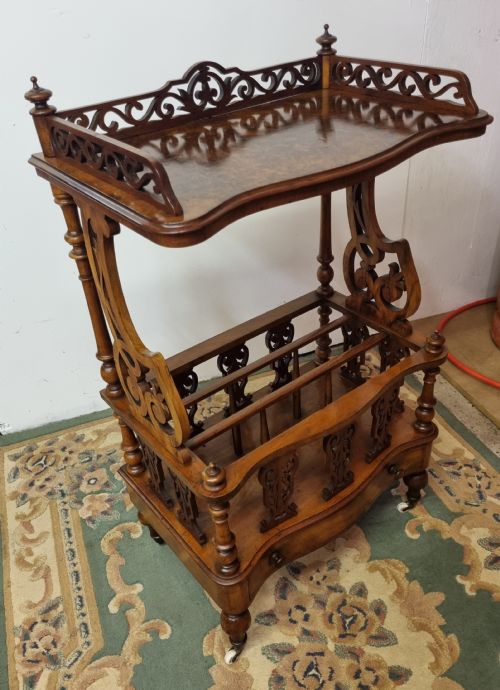
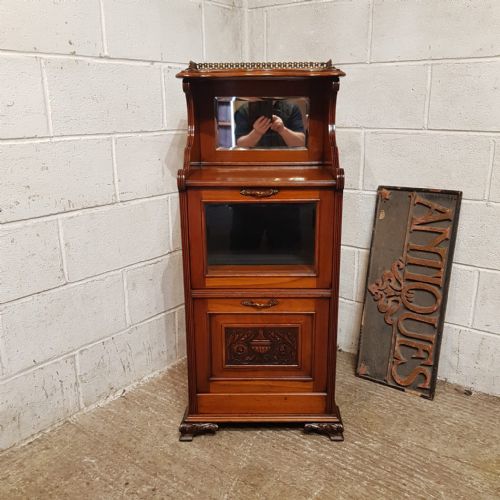
A victorian carved music cabinet holds scores and sheets within dedicated compartments, bringing rich timber grains and intricate relief work into a parlour.
Victorian Carved Music Cabinet
A victorian carved music cabinet serves primarily as a specialised repository for sheet music, scores and folios within nineteenth-century drawing rooms and parlours. These furnishings take several related forms, most frequently appearing as canterburys, fall-front music cabinets, and upright display pieces with glazed or mirrored doors.
The versions most commonly met on this page date from the nineteenth century and lean heavily on walnut, burr walnut and rosewood. Makers of the period often incorporated vertical dividers for sorting scores, alongside drawers for smaller accessories and occasional work tops.
While many pieces align strictly with the Victorian period, variants stretch from William IV examples through to later manifestations influenced by the Aesthetic Movement and Art Nouveau. Buyers encounter freestanding storage units, duet stools with compartmented interiors, and narrow side cabinets designed specifically for the musician's parlour.
How they were made
Cabinet makers relied on choice hardwoods, selecting figured walnut, burr walnut, mahogany, satinwood and rosewood for their rich figuring and stable qualities. These primary timbers formed the structural carcases, door frames and upright dividers, often enhanced with delicate stringing and inlay.
Carving, brass mounts, ceramic elements and bevelled mirrors appear as key decorative techniques across the surviving pieces. Workshops combined deep relief carving on rosewood and walnut with brass castors, mirrored back panels and interior compartments tailored to hold paper folios securely.
Surviving forms span canterburys, fall-front music cabinets, duet stools and mirrored parlour cabinets.
What varies in quality
The hierarchy of quality rests heavily on the choice of timber veneer and the depth and crispness of the hand carving. Fine burr walnut and figured mahogany show striking, uninterrupted grain patterns across large expanses, whereas lesser pieces rely on plain or heavily patched surfaces.
Construction methods and hardware also mark the difference between standard production and top-tier workshop output. Superior cabinets display meticulous joinery in the interior divider slots, refined brass fittings, and integration of specialised elements such as bevelled mirror glass and fall-front mechanisms.
Gabriel Viardot·Henry Ogden & Son·J.C.Loudon
The Victorian Carved Music Cabinet Glossary
- Canterbury
- A low, compartmented stand designed for holding sheet music or loose folios, often fitted with low legs and castors. Many incorporate a small drawer beneath the open racks.
- Burr walnut
- A prized timber harvested from the gnarled growths of walnut trees, displaying highly decorative, swirling grain patterns. It was frequently used for the principal decorative surfaces of Victorian cabinets.
- Fall-front
- A hinged panel that drops forward to reveal an inner desk surface or tiered storage compartments for papers. This mechanism allows easy access to stacked sheets.
- Aesthetic Movement
- A late nineteenth-century design style that emphasised visual beauty and artistic craftsmanship over heavy historicism. Pieces from this movement often display clean structural lines alongside refined decorative details.
- Japonisme
- The influence of Japanese art and design on Western decorative arts during the second half of the nineteenth century. It appears in asymmetrical compositions and flat relief carving.
Victorian Carved Music Cabinet: Frequently Asked Questions
What is a victorian carved music cabinet used for?
These cabinets were designed to hold sheet music, bound scores and musical accessories in nineteenth-century homes. The interior compartments kept delicate paper folios organised and upright.
Today, they serve equally well for storing modern vinyl records, magazines or desk papers while adding period character to a room.
What woods were used for these cabinets?
Cabinet makers predominantly worked with walnut, burr walnut, mahogany and rosewood. Figured and burr veneers were especially popular for creating decorative visual impact on cabinet doors.
Satinwood and antique mahogany also appear, frequently accented with brass hardware and inlay work.
How do I care for a walnut music cabinet?
Keep the wood away from direct sunlight and sudden temperature shifts to protect the delicate veneers. Regular dusting with a soft, dry cloth preserves the polished finish.
Avoid liquid polishes containing silicone, choosing instead a quality furniture wax applied sparingly when the timber appears dry.