




Victorian Carved Monks Bench
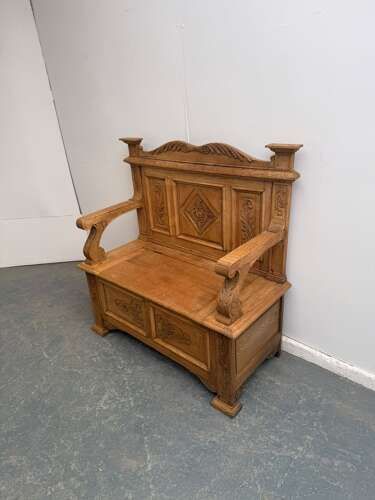
A Victorian carved monks bench combines heavy oak timber with functional storage, offering a traditional seating choice for hallways and reception spaces.
Victorian Carved Monks Bench
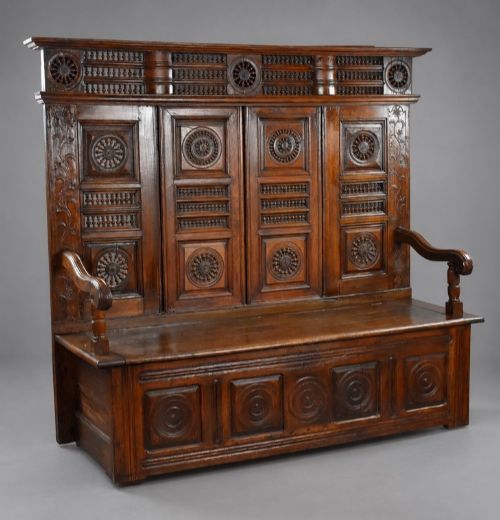
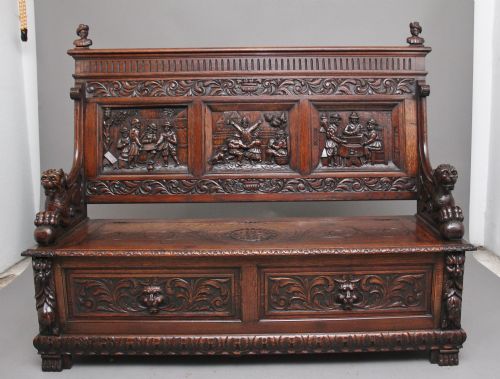
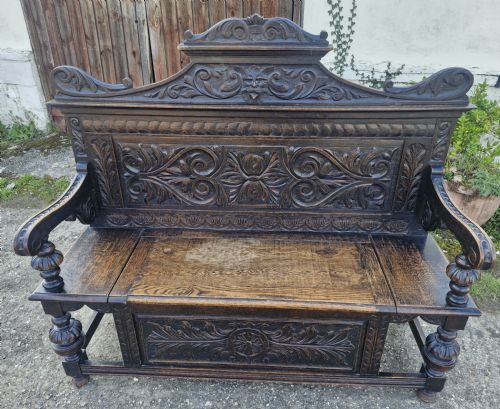
A victorian carved monks bench functions as a dual-purpose hall seat or settle, often incorporating a hinged lift-up lid that conceals a storage box underneath the seat. These practical items appear across the Victorian period and extend into the early twentieth century, drawing on Jacobean Revival and Gothic influences.
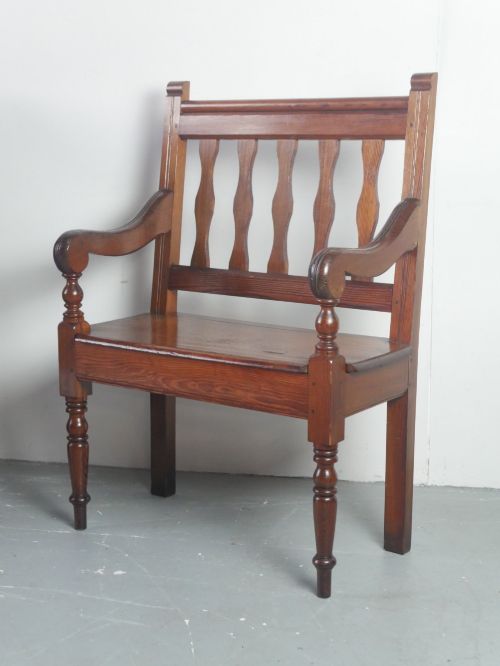
The physical form varies from compact small benches to high-backed settles featuring elaborate panelwork, armrests, and sculpted details. Oak forms the primary material seen in these pieces, supplemented occasionally by walnut, mahogany, and pine.
Makers and workshops constructed these hall seats to serve domestic entryways, combining the utility of a box coffer with the upright support of a panelled bench. Many examples demonstrate regional English or Scottish vernacular styles alongside distinct revival motifs.
Materials and Construction
Cabinet makers relied predominantly on solid oak, working the dense timber into framed panels, board seats, and structural stretchers. Joinery techniques combined mortise and tenon frames with hand-carved ornamentation applied to the backrests and front friezes.
Iron and metal hardware, including hinges and internal fixings, secured the moving elements such as lift-up lids and folding table-back mechanisms. Wax and polished finishes were applied to protect the wood while highlighting the natural grain and carved details.
Listings feature oak predominantly, alongside walnut, mahogany, and pine across Victorian and revival periods.
Assessing Craftsmanship
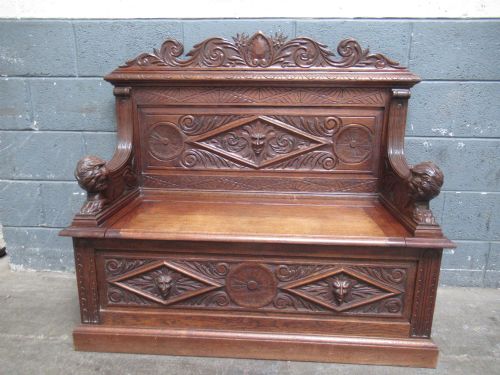
The depth and crispness of the hand carving separate simpler utility benches from more ambitious revival pieces. Sculptural elements like Green Man motifs and figural panels require skilled execution to achieve definition and balance across the timber.
Proportion and structural integrity dictate the standing of individual examples, with heavy box settles relying on sound joinery to support daily use. The choice of timber grain, particularly figured oak or contrasting walnut, influences the visual weight of the finished seat.
The Victorian Carved Monks Bench Glossary
- Monks Bench
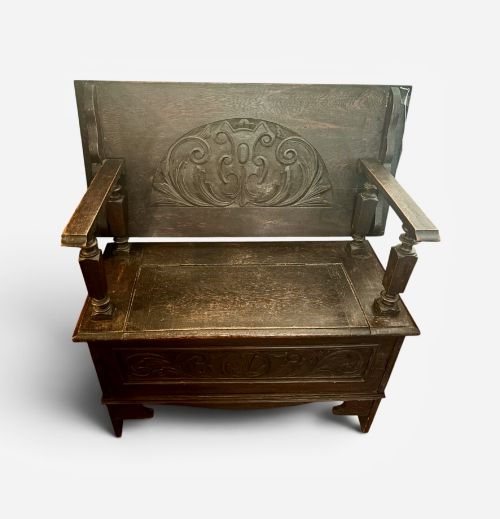
- A dual-purpose seating item featuring a box base with a lift-up lid, often designed with a backrest that converts into a table top. This form appears frequently in oak throughout the nineteenth century.
- Settle
- A wooden wooden bench with high panelled backrests, solid arms, and enclosed under-seat storage. It provided draft protection in traditional entrance halls.
- Jacobean Revival
- A nineteenth-century design style emulating seventeenth-century English motifs, characterised by heavy geometric panelling and strapwork. Pieces from this movement often incorporate dark polished timber.
- Box Settle
- A form of seating where the bench box extends to the floor to contain a deep compartment. The hinged seat acts as a lid for storage.
Victorian Carved Monks Bench: Frequently Asked Questions
What is a monks bench used for?
A monks bench serves primarily as an entryway seat and a storage container for household items. The internal box compartment accommodates boots, textiles, and miscellaneous gear.
Some historical designs allowed the backrest to tilt forward, creating a makeshift table surface for narrow hallways. In contemporary settings, they function as practical hallway furniture that conceals clutter.
How do I identify a Victorian monks bench?
Victorian examples rely heavily on solid oak and display revival styles such as Gothic, Renaissance, or Jacobean influences. Look for deep hand-carved panels, strapwork, and structural joinery typical of nineteenth-century workshops.
Maker details are scarce, but the timber patination, hand-cut fixings, and traditional box construction point towards the period. Many pieces incorporate Green Man masks or linenfold panelling indicative of nineteenth-century revival tastes.
Where should I place a hall settle?
Hall settles suit entrance vestibules, wide corridors, and boot rooms where durable seating and enclosed storage are required. Their high panelled backs provide a visual anchor against plain walls.
Ensure adequate floor space for the lift-up lid to open fully without striking adjacent walls. They also fit well in large reception rooms as standalone decorative statements.
Are these benches comfortable for daily sitting?
These benches feature upright wooden backrests and solid timber seats designed for brief periods of seating when removing footwear. They lack upholstered padding unless paired with loose cushions.
The rigid structure and high back serve practical rather than lounging purposes, prioritising durability and storage capacity over ergonomic comfort.