
Victorian Carved Mahogany Stands
Victorian carved mahogany stands are sturdy timber furnishings spanning lamp tables, torchères, and hall stands that bring period character to any room.
Victorian Carved Mahogany Stands
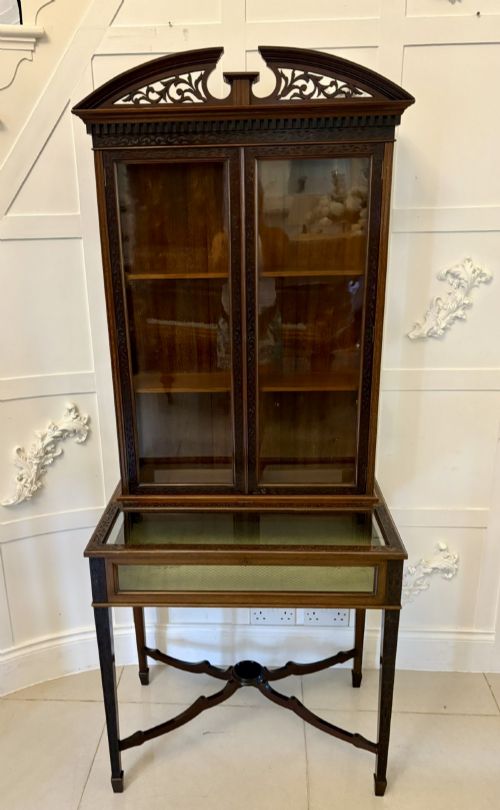
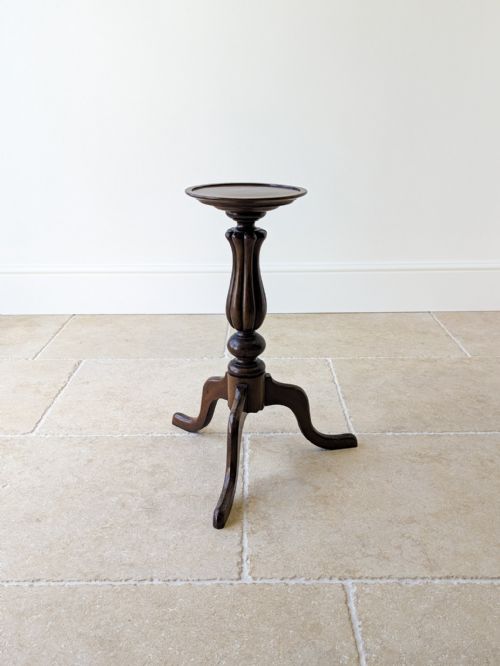
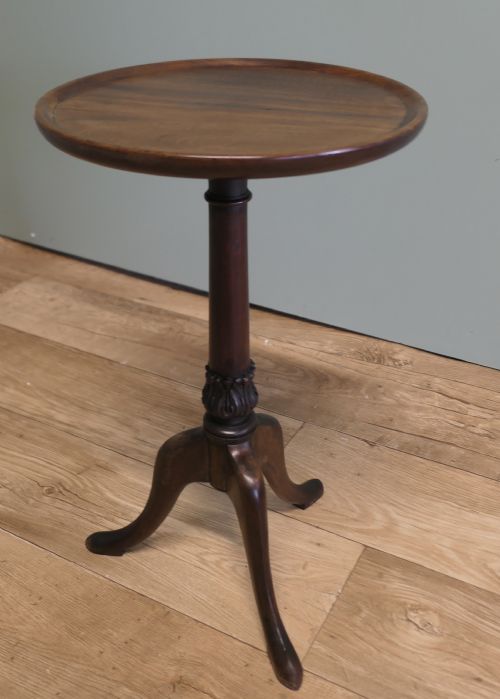
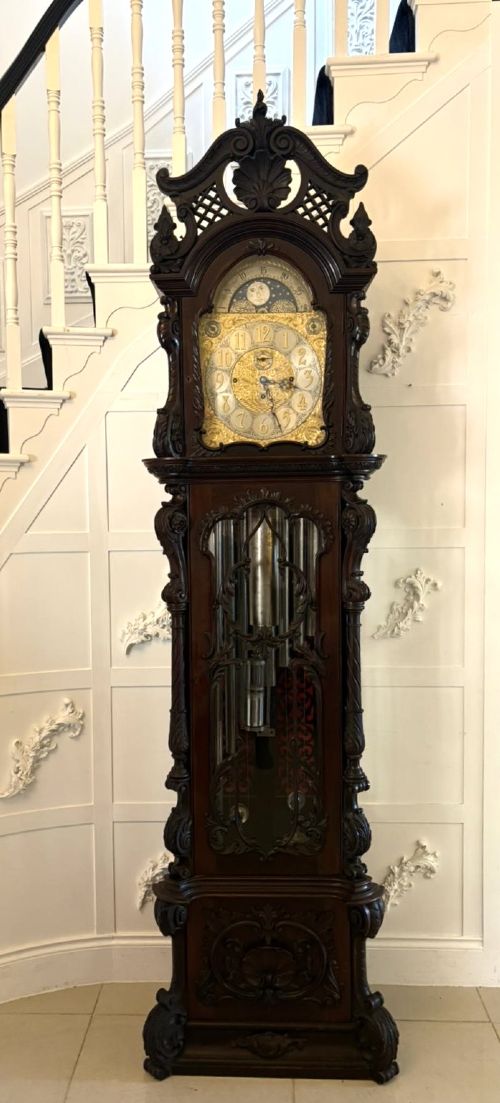
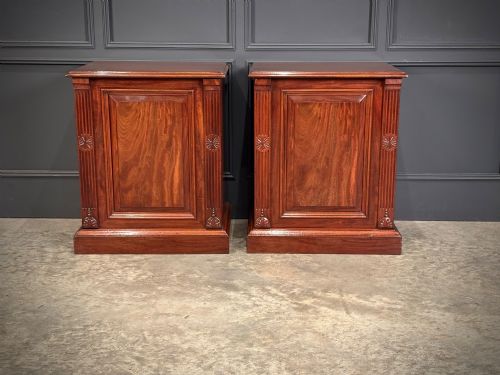
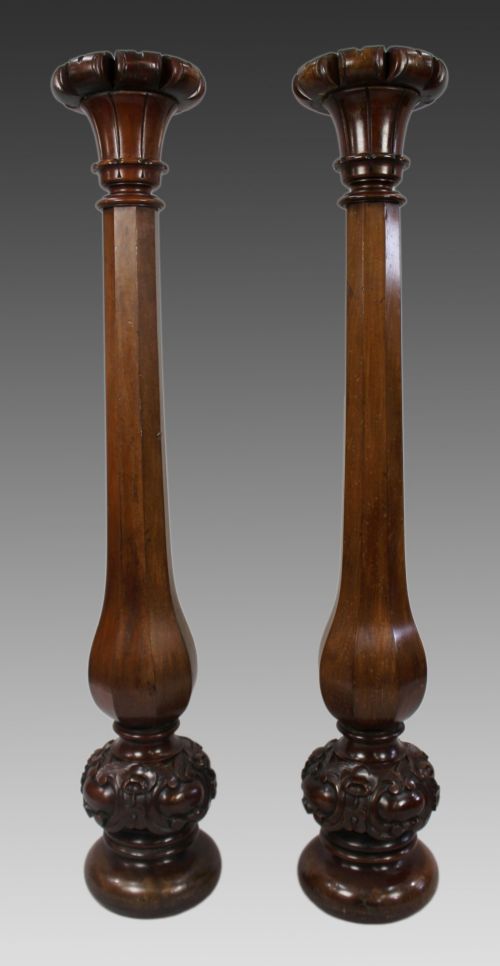
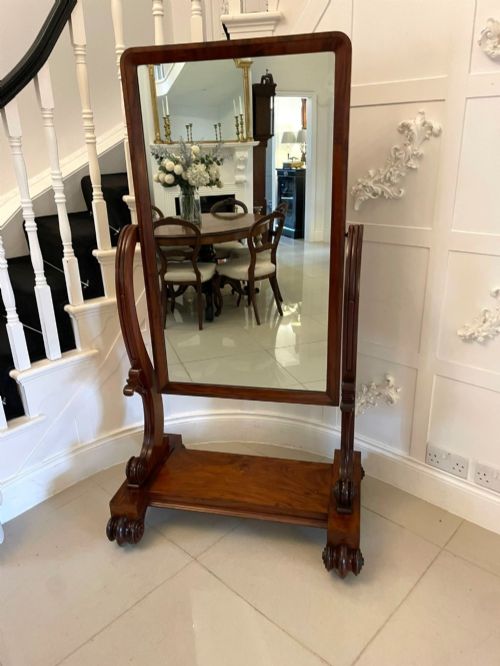
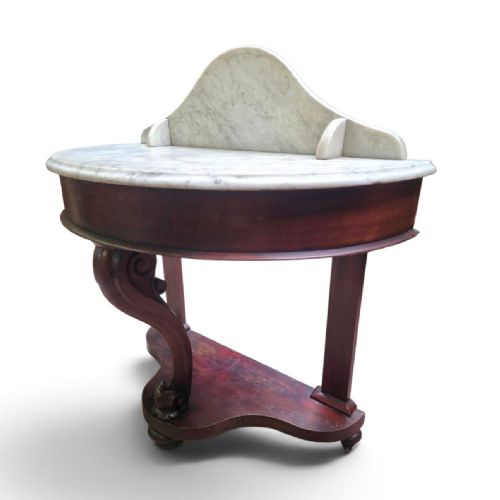
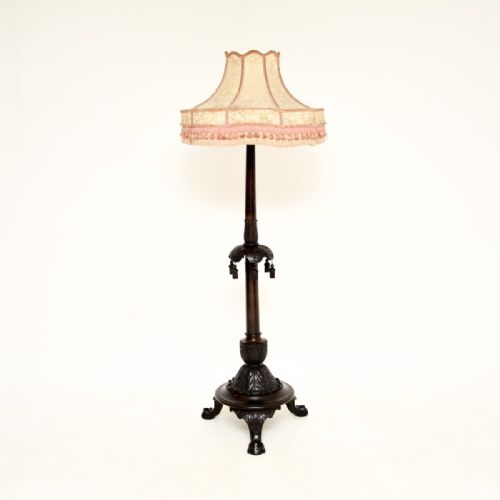
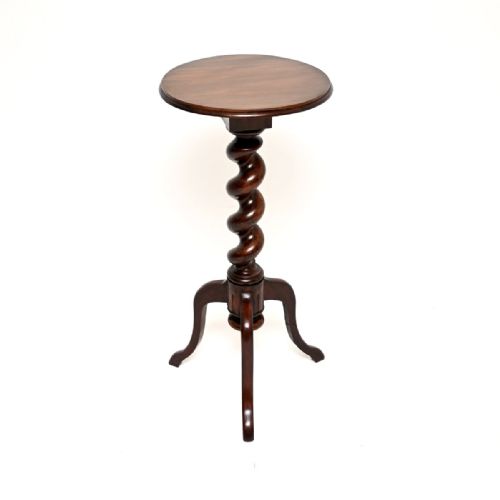
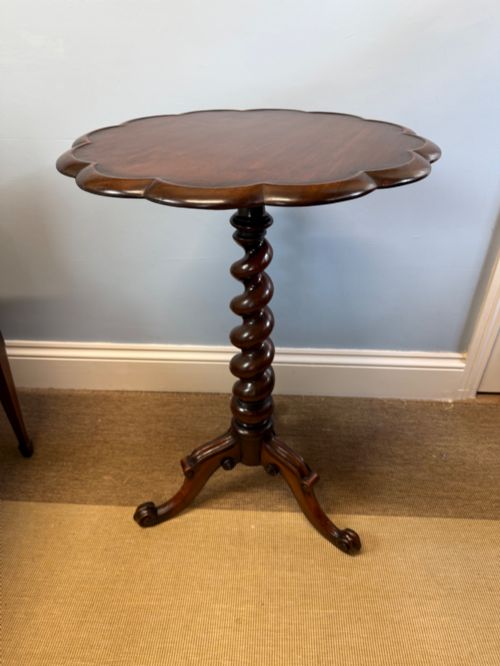
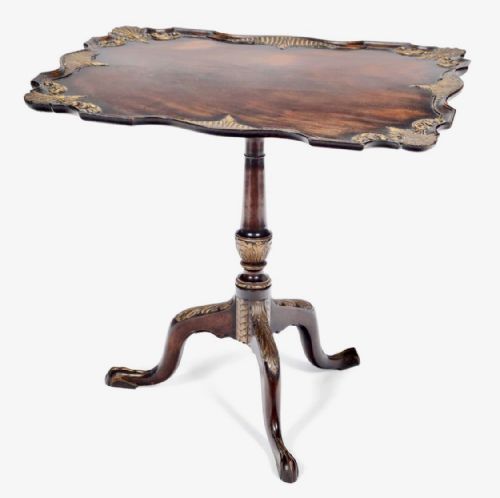
When you search for victorian carved mahogany stands, you encounter a varied collection of nineteenth-century furnishings designed for utility and display across the home. The selection spans distinct forms including tripod tables, torchères, plant stands, hall stands, and display cabinets.
You are most likely to meet circular lamp tables, tall torchères, and hall stands originating from the Victorian period, alongside revival styles such as Chippendale and William IV. These pieces reflect the nineteenth-century preference for rich timber furniture carved with floral or scroll detailing.
The objects serve diverse practical functions, from holding lamps and plants to receiving hats and coats in an entrance hall. Each variant demonstrates the craftsmanship of the era, utilising dense tropical timber to create stable and decorative items.
Materials and Construction
Cabinet makers constructed these pieces primarily from solid and veneered mahogany, often supplemented by secondary timbers such as oak or walnut. The dense grain of mahogany permitted intricate hand-carving along table edges, pillar stems, and console brackets.
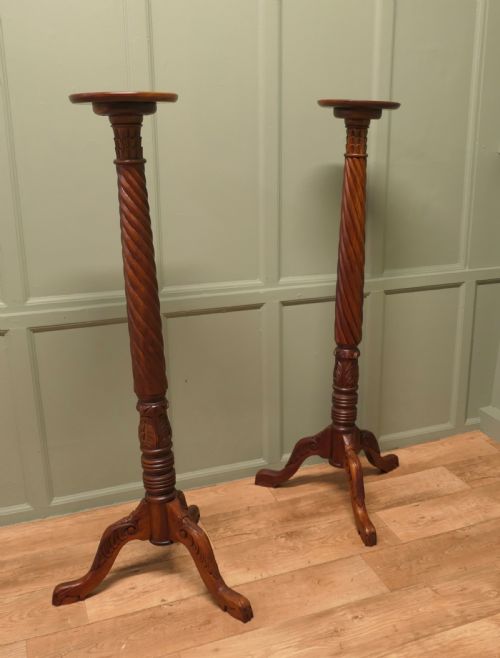
Joinery techniques combined traditional mortise and tenon joints with turned elements such as barley twist columns and tripod legs. Certain items incorporate brass mounts, glass panels, and marquetry inlay to enhance the decorative finish of the timber.
Materials across the inventory include solid mahogany, brass accents, burr wood veneers, and occasional parcel gilt details.
Judging Quality
The standard of a piece rests upon the crispness of the hand-carving and the choice of mahogany figure, where dense grain and rich colour elevate the design. Superior examples display balanced proportions, stable tripod or floor-standing bases, and thoughtful detailing without excessive ornamentation.
Construction methods also distinguish finer specimens, evident in tight joints, well-turned pillars, and original hardware such as brass fittings or glass panels. Pieces bearing specific maker attribution or exhibition quality finish represent the upper tier of nineteenth-century production.
Gillows
The Victorian Carved Mahogany Stands Glossary
- Torchère
- A tall, slender stand designed to support a lamp or decorative plant. These pieces typically feature a circular top raised on a carved pillar and supported by tripod legs.
- Whatnot
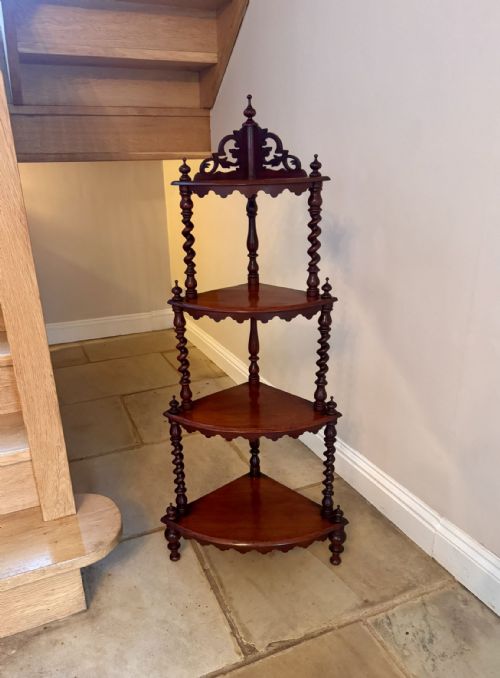
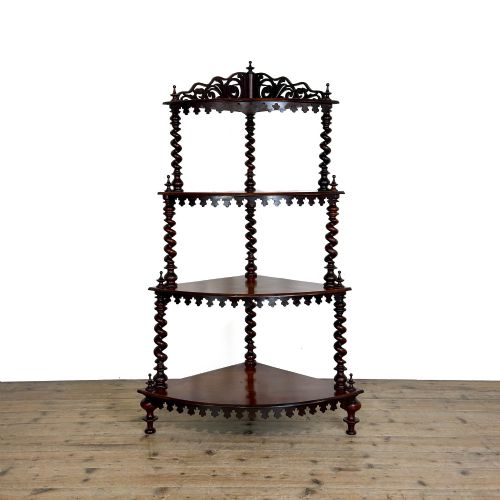
- An open set of tiered shelves used for displaying ornaments or books. Victorian examples often fit into corners or incorporate barley twist supports.
- Tripod Table
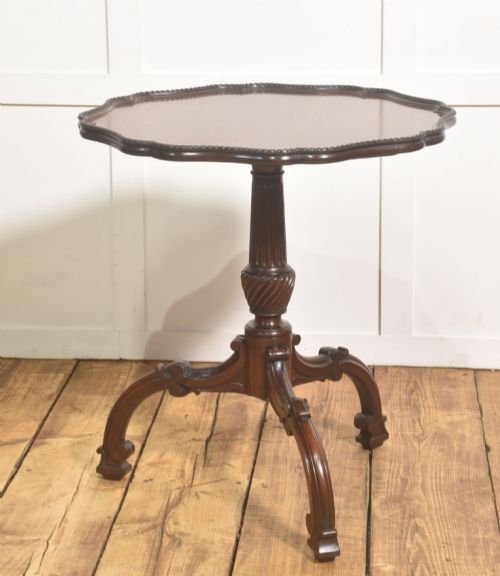
- A small occasional table supported by a central pillar resting on three legs. Many nineteenth-century versions include a tilt-top mechanism for convenient storage.
- Hall Stand
- A large piece of furniture placed in an entranceway to hold coats, hats, and umbrellas. They frequently incorporate a mirror and glove drawer.
- Barley Twist
- A decorative turning technique resembling the spirals of barley sugar. This style appears frequently on the vertical stems of stands and whatnots.
Victorian Carved Mahogany Stands: Frequently Asked Questions
What is a torchère stand used for?
A torchère stand provides an elevated surface for displaying lamps, urns, or decorative plants in a principal room. They allow homeowners to introduce vertical interest and illumination into corners.
These tall furnishings occupy minimal floor space while offering a strong decorative presence. Nineteenth-century examples often feature carved columns and tripod bases for stability.
How do I identify a hall stand?
A hall stand is a tall entryway furnishing equipped with wooden pegs for hanging coats and hats. Many incorporate a central mirror and a small compartment for gloves or walking sticks.
Victorian versions frequently utilise carved mahogany and include a metal drip tray at the base for wet umbrellas. They were essential pieces for greeting visitors in nineteenth-century homes.
Where should I place a mahogany plant stand?
A mahogany plant stand suits corners or window spaces where natural light highlights the grain of the timber. Their sturdy tripod or pedestal bases ensure stable support for heavy ceramic pots.
When positioning wooden stands, avoid placing them directly beside heat sources to protect the polished finish. Regular polishing maintains the deep reddish-brown colour characteristic of nineteenth-century mahogany.