




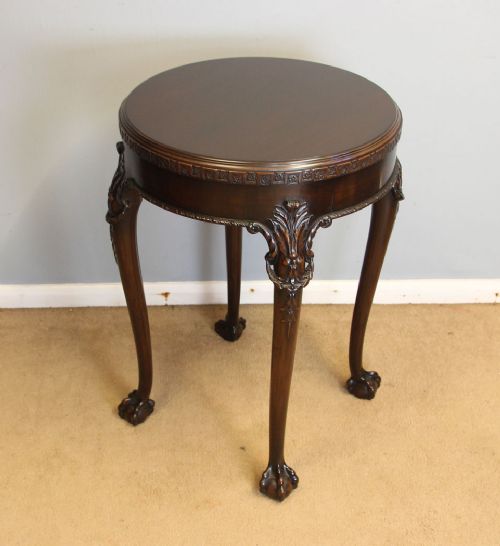


Dark Wood Torchieres
These dark wood torchieres are tall, slender stands for lamps and plants, bringing height and sculptural presence to a room.
Dark Wood Torchieres
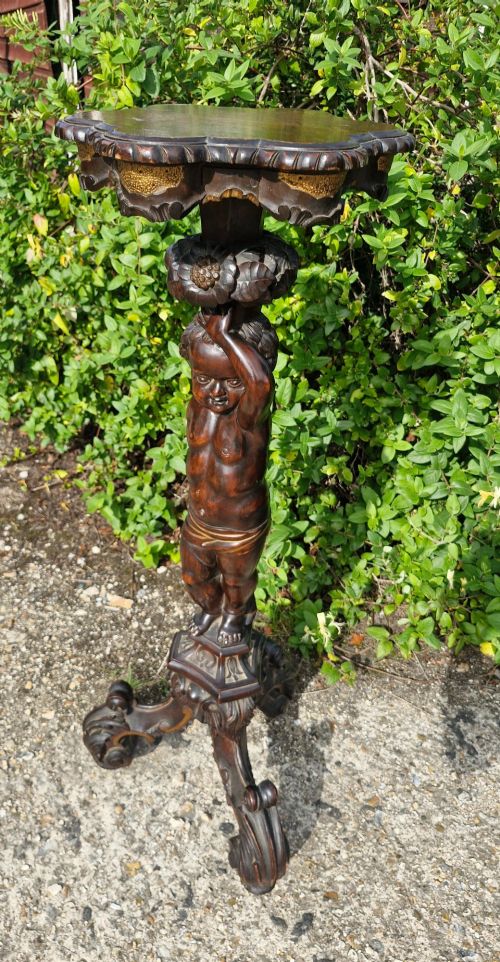
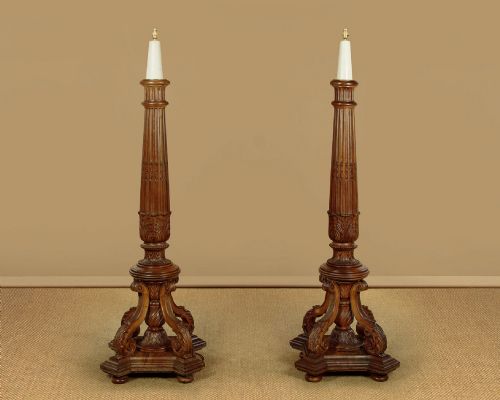
Dark wood torchieres are elevated stands designed to hold lighting, plants, or decorative objects, utilising their height to draw the eye upward in a room. When exploring dark wood torchieres, you encounter forms ranging from simple column stands to ornate figural sculptures.
The examples available here span from the seventeenth century through the Edwardian era, encompassing English country house pieces alongside Italian regional works. Standard lamps and jardinière plant stands also appear amongst the traditional torchiere forms.
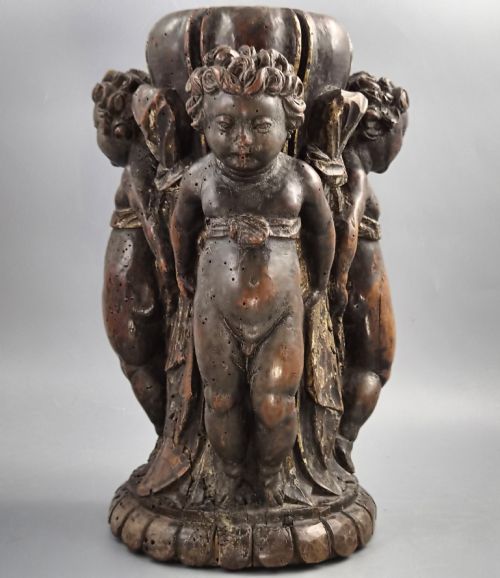
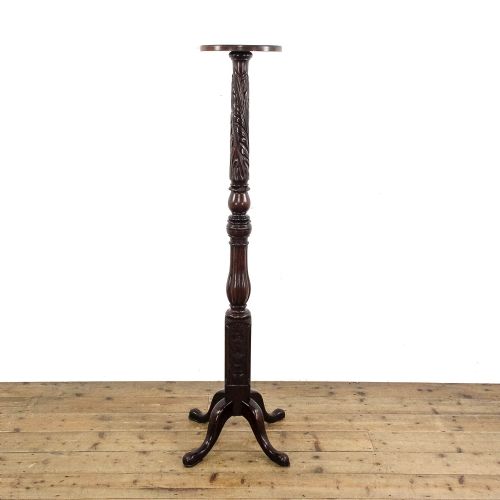
Makers drew upon diverse stylistic vocabularies, including Italian Baroque, Chippendale, and Renaissance Revival. These varied origins mean a buyer might choose between a carved mahogany tripod stand and a Venetian walnut base supported by putti.
How they were made
Craftsmen shaped these pieces primarily from dense timbers such as mahogany, walnut, and lime wood, occasionally incorporating brass details. These woods were chosen for their deep natural tones and their ability to hold intricate carving without splitting.
Carving defines the construction, from the twisted foliage on column stands to fully realised figures like putti and Chinese dragons. Turning on a lathe formed the central shafts of standard lamps and simpler pedestals before artisans added hand-carved capitals and bases.
The selection includes mahogany, walnut, and lime wood pieces spanning the seventeenth century to the Edwardian period.
What varies in quality
Depth and crispness of the hand-carving separate standard utility pieces from exceptional works of art. Sharp undercut details on figures and foliage indicate a master carver's hand, whereas softer, rounded edges suggest more hurried production.
Timber selection and grain figure heavily in the overall success of a piece. Well-matched mahogany or richly figured walnut with a deep, warm patina elevates the visual weight of a tall stand.
The Dark Wood Torchieres Glossary
- Torchiere
- A tall stand originally designed to carry a torch or candle, later adapted for electric lamps and floral displays. These tall supports lift light sources to eye level or above.
- Putti
- Depictions of plump, winged male infants, frequently found carved into the bases of continental stands. They often appear supporting the central column or platform.
- Jardiniere
- An ornamental pot or stand for holding plants and flowers. In the context of tall stands, it describes a top designed specifically to contain a floral arrangement.
- Capital
- The uppermost member of a column or standard, providing a decorative transition to the top platform. Carved acanthus leaves and scrolls frequently ornament this section.
Dark Wood Torchieres: Frequently Asked Questions
Where should I place a torchiere?
These tall stands suit neglected corners, empty wall spaces, or flanking a fireplace where they add vertical interest without occupying much floor area.
They function best when holding a heavy table lamp, a trailing plant, or a bronze sculpture where the height allows the object to be seen clearly.
Can these hold heavy items?
Solid timber construction gives these stands considerable stability, particularly tripod base designs and heavy walnut pedestals.
One should still consider the balance of the piece when placing top-heavy lamps or large ceramic planters on slender columns.
How do I identify Italian Baroque stands?
Italian Baroque pieces often feature dramatic figural carving, such as putti or dynamic scrolls, executed in rich walnut.
They emphasise movement and theatricality, contrasting with the more restrained proportions of English Georgian column stands.
Are these stands electrified?
Many examples listed as standard lamps or lamp torchieres have been adapted for electricity at various points in their history.
Original plant stands and candle stands retain their plain flat tops, leaving the buyer the option of displaying objects rather than lighting.