





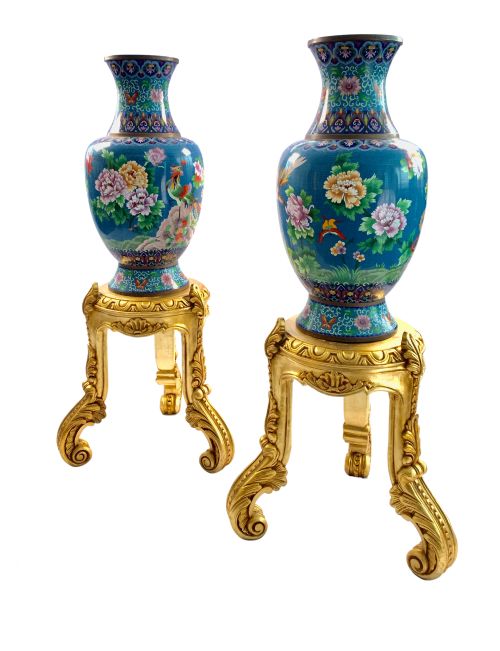

Vintage Urn Stand Pair
These vintage urn stand pair selections bring classical dignity to any corner, holding heavy planters or delicate candleholders with absolute poise.
Vintage Urn Stand Pair
A vintage urn stand pair comprises matched supports designed to elevate garden planters, decorative urns, and heavy jardinières above floor level. Buyers seeking a vintage urn stand pair encounter diverse forms spanning the nineteenth century through the nineteen-forties, including columnar pedestals and low tables.
Originating across British, French, and Chinese traditions, these pieces reflect varied aesthetic movements from Victorian garden design to Art Deco and Neoclassical styles. Buyers select these matched items to create visual symmetry within grand hallways, formal reception rooms, and garden terraces.
Materials and construction methods
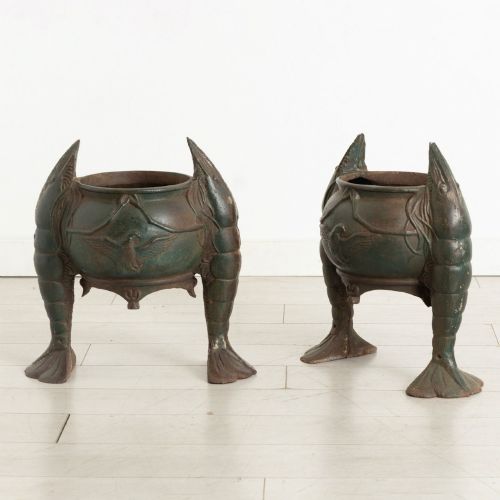
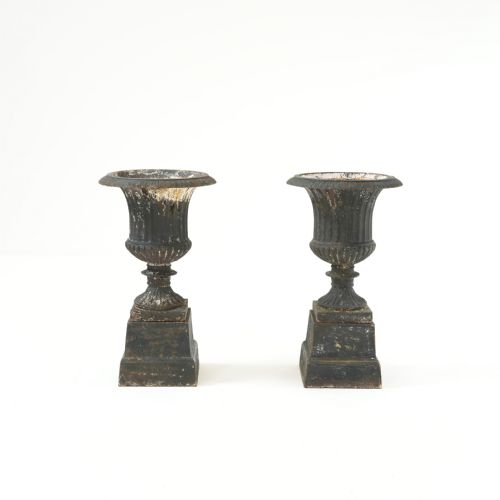
Cast iron and heavy terracotta provide durable foundations for garden urn stands, often moulded with botanical or animal motifs such as shrimp and campana shapes. These metal and clay bodies withstand outdoor exposure while offering substantial weight for stability.
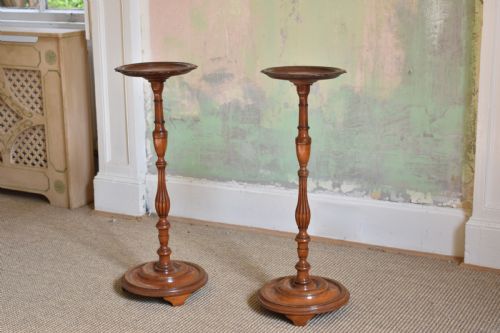
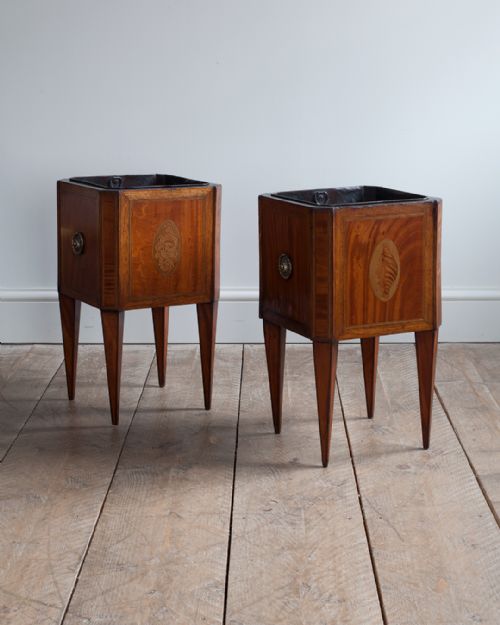
Fine cabinet timbers including satinwood, mahogany, and carved oak utilise traditional joinery, inlay, and painted decoration for interior display stands. Marble tops and column inserts introduce contrasting textures alongside cloisonné enamel and gilt finishes.
The available selection includes functional garden planters, indoor plant stands, and decorative pedestals featuring secret compartments.
Distinctions in quality and execution
Structural integrity depends on the original joinery, the preservation of painted or gilt surfaces, and the matching accuracy between the paired items. Finer pieces retain their original patination and specialised mechanisms, such as concealed compartments within carved wooden pedestals.
Dunfermline Clay Company·Coalbrookdale
The Vintage Urn Stand Pair Glossary
- Campana urn
- A bell-shaped vessel with a flared rim, frequently mounted upon a square plinth base. These classical forms dominate nineteenth-century garden ornament.
- Torchiere
- A tall stand or candlestick originally designed to hold a torch or light source. In later periods, these evolved into slender display pedestals for busts and vases.
- Jardinière
- An ornamental pot or stand specifically intended for holding live plants or floral arrangements. They appear in ceramic, cast iron, and inlaid cabinet woods.
- Plinth
- A heavy rectangular or square block forming the lowest base of a column, pedestal, or urn. It provides necessary stability for top-heavy decorative vessels.
- Cloisonné
- A decorative metalwork technique where enamel is applied within wire partitions soldered to a base. This method creates vibrant, multicoloured surface patterns.
Vintage Urn Stand Pair: Frequently Asked Questions
Where should I place these stands at home?
These paired stands work effectively when positioned symmetrically to frame architectural doorways, fireplaces, or large windows. Indoor wooden and marble versions suit reception rooms and hallways, while cast iron and terracotta variations anchor garden paths and conservatories.
Ensure the surface area and weight capacity of the stand safely accommodate the base of your chosen planter, urn, or decorative sculpture.
How do I date a nineteenth-century stand?
Dating relies upon examining material composition, tool marks, joinery techniques, and stylistic traits associated with specific reigns and design movements. Cast iron pieces often bear registration marks or foundry characteristics typical of the Victorian era.
Wooden examples reveal their age through timber selection, such as satinwood or mahogany, alongside hand-cut dovetails and traditional finishing methods like French polish.
Can iron urn stands stay outdoors year-round?
Cast iron and terracotta pieces are engineered for exterior environments and naturally weather when exposed to seasonal elements. Regular inspection for moisture accumulation helps preserve the structural integrity of outdoor metal and clay garden furniture.
Protecting unpainted iron surfaces with appropriate waxes or treatments prevents excessive oxidation during prolonged wet winter conditions.
What is the difference between a pedestal and a torchiere?
A pedestal is generally a sturdy, freestanding column or pillar designed primarily to support heavy items like marble busts or large garden urns. A torchiere is traditionally more slender and decorative, originating as a light stand before adapting into an elevated display piece.
Both forms provide vertical height variation, but pedestals prioritize weight-bearing capacity while torchieres emphasise refined silhouette and decorative detail.