

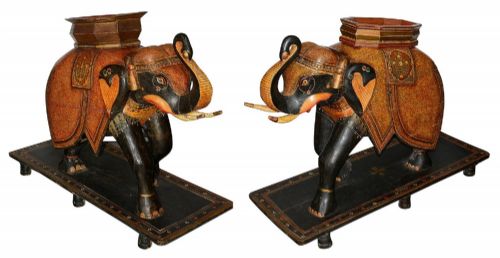


Sculpture Pedestal Pair
A sculpture pedestal pair holds a bust or bronze steady, elevating a classical form through height and proportion.
Sculpture Pedestal Pair
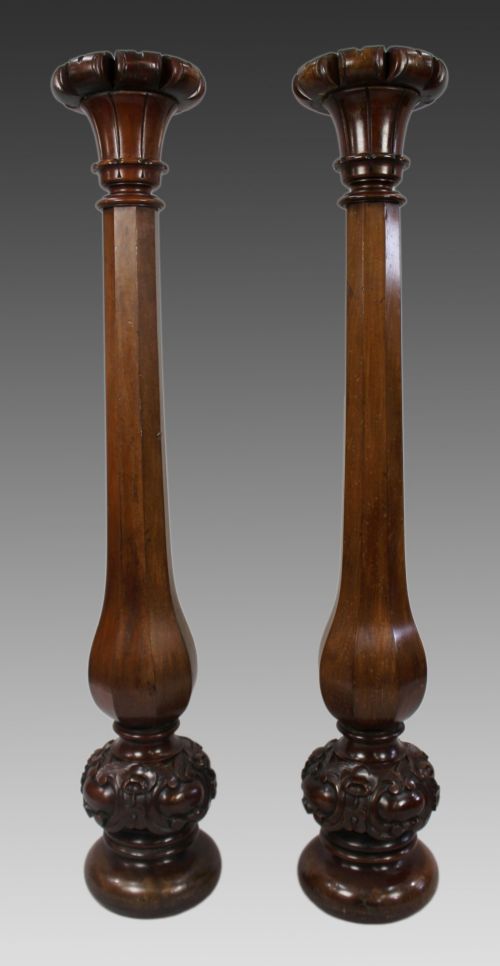
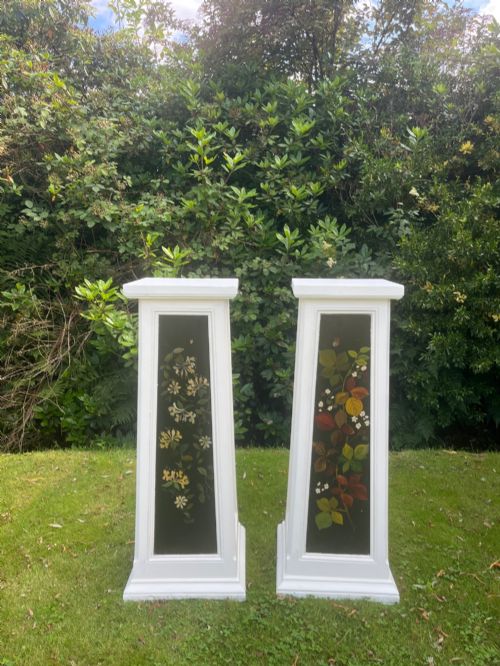
A sculpture pedestal pair serves to elevate display items such as busts, urns, and figures to eye level. These matching supports appear across various forms, functioning as columns, plinths, and plant stands.
Most examples originate in the nineteenth century, reflecting periods from the Victorian era back to eighteen hundred. Materials shift between timber, carved stone, and painted plaster according to the prevailing taste of each decade.
Neoclassical and Victorian designs dominate the available selection, often incorporating classical architectural details like fluting and capitals. Plain wooden columns stand alongside heavily carved or marble-topped variants.
Evaluating craftsmanship and materials
Quality rests upon the selection of raw materials, distinguishing solid marbles and select timbers like amboyna from painted plaster or basic softwood. Precision in hand-carved ornamentation and the weight of cast bronze components determine the tier of a piece.
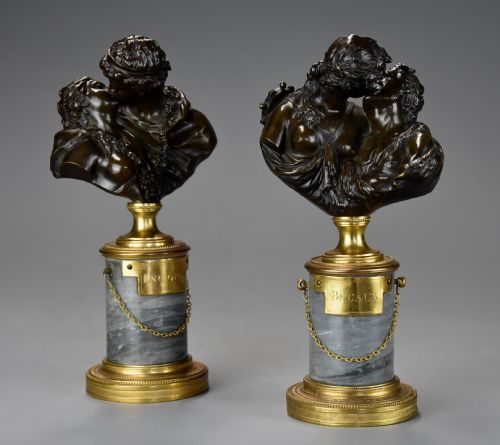
Subtlety in proportion and the integration of metal mounts, such as fire-gilded ormolu, separate standard workshop output from exhibition quality items.
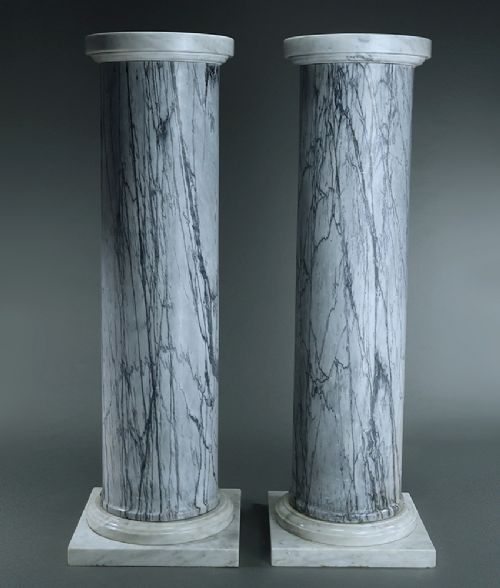
Listings feature woods including mahogany, satinwood, amboyna, and oak alongside marbles such as Bardiglio, Carrara, and green serpentine.
Jean Antoine Houdon·Valentino Besarel·F. De Luca·François Christophe Armand Toussaint
The Sculpture Pedestal Pair Glossary
- Column
- A vertical structural element with a base, shaft, and capital, frequently utilised as a freestanding display stand. Many marble and wood pedestals adopt this classical cylindrical profile.
- Torchiere
- A tall stand or floor lamp designed to hold a light source or figure aloft. These pieces often feature figural bronze supports or large standing torch bearers.
- Plinth
- A heavy flat block acting as the base for a statue, column, or bust. Plinths provide stability and visual weight at the bottom of a taller pedestal.
- Ormolu
- Gilt bronze ornamentation applied to furniture and stands. This material adds metallic contrast to marble columns and wooden display bases.
- Serpentine marble
- A distinctive green-hued decorative stone marked by mottled patterns resembling snakeskin. It appears frequently in nineteenth-century French and Italian column shafts.
Sculpture Pedestal Pair: Frequently Asked Questions
What items sit on a sculpture pedestal pair?
These supports hold decorative items such as marble busts, bronze figures, ceramic urns, and heavy floral arrangements. They elevate smaller display pieces to give them prominence within a room.
Heavier versions accommodate stone sculptures and large lamps, while taller torchieres lift light sources above head height to illuminate surrounding spaces.
How do I date a pedestal pair?
Dating relies on identifying timber species, marble varieties, and stylistic markers such as Neoclassical revival motifs or Victorian carving techniques. Nineteenth-century pieces often display hand-turned shafts or heavy brass and ormolu mounts.
Twentieth-century examples transition towards Art Deco obelisks or simpler painted plaster structures, reflecting the changing interior design aesthetics of the nineteen-thirties and forties.
Are these pairs intended for outdoor use?
Most antique wooden and alabaster pedestals require indoor placement to protect delicate veneers, gesso, and polished stone from moisture. Garden stone pieces and specific cast iron stands handle external environments adequately.
Checking the primary material clarifies whether a pair belongs inside a country house interior or out on a terrace.
What is the difference between a column and a plinth?
Columns feature a distinct vertical shaft, base, and capital modelled after classical architecture, often tapering upwards. Plinths generally take the form of shorter, heavier blocks designed to support statues or seated figures directly.
Both serve to elevate art objects, but columns emphasise height whilst plinths focus on foundational stability.