
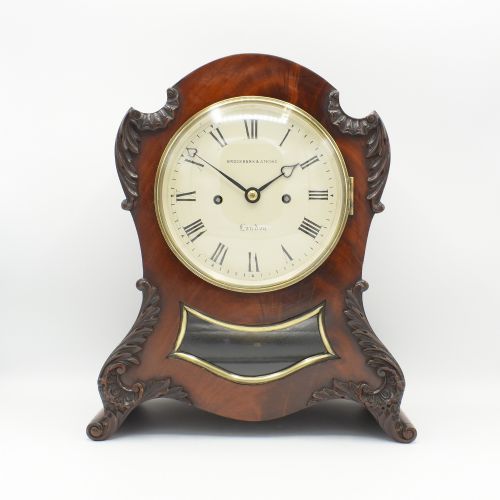
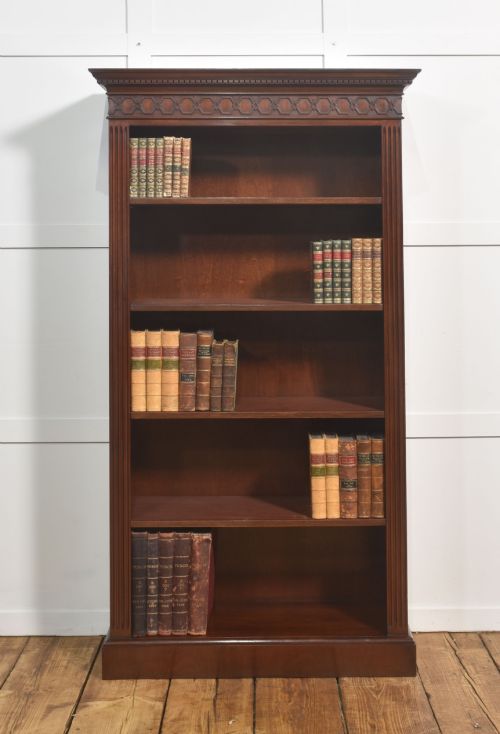
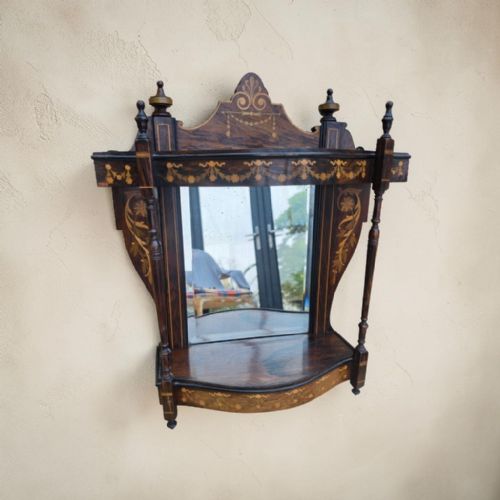
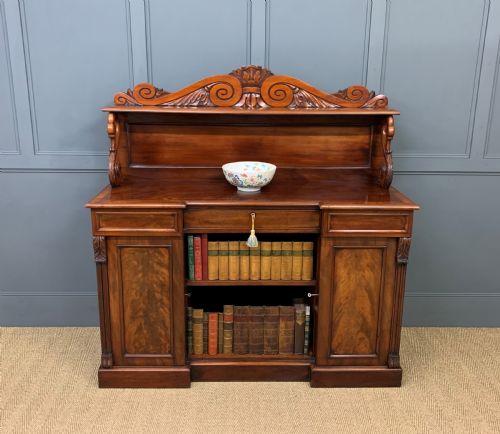
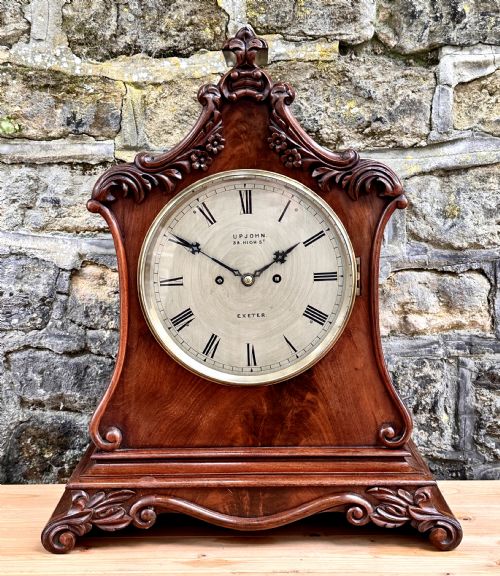
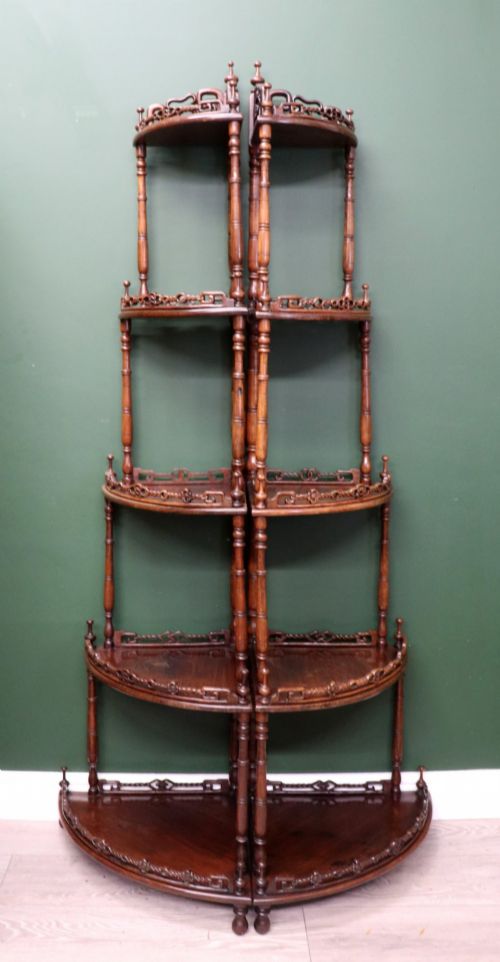
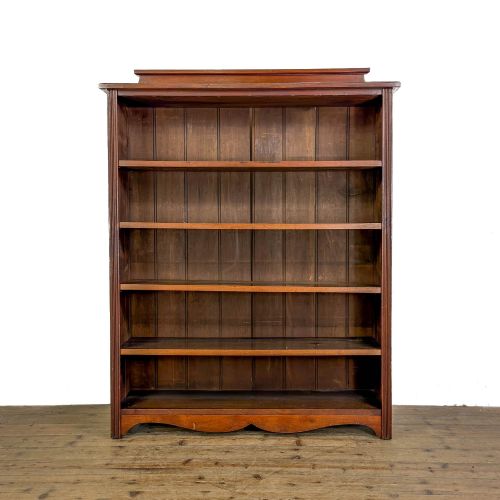
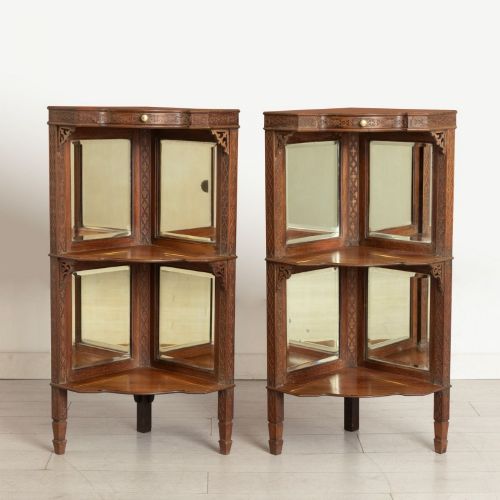
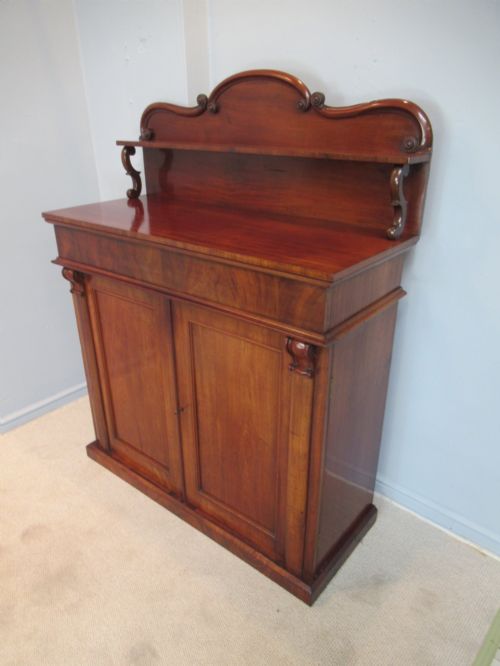


Victorian Carved Mahogany Shelf
A victorian carved mahogany shelf brings warmth and practical display space to a room, drawing the eye with rich timber grain and period detail.
Victorian Carved Mahogany Shelf
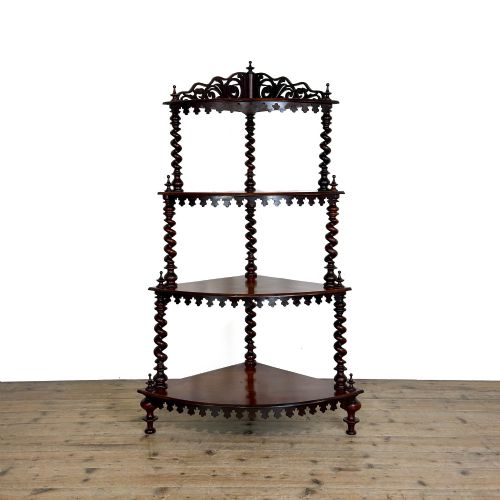
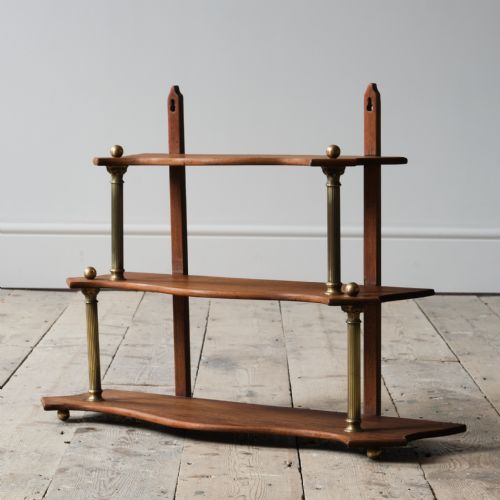
A victorian carved mahogany shelf typically appears as a wall hanging unit, a corner whatnot, or a tiered etagere designed for displaying small objects. These pieces bring functional storage and decorative woodwork into nineteenth-century domestic interiors.
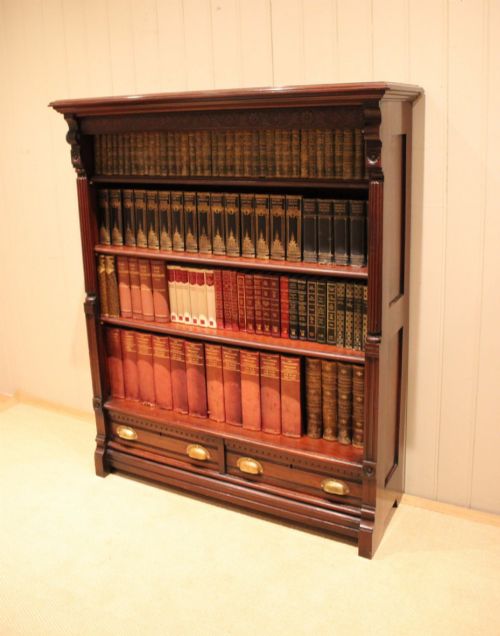
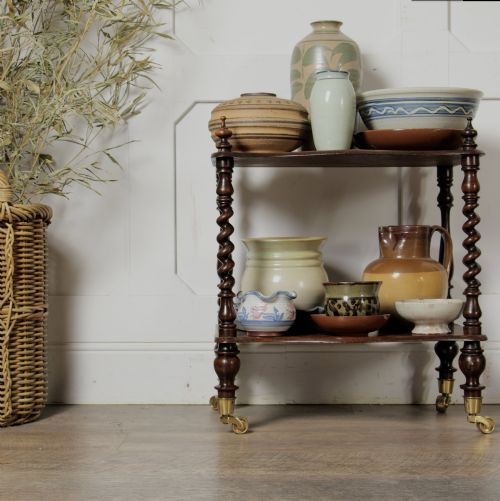
The selections found here span the broader Victorian era alongside related nineteenth-century periods, ranging from compact wall shelves to taller open bookcases and tiered stands. Wall-mounted versions and multi-tiered corner whatnots dominate the forms meeting this search phrase.
Makers and workshops of the period utilised durable timbers to construct sturdy ledges and partitions that could support books, ceramics, and decorative items. Buyers frequently encounter pieces incorporating turned supports, mirrors, and small drawers alongside the main display tiers.
Materials and construction
Makers built these shelves primarily using solid mahogany and flame mahogany veneer, sometimes combining pine or walnut for internal and secondary structures. Artisans also integrated brass hardware, glass panels, boxwood inlay, and marble shelves into more elaborate designs.
Joinery techniques involved precise fitting of boards and brackets to ensure wall-hanging units and standing whatnots remained stable under weight. Carved elements, barley twist supports, and moulded cornices required careful hand-tooling by nineteenth-century cabinet makers.
Some shelves spent their previous lives in nineteenth-century chemists and pharmacies, trading apothecary jars for modern ornaments.
Evaluating the pieces
Quality separates through the crispness of the hand-carving and the depth of the mahogany timber grain, particularly where flame veneer is present. Superior examples display tighter joinery, balanced proportions, and well-integrated secondary materials such as boxwood inlay or brass fittings.
The integrity of the original surfaces and the subtlety of decorative flourishes distinguish finer workshops from mass-produced or later replacement items. Balance in multi-tiered etageres and corner whatnots indicates the care taken during initial construction.
Edwards & Roberts·Robert Strahan·Piggin Norwich·Brockbanks & Atkins
The Victorian Carved Mahogany Shelf Glossary
- Whatnot
- An open set of tiered shelves designed for displaying ornaments, books, or small collections. These pieces often feature three or more levels supported by turned columns or uprights.
- Etagere
- A piece of furniture consisting of a set of open shelves for holding display items. Mid-nineteenth-century examples occasionally incorporate a single drawer beneath the tiers.
- Flame mahogany veneer
- A sheet of thin mahogany sliced from wood taken from the fork of the tree, producing a distinctive flickering flame pattern. Cabinet makers applied this to prominent surfaces for visual impact.
- Barley twist
- A carved wooden support or column turned in a spiral resembling a twist of barley sugar. This decorative detail frequently appears on nineteenth-century stands and whatnots.
- Corbel
- A structural piece of stone or wood projecting from a wall to carry a weight. In shelf design, carved wooden corbels act as decorative wall brackets supporting the ledge.
Victorian Carved Mahogany Shelf: Frequently Asked Questions
How do I hang a wall shelf safely?
Wall-hanging shelves require secure fixings into wall studs or appropriate masonry anchors to bear the combined weight of the timber and displayed objects. Checking the structural integrity of the backboards and hanging brackets before mounting ensures safe installation.
Distributing weight evenly across the tiers prevents undue strain on the nineteenth-century joints and fixings. Consulting a professional installer is advisable for heavier mahogany and glass units.
What is the difference between a whatnot and an etagere?
A whatnot is typically a multi-tiered standing set of shelves designed for general display and often built to fit into corners. An etagere serves a similar open display purpose but frequently includes drawers or more refined decorative framing.
Both forms emerged strongly during the nineteenth century to serve the Victorian desire for exhibiting ornaments and curiosities. The terms are sometimes used interchangeably in historical listings, though etagere often implies a lighter, more ornamental construction.
How do I care for mahogany shelves?
Maintaining nineteenth-century mahogany involves dusting regularly with a soft, dry cloth and avoiding silicone-based polishes that build up over time. Applying occasional quality wax helps nourish the timber grain and preserve the finish.
Keeping wooden furniture away from direct sunlight and strong heat sources prevents the mahogany veneer from drying out or splitting. Stable room humidity protects both the solid timber and any delicate boxwood inlay.
Where were these shelves placed in a Victorian home?
These units found homes in libraries, parlours, and bedrooms as versatile surfaces for books, clocks, and personal ornaments. Corner whatnots made efficient use of awkward domestic spaces, while wall-hanging shelves saved floor area in smaller rooms.
Larger open bookcases and chiffonier variations stood against main walls in living spaces for heavy volumes and display collections. Hall stands with shelves greeted visitors near entryways for everyday convenience.