

Antique Tiered Etagere
An antique tiered etagere provides open display space through stacked shelves, bringing architectural lightness and practical surface area to a room.
Antique Tiered Etagere
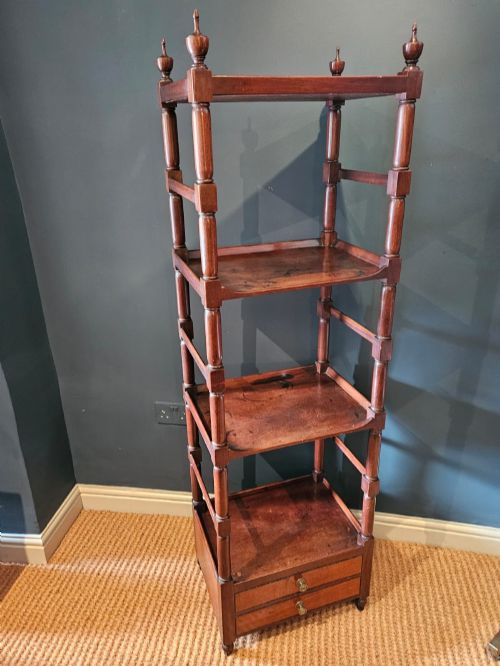
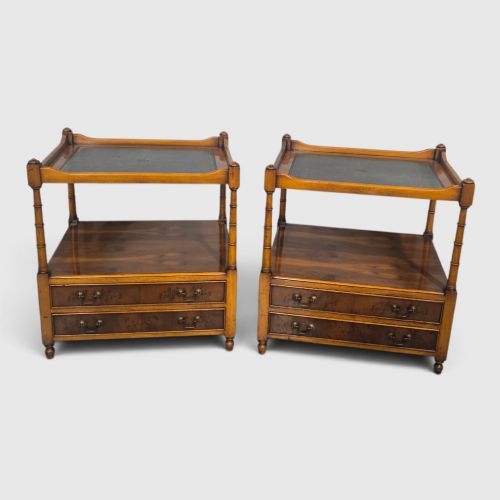
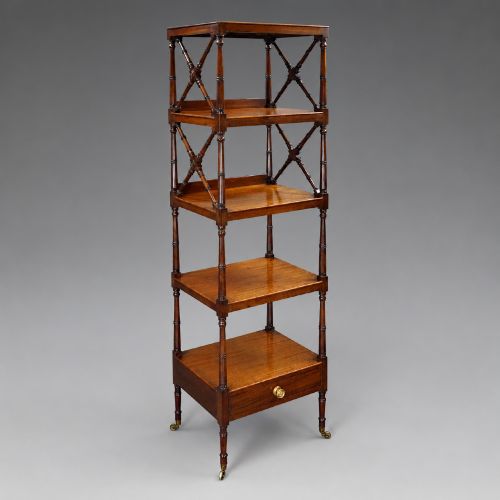
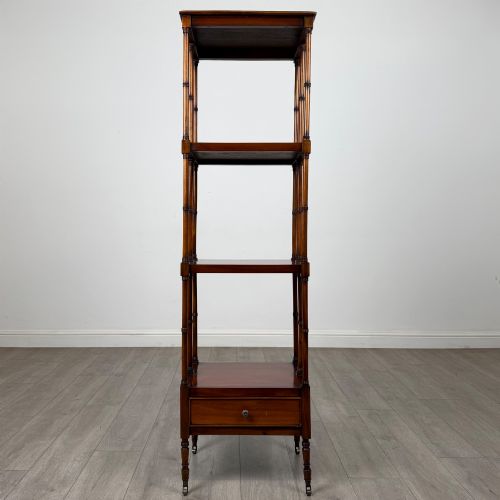
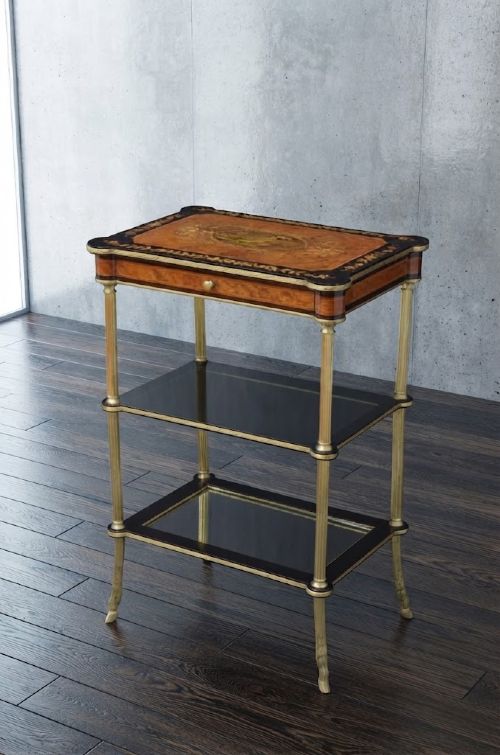
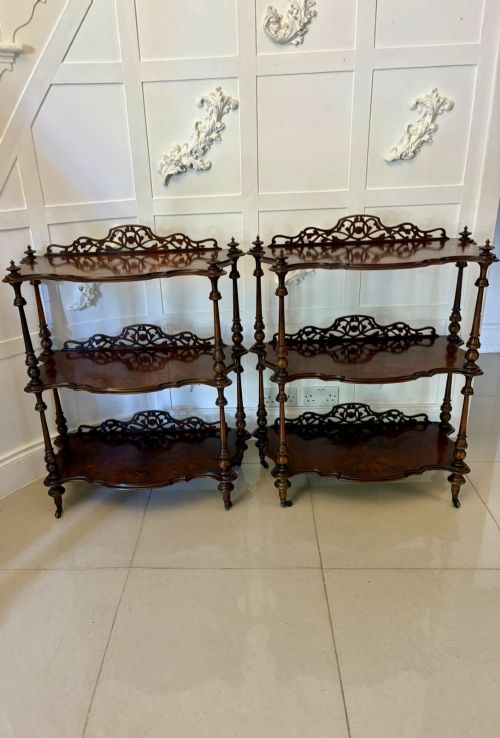
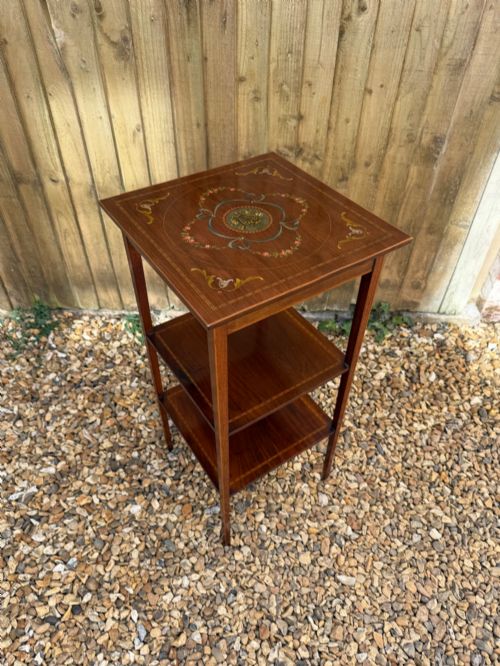
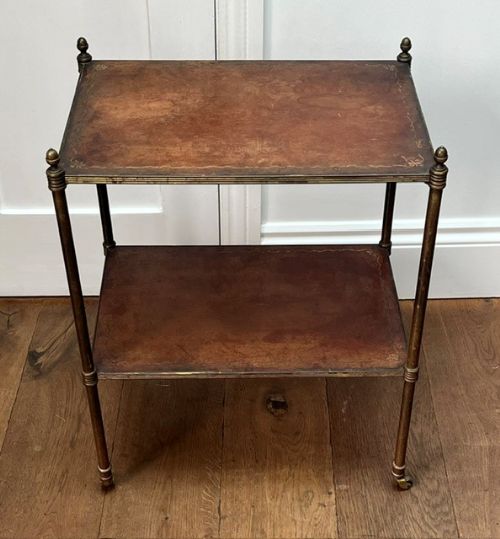
An antique tiered etagere, often encountered under related designations such as the whatnot or display shelves, is defined by its vertically tiered surfaces designed for the display of ornaments, books, and smaller objects. The examples available here span primarily from the Georgian and Regency eras through the Victorian period, Edwardian decades, and into the early twentieth century.
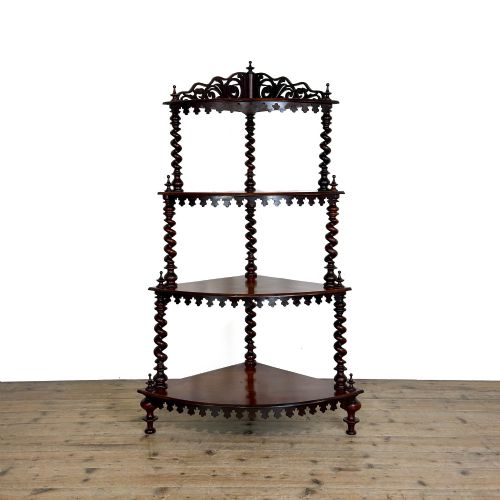
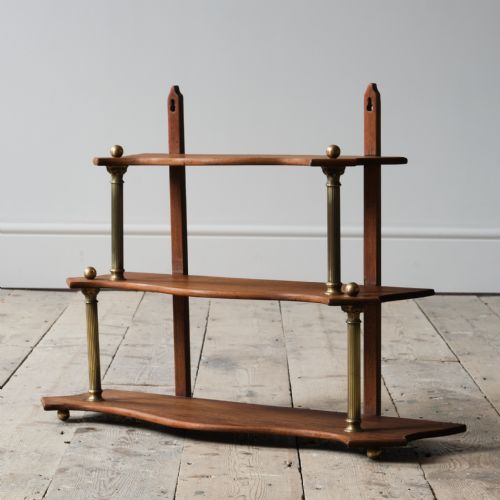
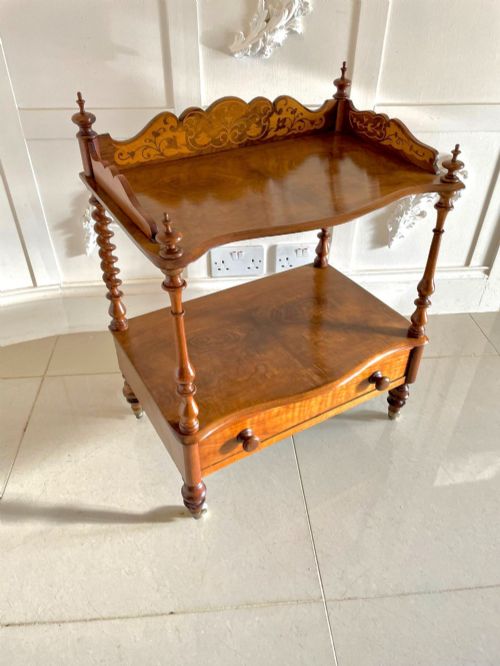
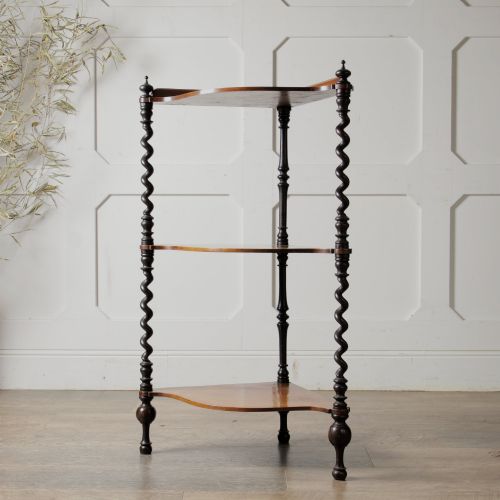
Buyers will find that the forms vary significantly between freestanding multi-tiered units, corner etageres engineered to utilise neglected room junctions, and wall-hanging display shelves. Many pieces integrate turned supports, barley twist columns, or slender uprights to divide the tiers, creating an open silhouette that distinguishes them from traditional closed cabinets.
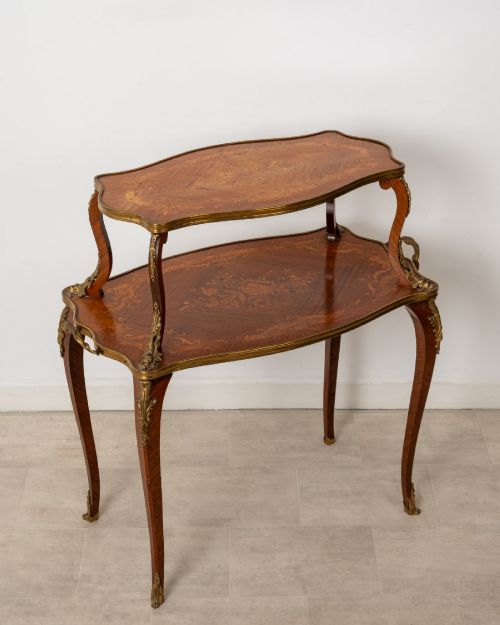
Originating largely from British workshops, though occasionally displaying Continental influences such as French styling or Anglo-Indian padauk construction, these pieces reflect changing domestic habits. They served variously as bedside tables, music stands, side tables, and dedicated display furniture in period interiors.
Materials and Construction Techniques
Cabinetmakers relied heavily on dense hardwoods, employing mahogany, walnut, burr walnut, rosewood, and kingwood as primary structural materials. These timbers were frequently utilised both for their solid strength in upright supports and as decorative veneers on the prominent surfaces of the tiers.
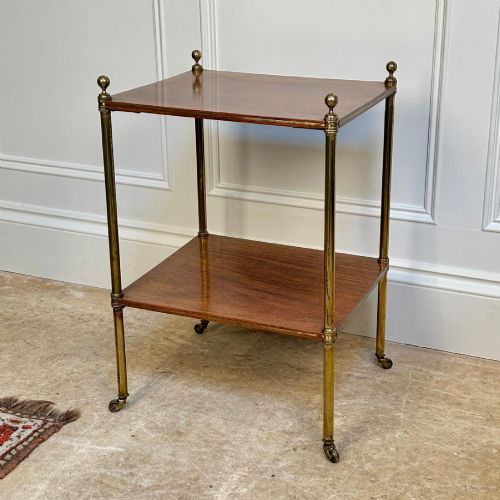
Detailing was achieved through specialised decorative techniques including marquetry, parquetry, ebonised finishes, and parcel gilding. Metal components such as brass galleries, rods, and casters were integrated to add functional utility and structural contrast to the timber framework.
Materials recorded across the inventory include solid mahogany, burr walnut, rosewood, brass, and ebonised wood.
Distinctions in Quality and Execution
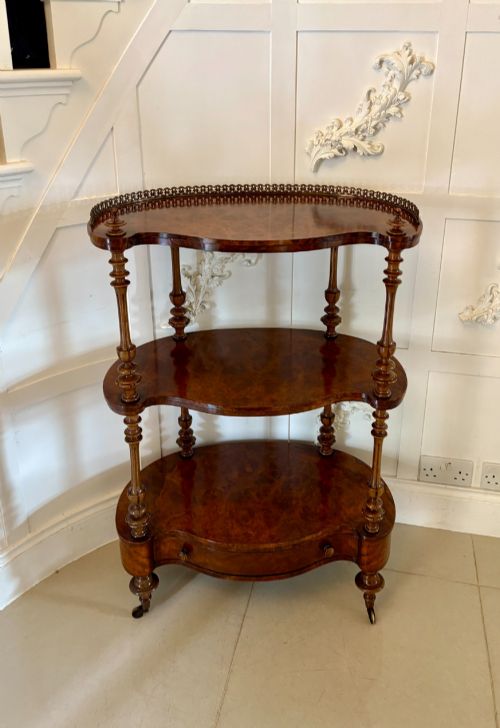
Quality in an antique tiered etagere rests fundamentally on the selection of timber and the precision of the joinery connecting the tiers to the upright supports. Superior examples exhibit carefully chosen veneer grains, such as burr walnut or figured mahogany, matched across the shelves rather than relying on plain secondary woods.
The refinement of turned or carved elements, the crispness of inlaid marquetry or parquetry work, and the integration of substantial brass fittings rather than plated base metals separate standard utility furniture from pieces of exceptional workshop execution.
Gillows
The Antique Tiered Etagere Glossary
- Etagere
- A piece of furniture consisting of a set of open shelves for displaying small objects or ornaments. The form gained popularity in the nineteenth century for domestic display.
- Whatnot
- A nineteenth-century term for a multi-tiered open shelving unit used for books or ornaments. It shares a nearly identical function with the etagere.
- Marquetry
- Decorative veneer work forming pictures or geometric patterns using various woods. Craftsmen cut thin slices of tinted or naturally coloured timbers to fit precisely into a prepared ground.
- Parquetry
- A geometric mosaic of wood pieces used for decorative floors and furniture surfaces. It creates a repeating pattern across the top tier of a table or cabinet.
- Burr walnut
- Wood taken from a growth on a walnut tree yielding complex, swirling grain patterns. It was highly prized by Victorian cabinetmakers for high-status display furniture.
Antique Tiered Etagere: Frequently Asked Questions
What is an antique tiered etagere used for?
These pieces were originally designed to hold books, ceramics, and decorative ornaments in principal reception rooms. Their open tiered structure allowed owners to exhibit collections without the visual weight of enclosed cabinetry.
In modern interiors, they continue to serve as display units or side tables. Their slender footprint makes them particularly useful for holding lamps or small decorative objects in restricted spaces.
How do I distinguish a Victorian whatnot from a Georgian one?
Georgian pieces, dating from the late eighteenth and early nineteenth centuries, typically feature restrained lines, straight mahogany supports, and precise architectural proportions. They often reflect neoclassical design influences.
Victorian examples from the mid-to-late nineteenth century tend toward more ornate detailing, utilising burr walnut, rosewood, or ebonised wood alongside turned columns, barley twists, and elaborate inlay work.
Are corner etageres stable?
Corner etageres are engineered with right-angled shelf profiles that naturally brace against two adjoining walls. This geometry provides inherent structural stability despite the vertical height of the stacked tiers.
When placed correctly into a room corner, the weight distribution across the multiple shelves keeps the unit secure, though taller examples benefit from being positioned on level flooring.
What woods were commonly used for these shelves?
Cabinetmakers predominantly selected rich hardwoods such as mahogany and walnut for their strength and fine grain. Rosewood and kingwood were also utilised for more decorative or high-status commissions.
In addition to solid timbers, decorative veneers like burr walnut were applied to display surfaces to create visual movement. Secondary woods were occasionally painted or ebonised to imitate more expensive materials.