
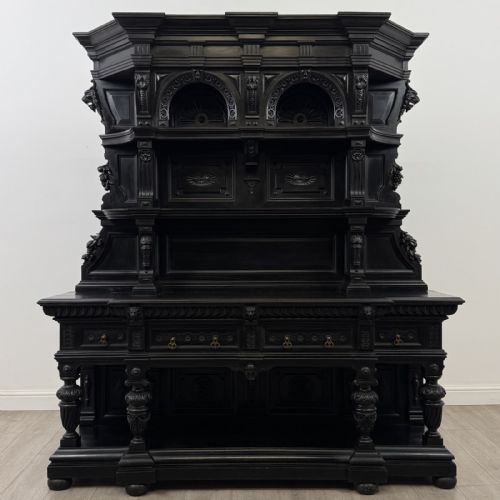
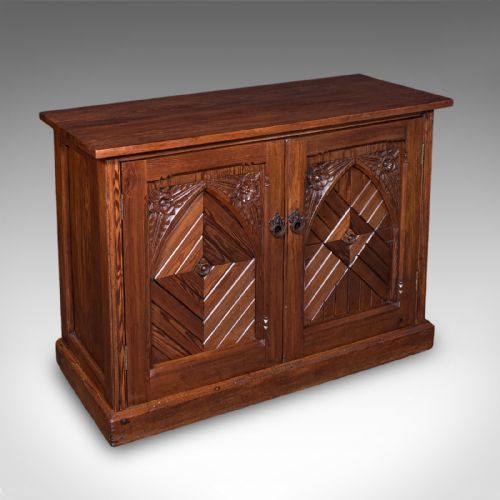
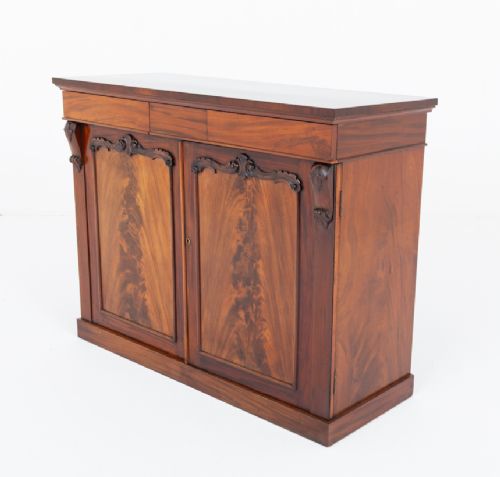
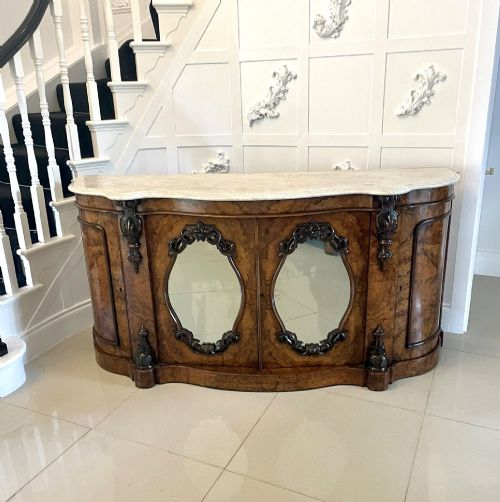
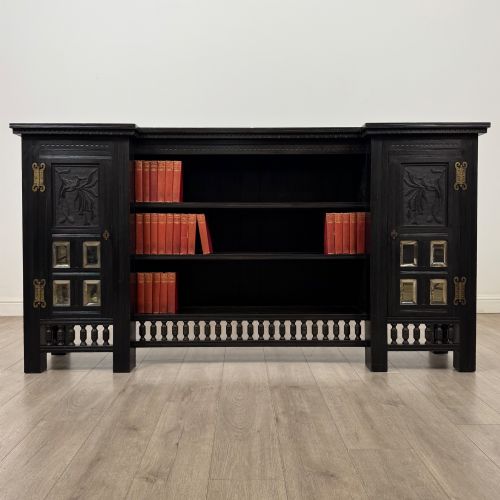
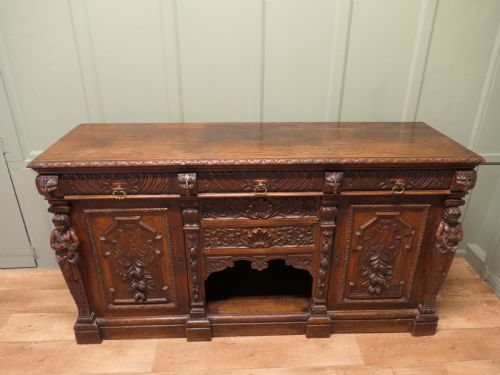
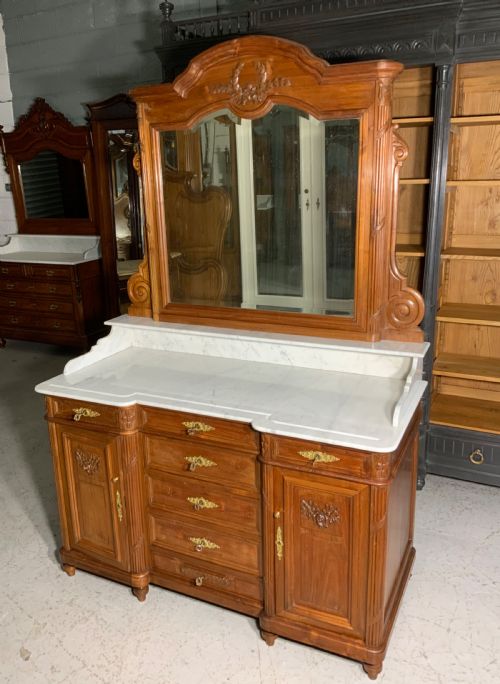
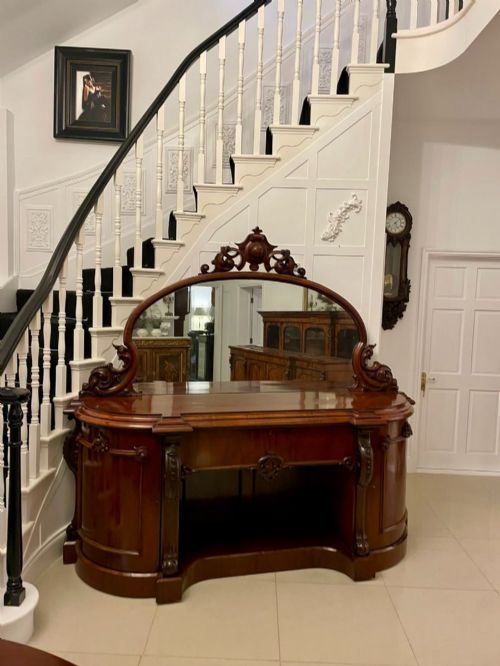
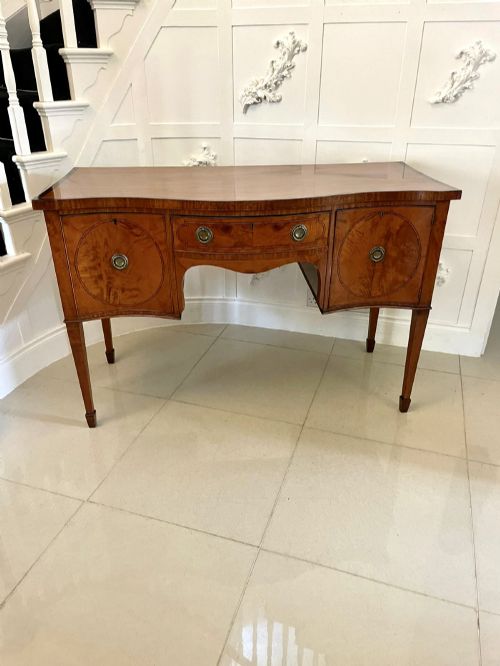
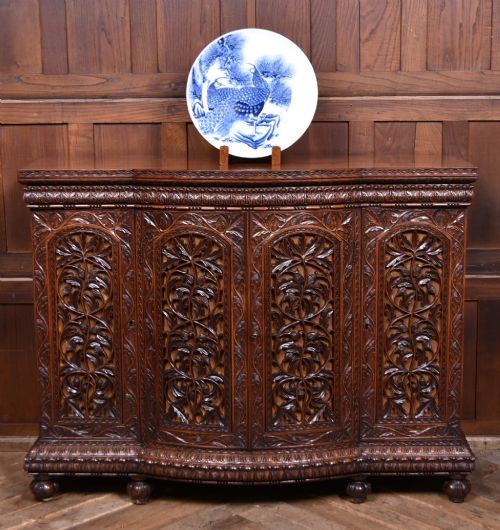
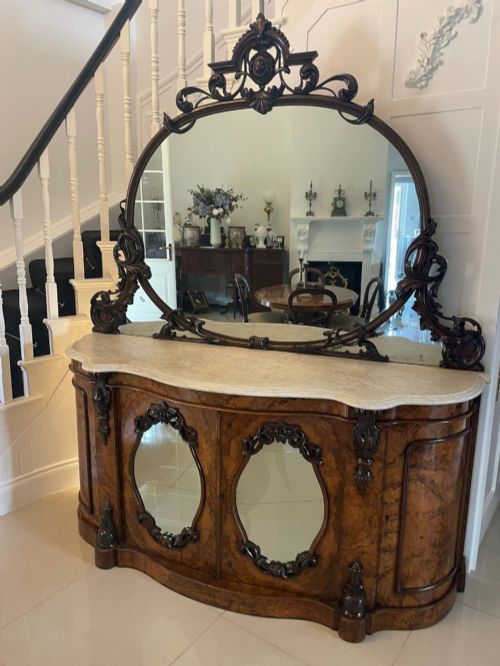
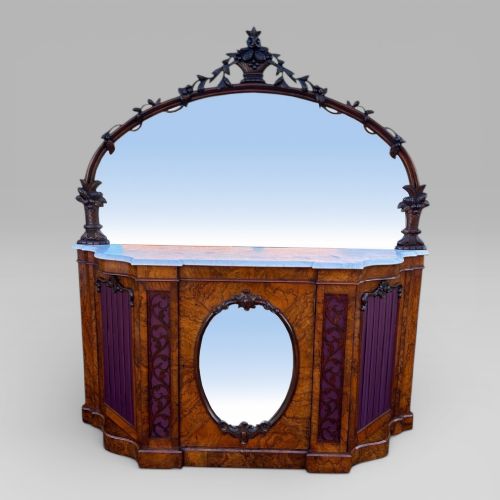
Victorian Carved Credenza Cabinet
These victorian carved credenza cabinet pieces bring grand nineteenth-century storage and display into a room through rich timber and ornate carving.
Victorian Carved Credenza Cabinet
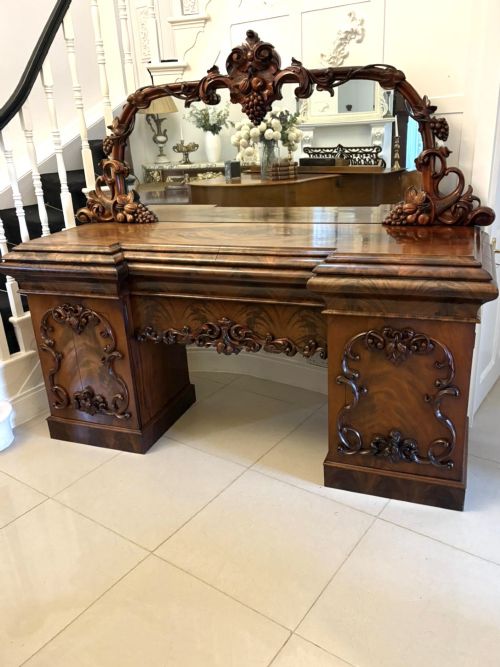
A victorian carved credenza cabinet combines the enclosed storage of a sideboard with the display functions of a cabinet or chiffonier, originating primarily from the nineteenth century. These forms encompass mirror-backed credenzas, marble-topped servers, and robust oak cupboards designed for formal entertaining and dining rooms.
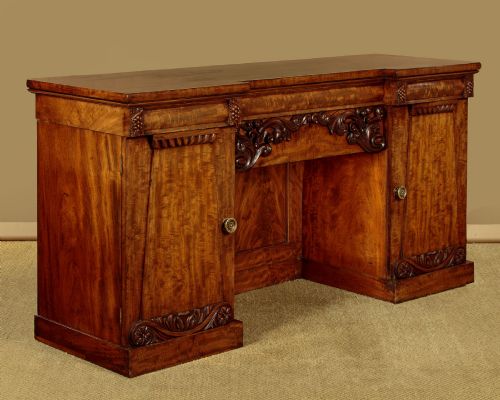
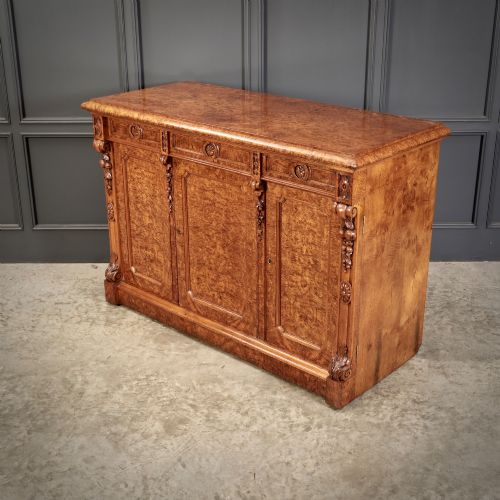
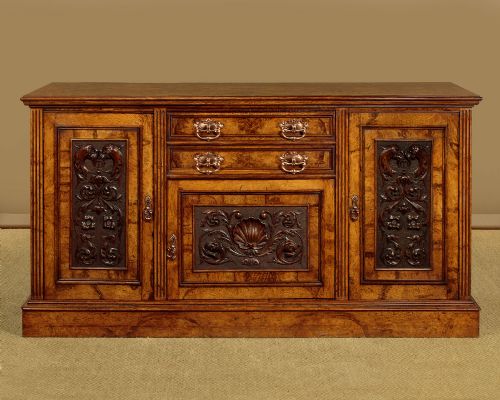
The pieces appearing on this page span the Victorian period alongside earlier nineteenth-century examples, incorporating revival styles such as Gothic Revival, Renaissance Revival, and Jacobean Revival. Buyers encounter heavy mahogany and burr walnut constructions alongside specialised timbers like pollard oak, rosewood, and teak.
Object types frequently overlap in the listings, connecting sideboards, chiffoniers, and bookcases into versatile low-profile cabinets. The typical survival from this era relies on substantial timber framing intended to anchor a grand interior layout.
How they were made
Cabinet makers utilised dense primary timbers such as mahogany, oak, and walnut, frequently applying figured veneers like burr walnut, flame mahogany, and satinwood to prominent surfaces. These woods provided the structural integrity required for heavy doors, tiered shelving, and wide mirror frames.
Surface ornamentation relied on deep hand-carving executed directly into the solid timber or onto applied mouldings, bringing out botanical motifs and architectural revival details. Selected pieces integrated inset marble tops, bevelled mirror glass, and cast brass hardware to finish the composition.
Listings feature woods spanning mahogany, burr walnut, oak, satinwood, rosewood, and teak across Victorian periods.
What varies in quality
Quality rests in the selection of figured veneers and the crispness of the hand-carved details across doors and pediments. Finer examples display symmetrical grain patterns, particularly in burr walnut or flame mahogany, paired with deeply undercut carvings rather than shallow mouldings.
Construction methods distinguish standard utility items from top-tier cabinet work, visible in the thickness of drawer linings, the integration of solid marble slabs, and the stability of large mirror-back frames. Superior execution ensures that heavy doors hang square and structural joints remain rigid under daily use.
Shoolbred & Co.
The Victorian Carved Credenza Cabinet Glossary
- Credenza
- A low cabinet traditionally used for serving food or displaying decorative objects, often featuring central cupboards flanked by glass-fronted side sections. In nineteenth-century British interiors, these pieces frequently incorporated mirrored backs.
- Chiffonier
- A compact sideboard or cabinet equipped with enclosed lower cupboards and sometimes a raised shelf or mirror tier on top. This form evolved to suit smaller reception rooms.
- Burr walnut
- A decorative timber veneer harvested from the gnarled growth on walnut trees, prized for its swirling, highly figured grain patterns. Cabinet makers applied it to the principal display doors of high-status furniture.
- Gothic Revival
- An architectural and decorative style drawing inspiration from medieval design, characterised by pointed arches, tracery, and heavy carved oak. Pieces in this taste often display severe vertical proportions.
- Mirror-back
- A wooden superstructure fitted with a large plate glass mirror, positioned above the main surface of a sideboard or credenza. This addition reflected light and displayed decorative porcelain from multiple angles.
Victorian Carved Credenza Cabinet: Frequently Asked Questions
Where did these cabinets go in a house?
These large storage units typically stood against the main wall of a dining room or formal reception space, holding heavy dinner services, silver, and glassware.
The flat top surface served as a serving station during meals or a display area for decorative ornaments and lamps.
How do I clean a burr walnut surface?
Dust the timber regularly with a dry, soft cloth to prevent grit from accumulating in the swirling grain patterns.
Apply a traditional beeswax polish sparingly every few months to feed the wood and maintain a gentle sheen without building up sticky layers.
How do I tell an early Victorian piece apart?
Early Victorian examples frequently employ dense flame mahogany or rosewood timbers with simpler architectural lines before the heavier revival carving styles took hold around mid-century.
Interior construction details, such as hand-cut dovetails on drawer boxes, help confirm the nineteenth-century production date.
Can a mirror-back cabinet fit in a modern room?
These pieces require substantial wall space and careful placement to support their heavy proportions and tall mirror superstructures.
They work best against solid masonry walls in rooms with high ceilings where their grand scale can anchor the interior.