

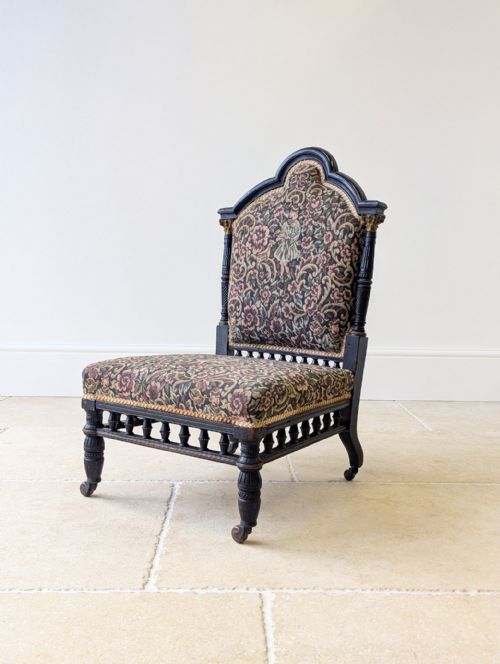
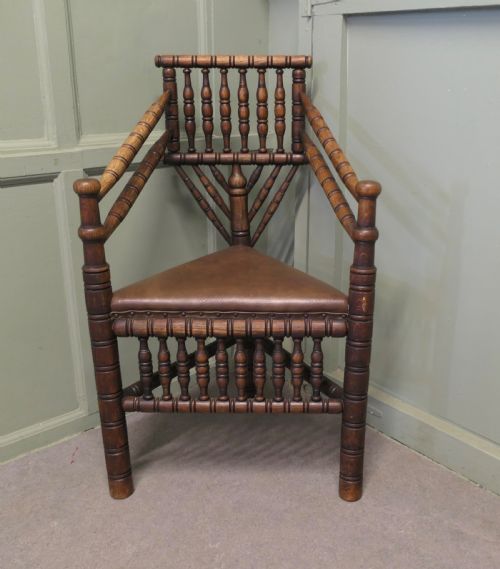


Victorian Carved Corner Chair
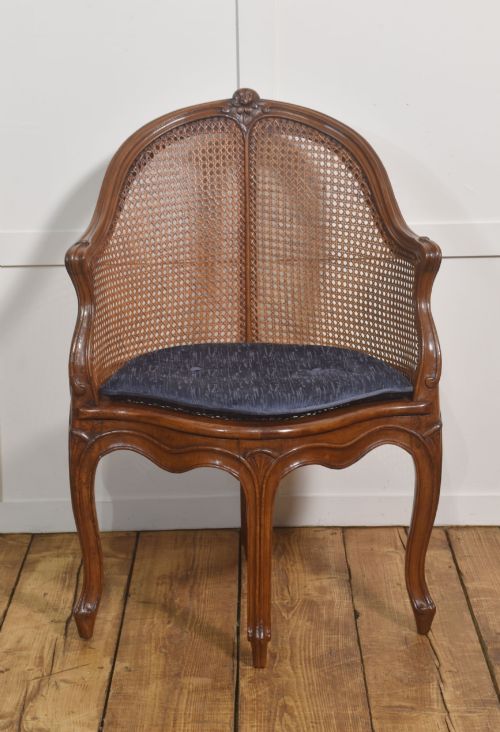
A victorian carved corner chair sits diagonally into a room, offering a curved backrest and a square seat suited for tighter spaces.
Victorian Carved Corner Chair
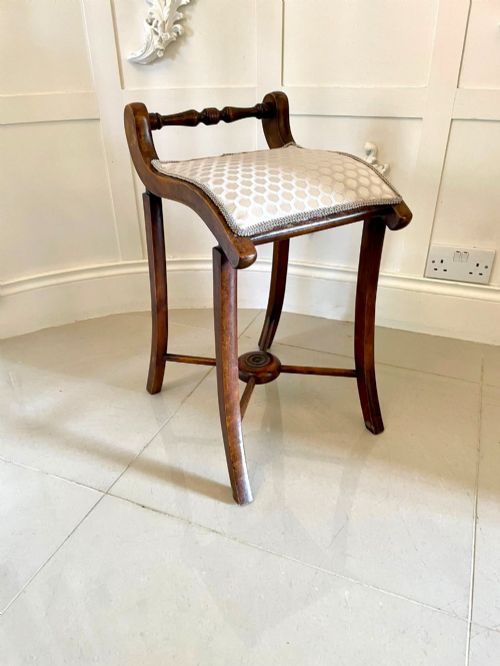
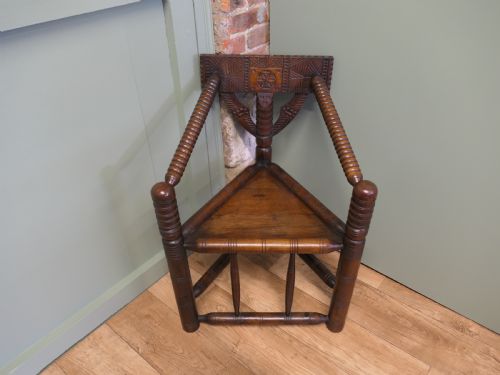
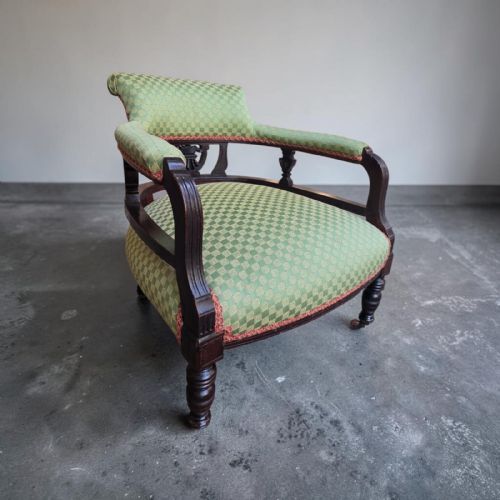
A victorian carved corner chair combines a diagonal footprint with deep relief woodwork executed across the back rail and supports. These pieces appear frequently in oak and walnut, spanning the nineteenth century alongside related corner armchair and turner chair formats.
Makers often drew upon revival idioms, producing examples influenced by Gothic, Italian, and Anglo-Moorish styles. The resulting forms range from sturdy panelled seating to slender frames featuring inlaid marquetry or turned spindles.
Materials and Techniques
Cabinetmakers utilised dense timbers such as oak, walnut, rosewood, and mahogany to provide a stable foundation for intricate hand-carving. Grain patterns were selected to complement the curved lines of the horseshoe-shaped backrest.
Construction frequently relied on pegged mortise and tenon joints, while decorative surfaces integrated carved foliage, turned bobbin elements, and occasional brass fittings or upholstered seat pads.
Victorian Carved Corner Chair Retail Price Guide 2026
Typical asking prices for victorian carved corner chair among the pieces listed under this phrase on Sellingantiques today, from the lower quarter to the upper quarter. They describe what is for sale here now, not the wider market.
Several pieces blur the line between seating and architecture, incorporating miniature spandrels normally reserved for cathedral roofs.
Judging Quality
The standard of a victorian carved corner chair depends on the crispness and depth of the timber carving. Sharp detail in the relief work indicates skilled hand-tooling rather than hurried mechanical production.
Structural integrity also separates examples, seen in tight joints and the preservation of original timber patination. Pieces retaining their structural rigidity without excessive repair command greater interest.
S&H Jewell·Liberty and Co
The Victorian Carved Corner Chair Glossary
- Corner chair
- A seating form designed to fit into the corner of a room, possessing a diagonal plan and a continuous curved backrest supported by turned pillars.
- Turner's chair
- An armchair constructed predominantly from turned wooden spindles and members, often associated with traditional joinery methods.
- Marquetry
- The art of applying decorative veneer pieces to a structure to form geometric or floral patterns.
- Gothic Revival
- An architectural and decorative style drawing inspiration from medieval ecclesiastical design, visible in pointed arches and tracery motifs.
Victorian Carved Corner Chair: Frequently Asked Questions
Where do you put a corner chair?
A victorian carved corner chair fits neatly into empty room corners where standard straight chairs appear awkward. The diagonal orientation makes efficient use of floor space.
They also function well in hallways or bedrooms as occasional seating that does not obstruct pathways.
How do I identify a Victorian piece?
Examination of the timber density, joint construction, and carving style helps determine the period. Nineteenth-century examples often display hand-carved details and heavy timbers such as oak or walnut.
Secondary woods and fastener types further assist in confirming the nineteenth-century manufacturing date.
Are these chairs comfortable to sit in?
The supportive horseshoe backrest provides a secure seating position suited for reading or writing at a desk. Some variants include upholstered pads for additional comfort.
Because they were designed primarily for formal parlours, they prioritise upright posture over deep lounging.
What is a turner's chair?
A turner's chair relies on geometric arrangements of turned wooden spindles rather than flat carved panels. This traditional format dates back centuries but saw revivals during the Victorian era.
The sturdy construction utilises interlocking turned components to form the arms, legs, and back.