




Victorian Carved Cameo Pin
A victorian carved cameo pin offers miniature relief sculpture worn upon the lapel, crafted from layered shell, hardstone or lava.
Victorian Carved Cameo Pin
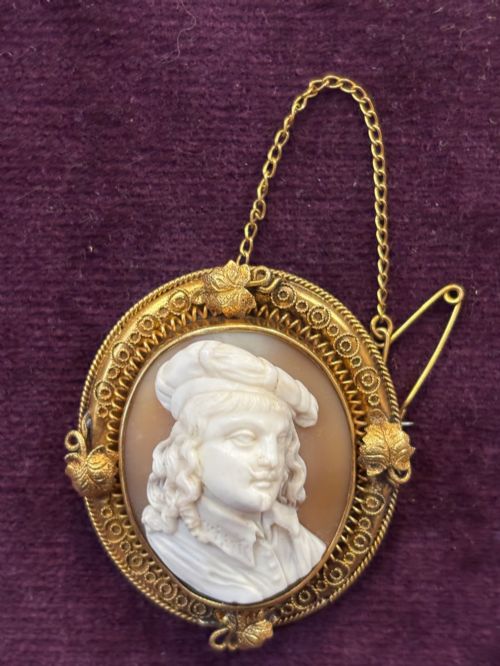
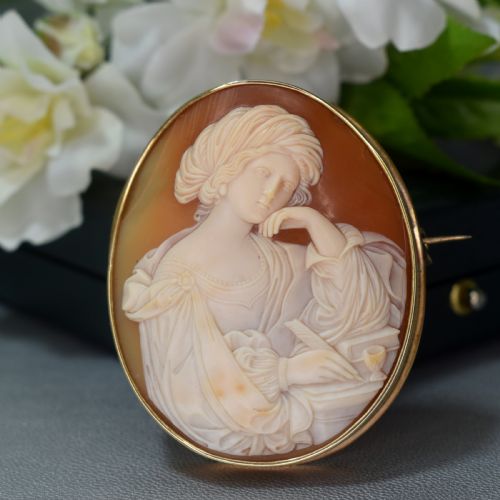
A victorian carved cameo pin combines relief carving with wearable metalwork, most frequently taking the form of a brooch pinned to clothing. These pieces span the nineteenth century, drawing on classical subjects such as deities, mythological figures and historical portraits.
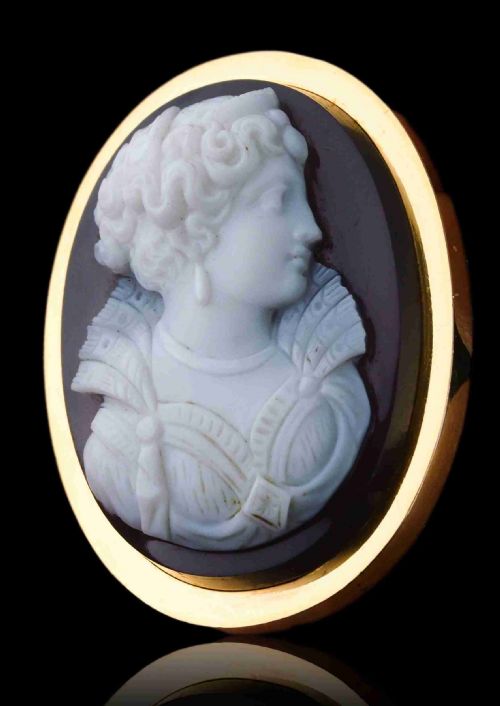
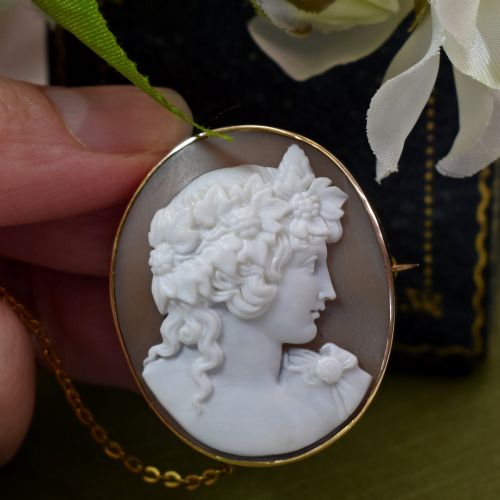
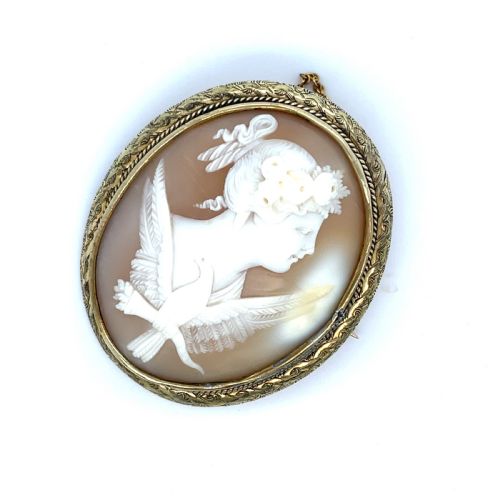
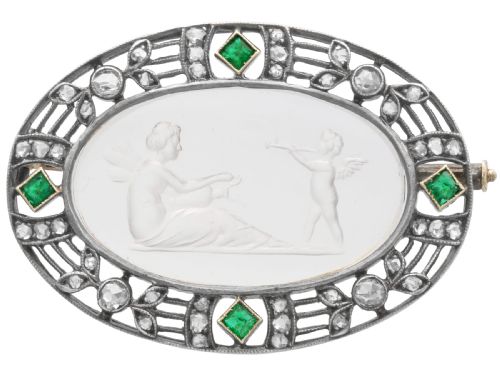
The most common versions met on this page are shell and hardstone cameos mounted in yellow gold, often bearing profiles of classical figures like Aphrodite, Flora or Psyche. The framing ranges from simple bezels to ornate filigree and diamond-set gold or silver mounts.
Originating largely from Italian workshops or French centres, these jewels reflect both domestic Victorian taste and the souvenirs brought back from Grand Tour travels. They function simultaneously as personal adornment and miniature portraits carved by skilled hands.
How they were made
Carvers worked primarily with natural shells possessing contrasting colour layers, such as conch or helmet shell, cutting away the lighter top stratum to leave a crisp white figure against a darker ground. Hardstone alternatives like agate utilised banded chalcedony, while volcanic lava and coral offered alternative sculptural mediums.
The resulting carved plaques were secured within metal mounts fashioned from gold of varying purities, pinchbeck or silver. Goldsmiths framed these reliefs using twisted wire, granulation, filigree or diamond clusters to complete the brooch structure.
Current listings feature shell, hardstone, agate, lava stone, coral, silver and gold ranging from 9ct to 20ct.
What varies in quality
Depth of relief and crispness of anatomical detail separate standard pieces from superior examples, where the carver utilises the natural strata of the shell or stone to create subtle shadow and perspective. The subject matter itself also plays a role, with mythological narratives carrying more complexity than simple female profiles.
The metal mount provides another measure of standard, shifting from simple pinchbeck or lower carat gold to heavy 18ct frames enhanced with gemstones, diamonds or intricate wirework. Matching sets, such as brooches accompanied by earrings, represent higher tiers of craftsmanship.
The Victorian Carved Cameo Pin Glossary
- Cameo
- A method of carving an object such as an engraved gem, item of jewellery, or vessel. In these pieces, it denotes a raised relief design carved from layered material.
- Hardstone
- A term for semi-precious stones used in carving, including agate and chalcedony. These materials offer greater durability and sharper detail than shell.
- Grand Tour
- A traditional trip of Europe undertaken by upper-class European young men of sufficient means. Many carved lava and shell cameos were acquired during these travels in Italy.
- Pinchbeck
- An alloy of copper and zinc resembling gold, invented by Christopher Pinchbeck in the eighteenth century. It appears in affordable Victorian jewellery mounts.
- Filigree
- Ornamental work of fine wire, usually of gold or silver, formed into delicate tracery. This technique decorates the metal frames surrounding many pins.
Victorian Carved Cameo Pin: Frequently Asked Questions
What materials are cameos carved from?
Carvers utilised natural shells with contrasting strata, banded agate hardstones, volcanic lava and coral.
These materials dictated the depth of the relief and the resulting colour contrast of the finished piece.
How were these pins worn?
Victorian women pinned them to collars, bodices, shawls and lapels as decorative ornaments.
They functioned both as everyday accessories and as miniature works of art displayed on formal attire.
Are these pieces Italian or English?
Many carved shells and lava stones originated in Italian workshops catering to travellers on the Grand Tour.
British and French goldsmiths frequently supplied the precious metal frames used to mount these imported carvings.
How do I identify the subject?
Subjects typically draw from classical mythology, depicting figures such as Flora, Psyche, Cupid, Demeter or historical personages.
Recognising specific attributes like wheat for Demeter or wings for Cupid reveals the identity of the carved figure.