
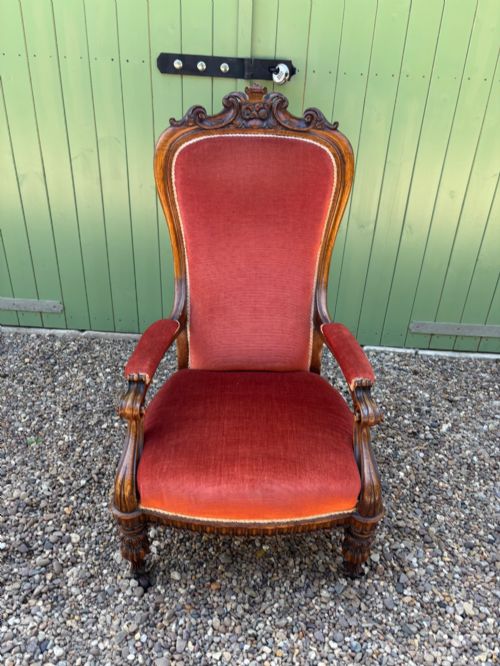
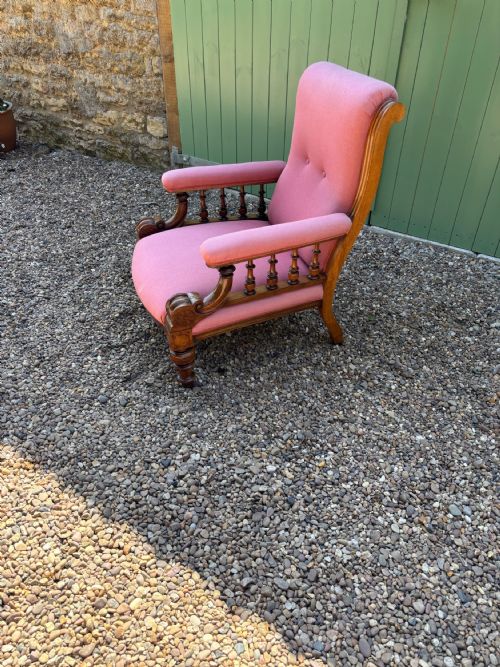
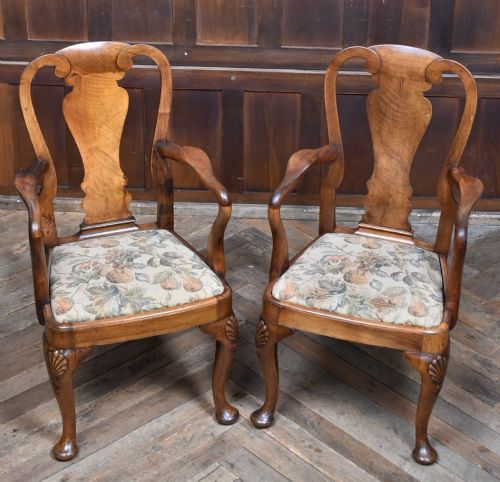
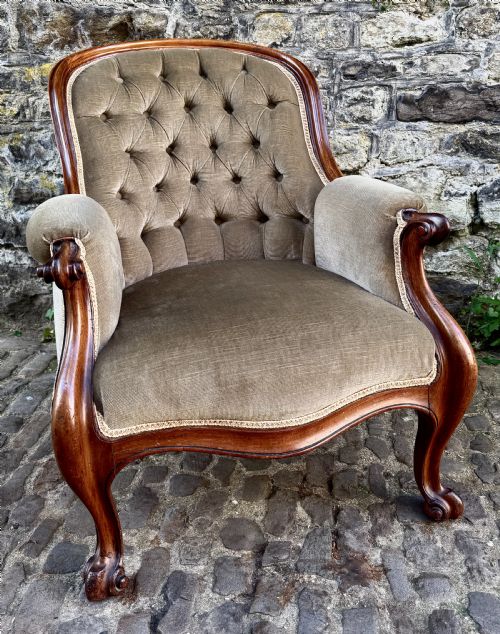
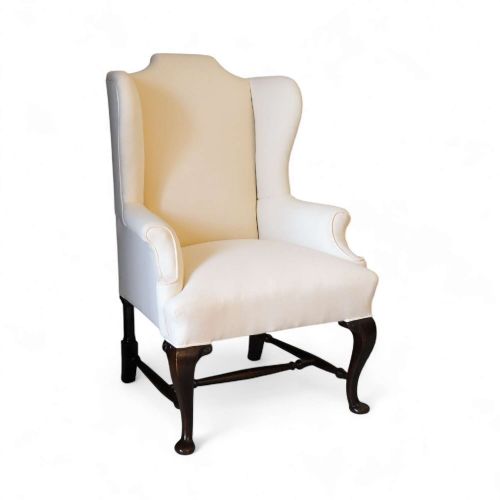
Victorian Carved Arm Chair
A victorian carved arm chair brings nineteenth-century presence and robust timber framing into a modern room.
Victorian Carved Arm Chair
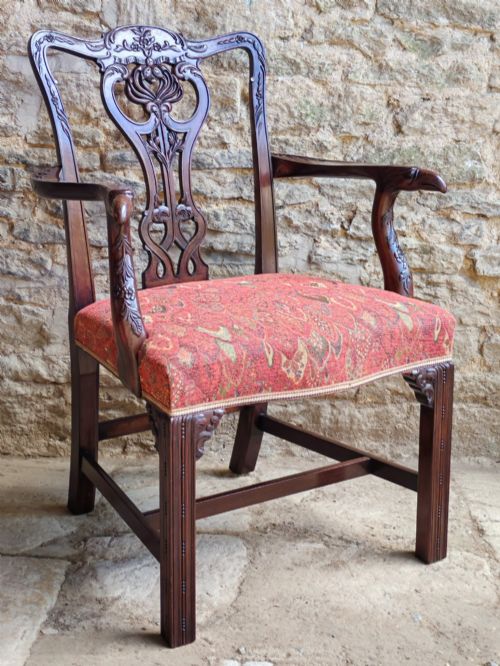
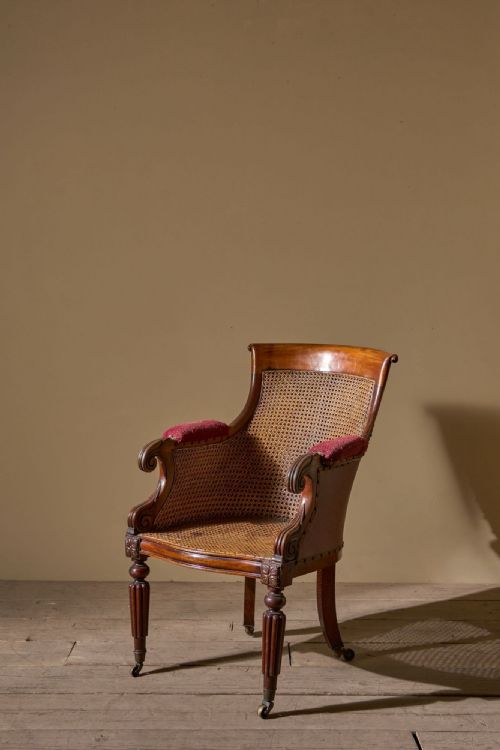
When you search for a victorian carved arm chair, you enter a diverse field spanning library seating, office swivels, and fireside gentleman's chairs. The examples found here reach from early nineteenth-century mahogany library models to late-period walnut and oak seating.
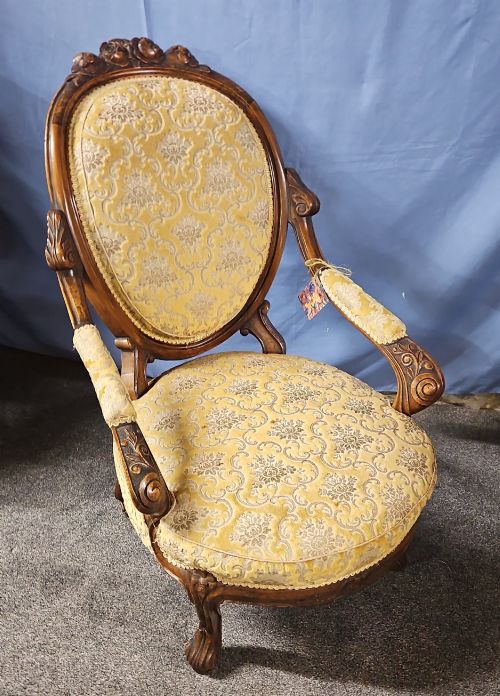
You will encounter distinct revival styles, including Queen Anne, Jacobean, and French Rococo, alongside country house Windsors and heavy oak throne chairs. Walnut and mahogany frame the majority of the formal parlour pieces, whilst elm, beech, and oak dominate the vernacular seating.
The evidence shows these chairs served varied domestic functions, from desk work and fireside repose to formal hall seating. Library chairs and office armchairs feature prominently alongside upholstered salon seating and cane-seated country models.
Timbers and Joinery
Cabinetmakers utilised dense hardwoods such as mahogany, walnut, oak, and rosewood to support deep hand-carving and structural joinery. Exotic timbers like goncalo alves also appear in specific frames, providing rich grain patterns beneath clear finishes.
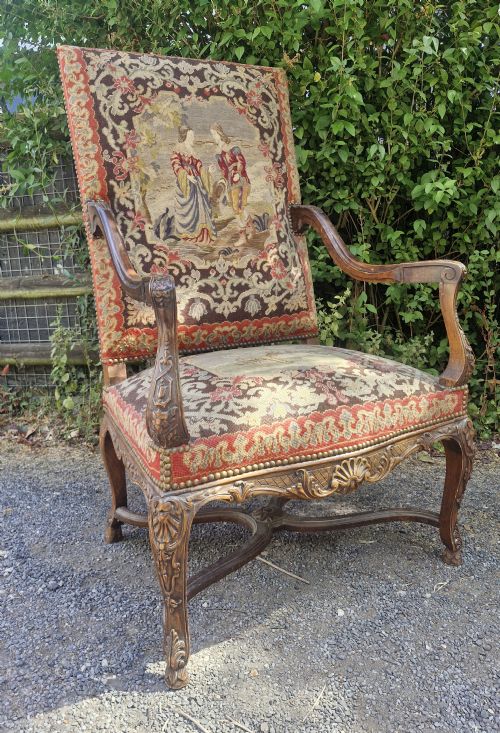
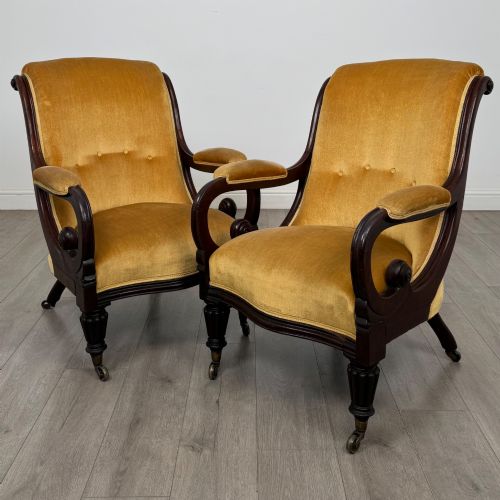
Upholstery techniques relied on webbing, springs, and stuffing covered in velvet, leather, needlework, or calico. Showwood frames expose polished timber around the borders of padded backs and arms, highlighting the joiner's hand-cut joints.
Listings feature 19th Century, Victorian, and Edwardian periods alongside revival styles including Jacobean, Queen Anne, and French Rococo.
Carving Depth and Timber Selection
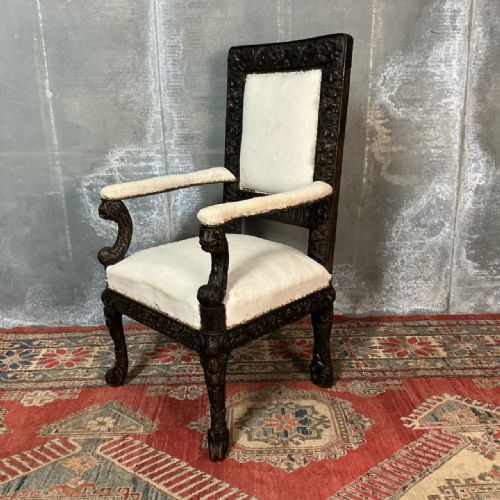
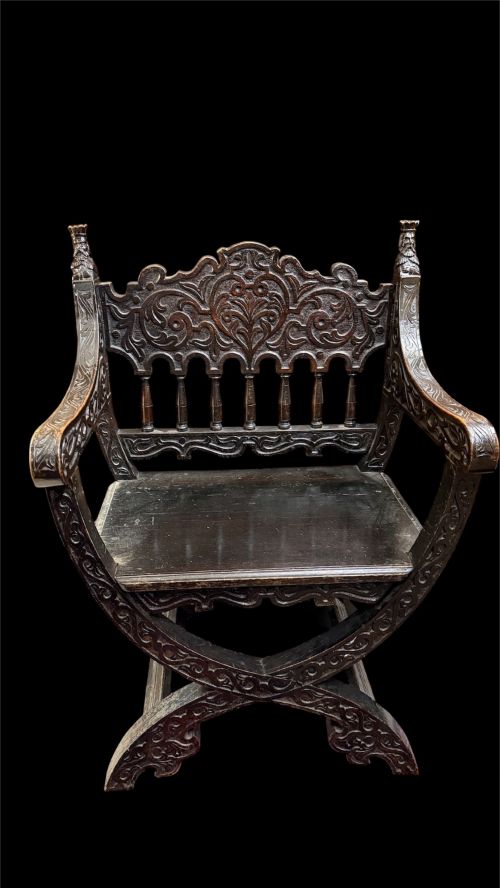
The distinction between standard commercial production and superior craftsmanship lies in the depth and crispness of the hand-carving. Deeply undercut foliage, heraldic shields, and figural details like lions' heads demand skilled labour that separates master workshop output from simpler factory pieces.
Timber selection and frame proportion dictate structural longevity. Heavy walnut and mahogany frames with tight joinery maintain their integrity far better than lighter, plain-timber alternatives subjected to heavy daily use.
Howard and Sons·S&H Jewell
The Victorian Carved Arm Chair Glossary
- Showwood
- Timber frame left visible around the upholstered portions of a chair. This exposes the polished grain and carved decoration rather than covering the entire structure in fabric.
- Carver
- A traditional term for an armchair, often used to describe a matching piece designed to sit at the head of a dining table. These feature supportive armrests alongside standard dining height dimensions.
- Spoon back
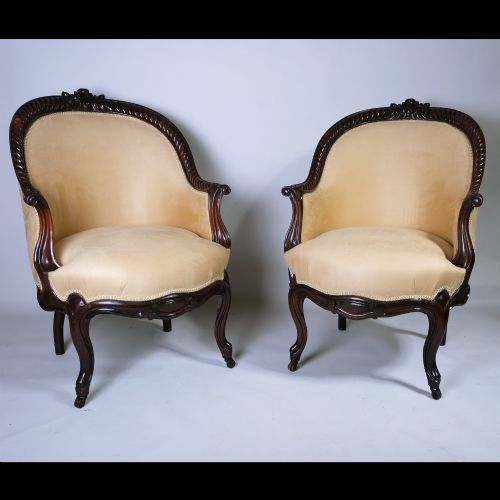
- An upholstered chair back shaped in a concave oval resembling the bowl of a spoon. This specific Victorian contour provides ergonomic support for the spine.
- Smokers bow
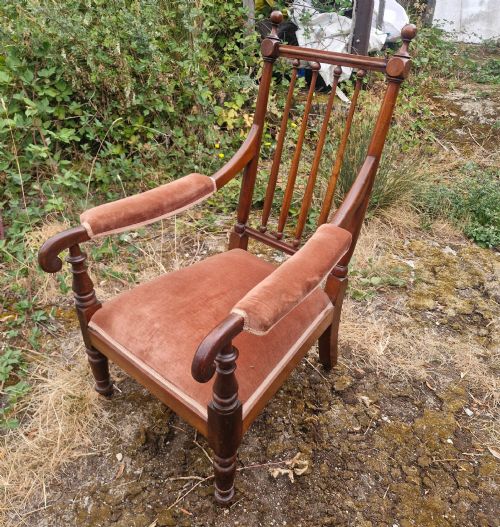
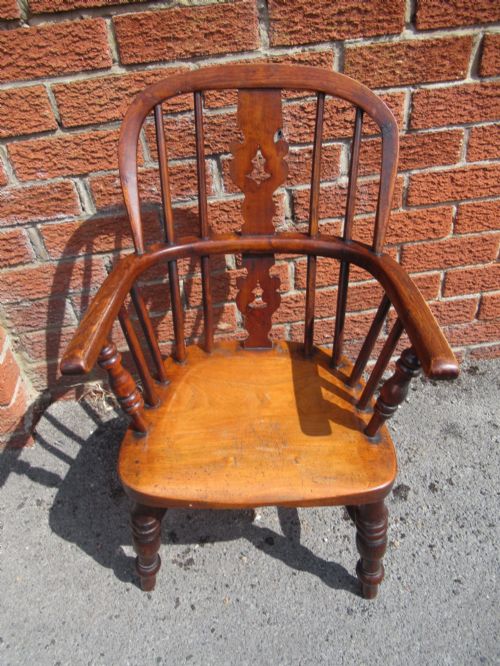
- A sturdy, low-backed Windsor armchair with a rounded crest rail supported by turned spindles. These comfortable wooden seats originated in vernacular farmhouse and tavern settings.
- Fauteuil
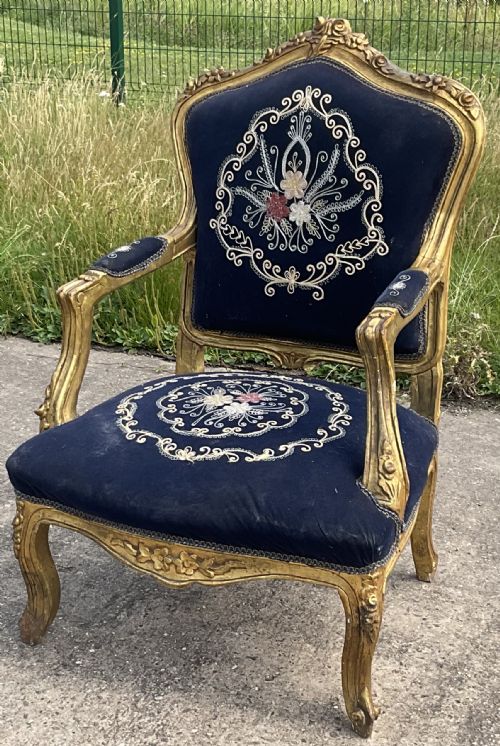
- An open-arm armchair with an exposed wooden frame and upholstered back and seat, following French revival fashions. These pieces often feature gilded or polished walnut surfaces.
Victorian Carved Arm Chair: Frequently Asked Questions
How do I identify a library chair?
Library armchairs generally feature substantial upholstered seats and padded armrests designed for prolonged reading and study. Their sturdy mahogany or walnut frames often incorporate low centres of gravity for stability.
You will frequently find these chairs paired with writing desks or positioned near nineteenth-century bookshelves. They differ from salon chairs by prioritising physical support over decorative framing.
Where were office swivel chairs used?
Office swivel armchairs served Victorian clerks, bankers, and professionals in commercial counting houses and private libraries. Their revolving mechanisms allowed users to access ledgers and paperwork across large desks.
These pieces combine bentwood or mahogany frames with leather upholstery and mechanical bases. They represent an early adaptation of ergonomic office furniture for nineteenth-century workplaces.
What distinguishes an oak hall chair?
Hall chairs were traditionally placed in entrance hallways to provide temporary seating for guests waiting to be announced. They typically feature solid wooden seats and high, carved backs displaying heraldic shields or geometric motifs.
Unlike upholstered fireside chairs, these timber pieces lack padding and emphasise architectural carving. Their upright posture suited the formal welcoming areas of Victorian homes.
How do I care for antique leather?
Antique leather upholstery requires gentle cleaning with damp cloths and occasional feeding with specialist leather balms to prevent cracking. Avoiding direct sunlight and intense heat sources preserves the natural hide.
Many Victorian desk and library chairs retain their original or early leather surfaces. Proper conditioning maintains the suppleness and deep patina developed over generations of use.