



Carved Armorial Seat
A carved armorial seat carries heraldic crests and timber grain into the room, offering centuries of lineage.
Carved Armorial Seat
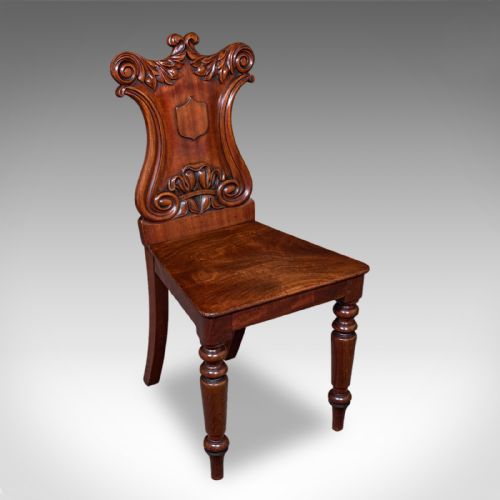
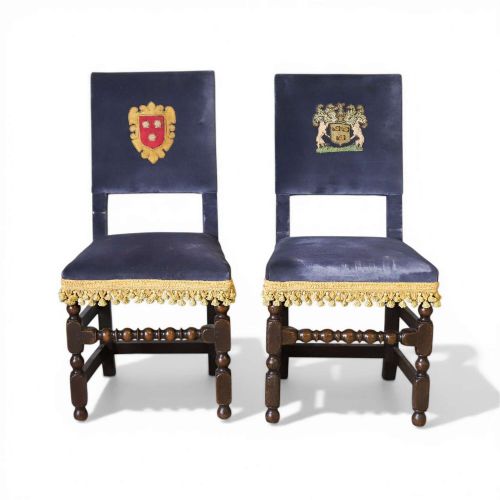
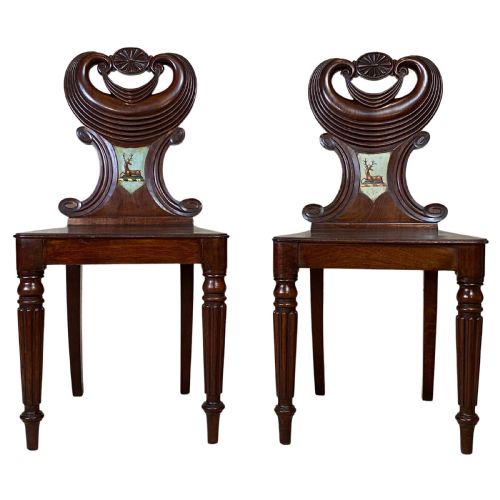
A carved armorial seat brings heraldry and solid timber into the hall or reception room. These chairs and settees display carved crests, shields, and heraldic motifs on wood or upholstered backs.
You will most commonly meet mahogany and oak forms spanning the seventeenth to the nineteenth centuries. The selection ranges from Regency hall chairs to Victorian armchairs and Scottish clan seating.
Makers such as Gillows appear among the pieces, alongside country house hall chairs and Carolean revival settees. Forms include side chairs, armchairs, and matching pairs with carved seats.
How they were made
Cabinetmakers shaped these seats primarily from dense hardwoods like mahogany and oak, occasionally employing walnut and applied paint. Timber selection dictated the structural integrity needed for carved armorial crests.
Carvers worked directly into the solid wood of the backs to form shells, hippocampus armorials, and heraldic devices. Upholstered variants integrate velvet and tapestry, finished with metallic fringe and brass detailing.
The listings span the seventeenth to the nineteenth centuries, covering oak, mahogany, walnut, and paint.
What varies in quality
The depth and crispness of the carved armorial detail distinguish standard output from exceptional workshop production. Sharp relief in heraldic crests and timber grain definition indicate superior craftsmanship.
Attribution to known makers like Gillows elevates the standing of a piece, alongside matched pairs and sets of five. The integration of structural timber with textile elements like velvet upholstery influences the overall presence.
Gillows
The Carved Armorial Seat Glossary
- Armorial
- Bearing a coat of arms or heraldic crest. This design marks the lineage or identity of the original owner.
- Hall chair
- A rigid wooden seat intended for a hallway or entrance. These pieces often feature carved timber backs rather than heavy upholstery.
- Regency
- A style period spanning the early nineteenth century. Furniture from this era draws on classical forms with clean mahogany lines.
- Carolean revival
- A nineteenth-century revival of seventeenth-century Caroline design. It typically employs rich carving and tall proportions.
- Hippocampus
- A mythological sea-creature used in decorative carvings. This motif appears on armorial crests within the wood.
Carved Armorial Seat: Frequently Asked Questions
Where did these seats originally stand?
These pieces sat in the grand halls, reception rooms, and country houses of families entitled to bear heraldic crests.
Guests encountered them immediately upon entering the house, where the carved armorials declared the lineage of the household.
How do I care for mahogany and oak wood?
Keep wooden frames away from direct heat sources and sudden humidity shifts to prevent timber movement.
Apply natural wax periodically to nourish the surface and preserve the crispness of the carved armorial details.
Can I use an armorial chair daily?
Most hall chairs and armchairs were built from sturdy hardwoods like mahogany and oak to withstand regular use.
Examples with delicate velvet upholstery or metallic fringe benefit from lighter placement in reception or display spaces.
How do I identify a Regency period piece?
Regency seats typically feature mahogany construction, clean classical lines, and disciplined carved ornamentation.
They reflect the aesthetic of the early nineteenth century, distinct from the heavier oak forms of earlier centuries.