




Victorian Card Holder
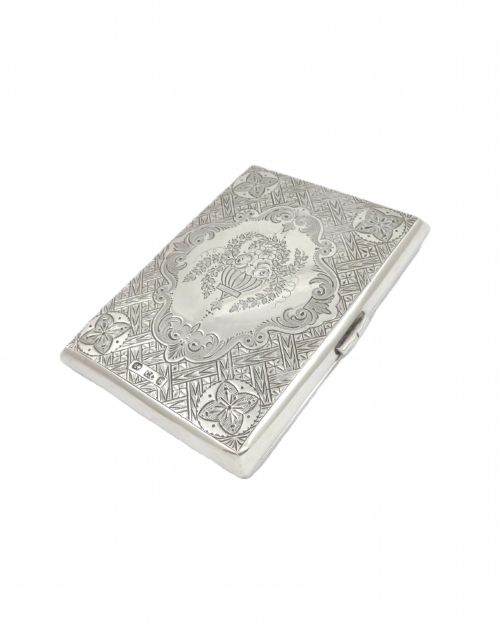
These Victorian card holders are pocket-sized pieces of silver and shell designed to hold calling cards during formal social visits.
Victorian Card Holder
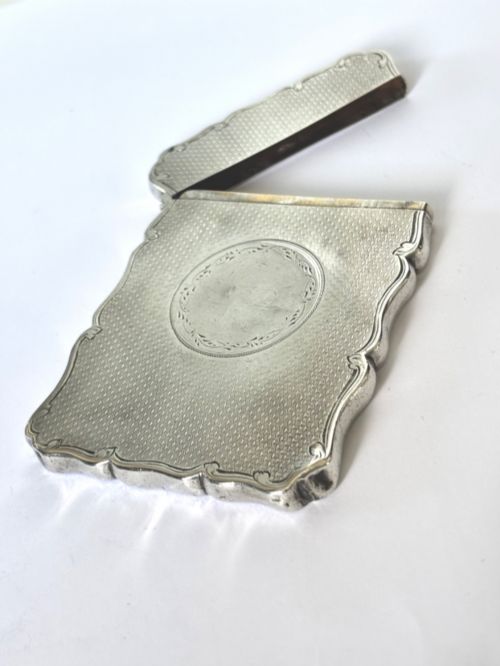
A victorian card holder is a portable case or small stand made to hold visiting cards, menu cards, or dance notes during the nineteenth century and the Edwardian era. The most frequent form on this page is the sterling silver pocket case, often hinged and shaped to fit a waistcoat or small evening bag.
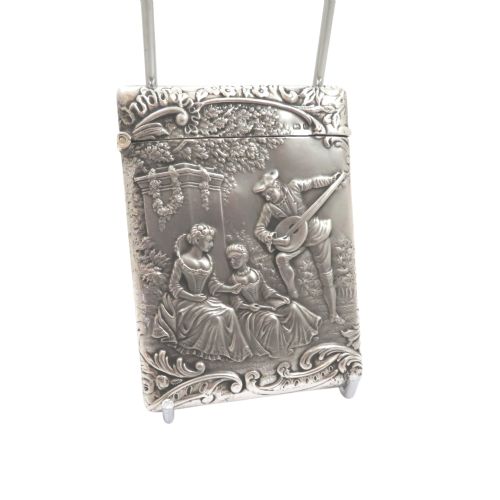
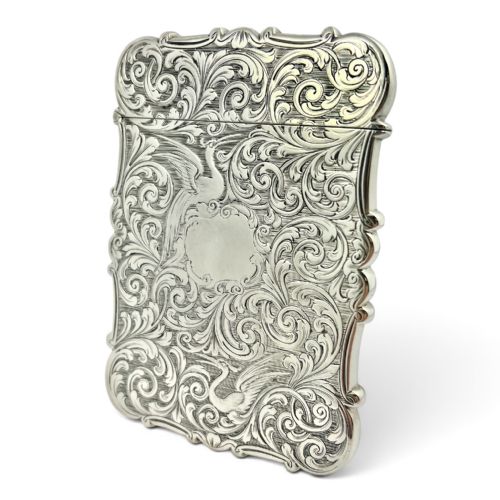
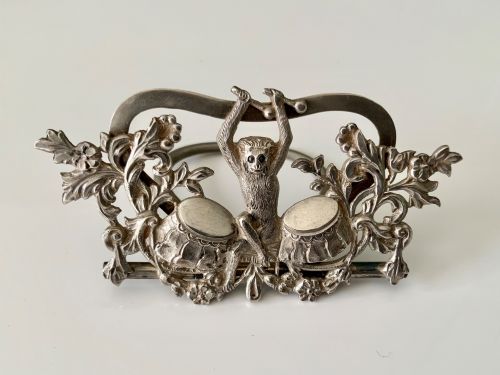
Beyond standard silver cases, the evidence shows specialist variations including menu holders for dining tables, dance card holders, and silver purses. Styles range from plain engine-turned surfaces to heavily decorated castle top pieces depicting architectural landmarks.
Origins span English provincial assay offices such as Birmingham and Chester, alongside international items including Indian, Madras, and Anglo-Indian silver work. Materials extend beyond metal to incorporate tortoiseshell, mother of pearl, velvet, enamel, bone, and Connemara marble.
Materials and Construction Techniques
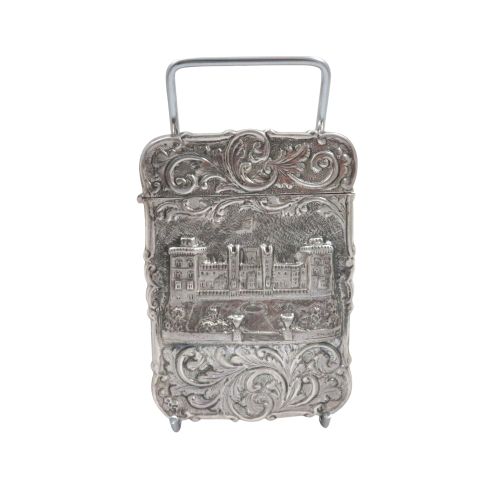
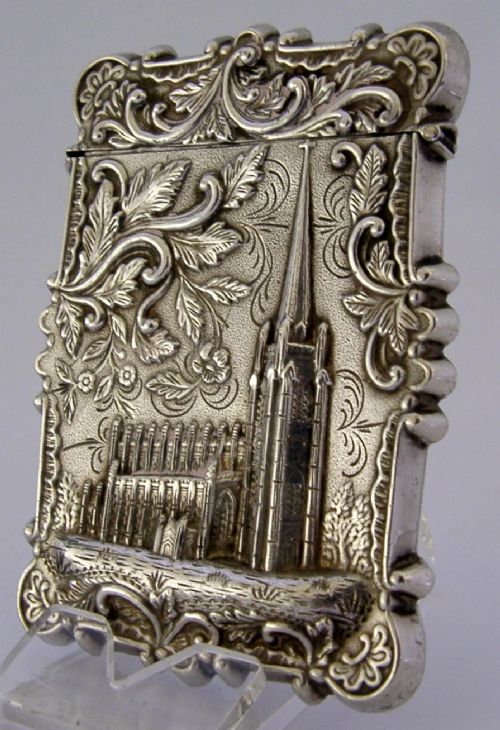
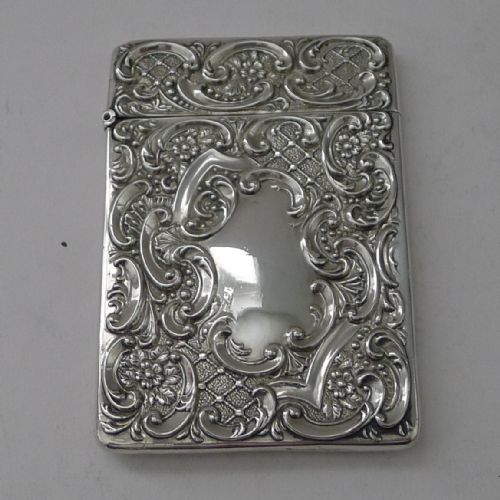
Silversmiths constructed the primary metal pieces using sterling silver, applying techniques such as engraving, repoussé work, and casting. Castle top pieces required detailed relief stamping or hand chasing to render specific buildings like Windsor Castle or St Paul's Cathedral with high definition.
Alternative items combine natural materials like mother of pearl, tortoiseshell, and bone into rigid cases, often held together with tiny pins and delicate brass hinges. Enamel work and inlaid marble further augmented the decorative finishes of select silver and box forms.
Materials documented across the catalogue include sterling silver, tortoiseshell, mother of pearl, enamel, glass, bone, velvet, and Connemara marble.
Distinctions in Quality
Quality rests in the crispness of the chasing and the depth of the repoussé work, particularly on pictorial subjects and architectural castle top scenes where sharper architectural detail separates standard items from finer masterwork. The crispness of hallmarks and the weight of the silver plate also dictate the standard of execution.
For pieces incorporating organic materials like mother of pearl or tortoiseshell, the structural integrity of the plates and the precision of the fit around the metal mounts determine the overall calibre. Intricate figural subjects, such as novelty animal menu holders or literary themes, rely on expressive casting and secure joints.
Nathaniel Mills·George Unite·Wright and Davies·Sampson Mordan·Levi and Salaman
The Victorian Card Holder Glossary
- Castle top
- A style of silver card case featuring a high-relief engraving or repoussé depiction of a famous building or landmark on the cover. These architectural scenes often represent specific cathedrals, castles, or monuments.
- Repoussé
- A metalworking technique where the smith hammers the metal from the reverse side to form a raised design in relief on the front. This method creates the dimensional decorative motifs seen on many nineteenth century items.
- Visiting card case
- A small flat container designed to protect paper calling cards exchanged during social visits in the Victorian period. They are typically pocket-sized and fitted with a hinged lid.
- Menu holder
- A small desk or table accessory used to display menu cards or place cards during formal dinners. They appear in matching pairs or sets and often feature novelty or figurative designs.
- Aide memoire
- A small pocket notebook or memorandum tablet often combined with card cases or dance cards to record appointments. They frequently include a tiny mechanical pencil or ivory writing leaf.
Victorian Card Holder: Frequently Asked Questions
What is a castle top card case?
A castle top case is a silver container featuring a detailed relief image of a well-known building stamped or chased onto the lid. Common examples on this page show landmarks such as Windsor Castle and St Paul's Cathedral.
These pieces were often produced by prominent Birmingham silversmiths like Nathaniel Mills. They represent some of the most sought-after examples of nineteenth-century silverwork.
How were calling card cases used?
Victorian callers carried these small cases to hold their engraved paper visiting cards when making formal social visits. Leaving a card signified a polite call even if the host was not at home.
The cases protected the delicate paper cards from bending or soiling within pockets and reticules while travelling between residences.
What is the difference between a card case and a menu holder?
Card cases are flat, hinged pocket containers intended for personal carriage and the distribution of visiting cards. Menu holders are small stationary tabletop stands designed to hold dining menus or place cards upright during meals.
While both utilise similar silver and decorative techniques, menu holders often feature heavier bases and playful figural or thematic designs.
How do I date a Victorian silver case?
Dating relies on the set of hallmarks stamped into the metal, which typically include a maker's mark, a purity mark, an assay office city mark, and a date letter. These stamps indicate the exact year and location of manufacture.
Stylistic cues such as Gothic Revival motifs or Edwardian novelty subjects also help narrow down the production period when hallmarks are rubbed.