






Late Victorian Silver Case
A late victorian silver case offers practical elegance, holding everything from sovereigns to prayer books inside polished metal and fitted interiors.
Late Victorian Silver Case
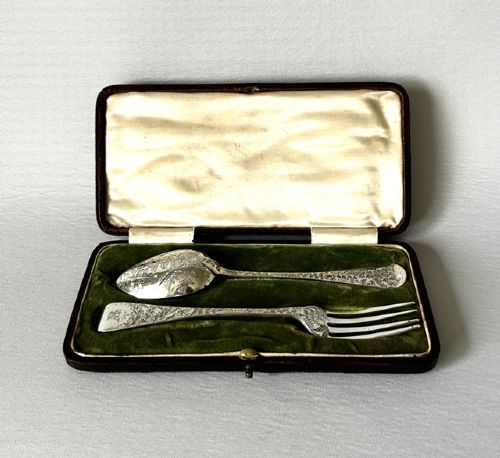
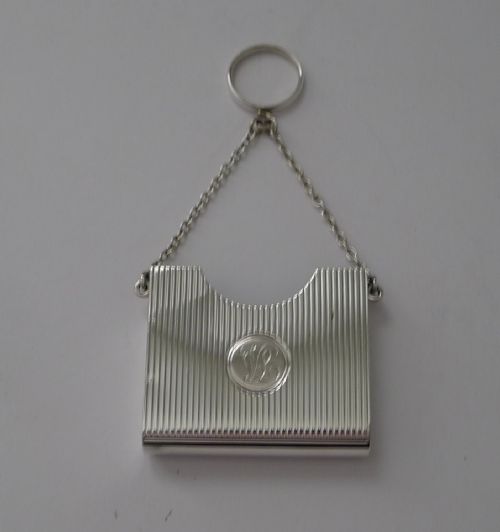
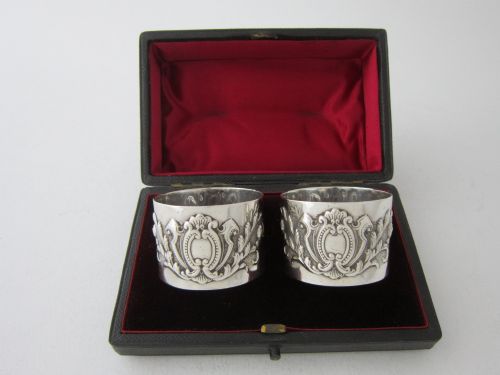
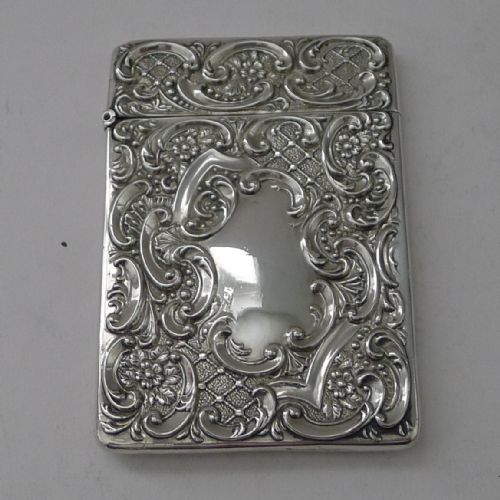
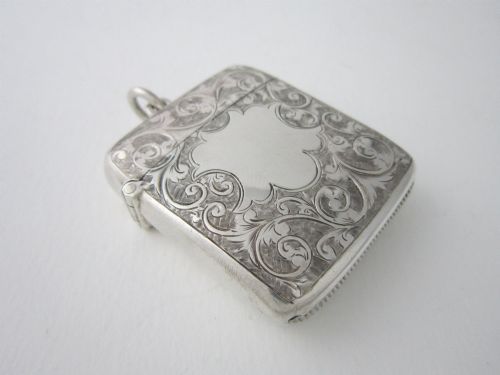
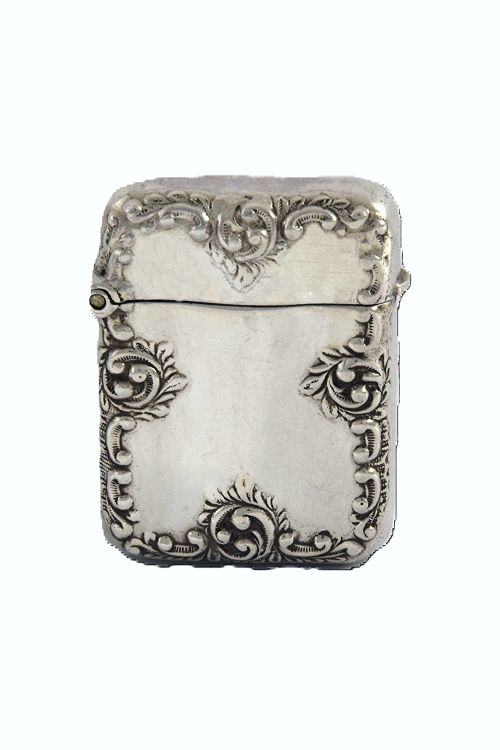
A late victorian silver case encompasses pocket accessories and fitted presentation boxes originating from the late nineteenth century. Buyers frequently encounter silver vesta cases, sovereign holders, and card cases alongside larger cased flatware and cutlery sets.
The objects span individual pocket items stamped in Birmingham or Chester and fitted presentation sets lined with velvet or silk. Many items combine sterling silver or silver plate with organic elements like horn, ivory, or mother-of-pearl.
Surviving examples reflect the manufacturing output of the 1880s, 1890s, and the turn of the century. These pieces bridge utilitarian function and decorative Victorian craftsmanship.
What varies in quality
Quality rests upon the crispness of the exterior engraving and the structural integrity of the hinged mechanisms. Superior pocket cases retain sharp relief on chased motifs without thinning of the silver walls from excessive wear.
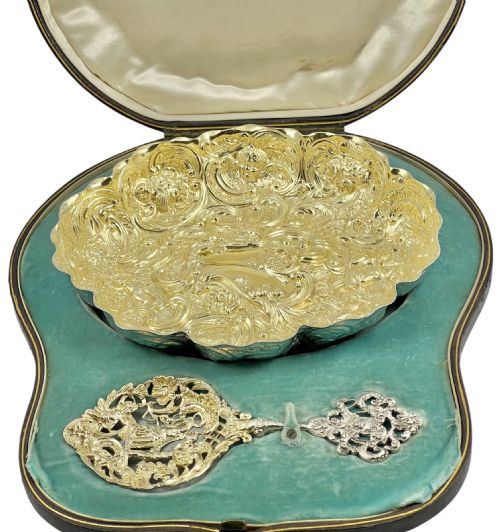
Internal presentation standards also divide the range. High-grade items preserve intact velvet or silk linings and secure fitted compartments that snugly house the original silver, glass, or ivory components.
One pocket vesta case is shaped entirely like a fish carp, proving Victorians loved carrying matches inside unusual aquatic fauna.
Sampson Mordan·Hukin and Heath·John Round·John Millward Banks·James Dixon and Sons·Walker and Hall
The Late Victorian Silver Case Glossary
- Vesta Case
- A small pocket container designed to hold matches and keep them dry. These often feature spring-loaded lids and striking grooves on the base.
- Sovereign Case
- A compact circular pocket container engineered to store gold coin currency securely. They frequently incorporate internal spring mechanisms for dispensing coins individually.
- Silver Gilt
- Sterling silver that has been coated with a thin layer of gold on the surface. This technique provides a rich two-tone appearance inside bowls and serving spoons.
- Aide-memoire
- A pocket notebook or memorandum case used for recording daily reminders. They often incorporate miniature pencils and silk-lined compartments.
- Hallmark
- An official stamp struck into precious metals indicating the standard of purity, assay office, and year of manufacture. British pieces commonly display city marks and date letters.
Late Victorian Silver Case: Frequently Asked Questions
What fits inside a vesta case?
These pocket containers were specifically manufactured to hold short wooden safety matches safely while on the move. The integrated serrated strip on the bottom allowed the user to strike the match upon extraction.
Today, collectors frequently repurpose these small silver containers to hold pills, stamps, or other miniature keepsakes without damaging the antique mechanism.
How do I clean silver gilt?
Silver gilt requires gentle dusting with a soft, dry microfibre cloth rather than aggressive chemical polishing. Rubbing too firmly will wear away the delicate gold layer applied over the underlying sterling silver.
Store these pieces away from direct sunlight and high humidity to prevent tarnishing and preserve the integrity of the gilded finish.
What is an aide-memoire used for?
An aide-memoire functioned as a nineteenth-century pocket diary or memorandum pad for recording social engagements and shopping lists. They often included small ivory or paper writing tablets alongside silk compartments.
Collectors prize surviving examples that retain their original fitted mechanical pencils and intact internal linings.
How can I date my silver case?
Dating relies heavily upon the stamped hallmarks showing the assay office location and the specific date letter code. Consulting standardised British assay tables matches these stamped symbols to the exact year of manufacture.
Stylistic cues, such as Art Nouveau floral motifs or late Victorian engraving styles, also help narrow down the production era when hallmarks are rubbed.