



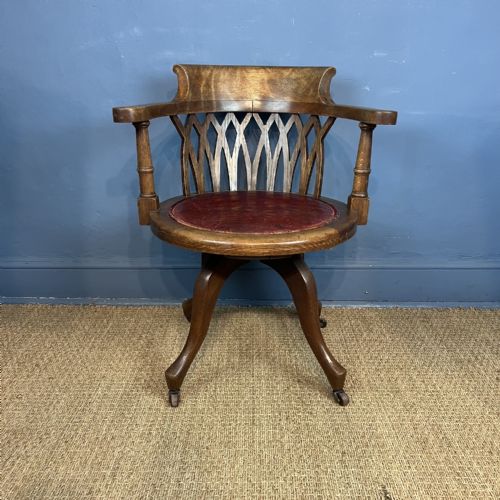
Victorian Captains Desk Chair
A victorian captains desk chair offers sturdy revolving comfort for daily study or correspondence.
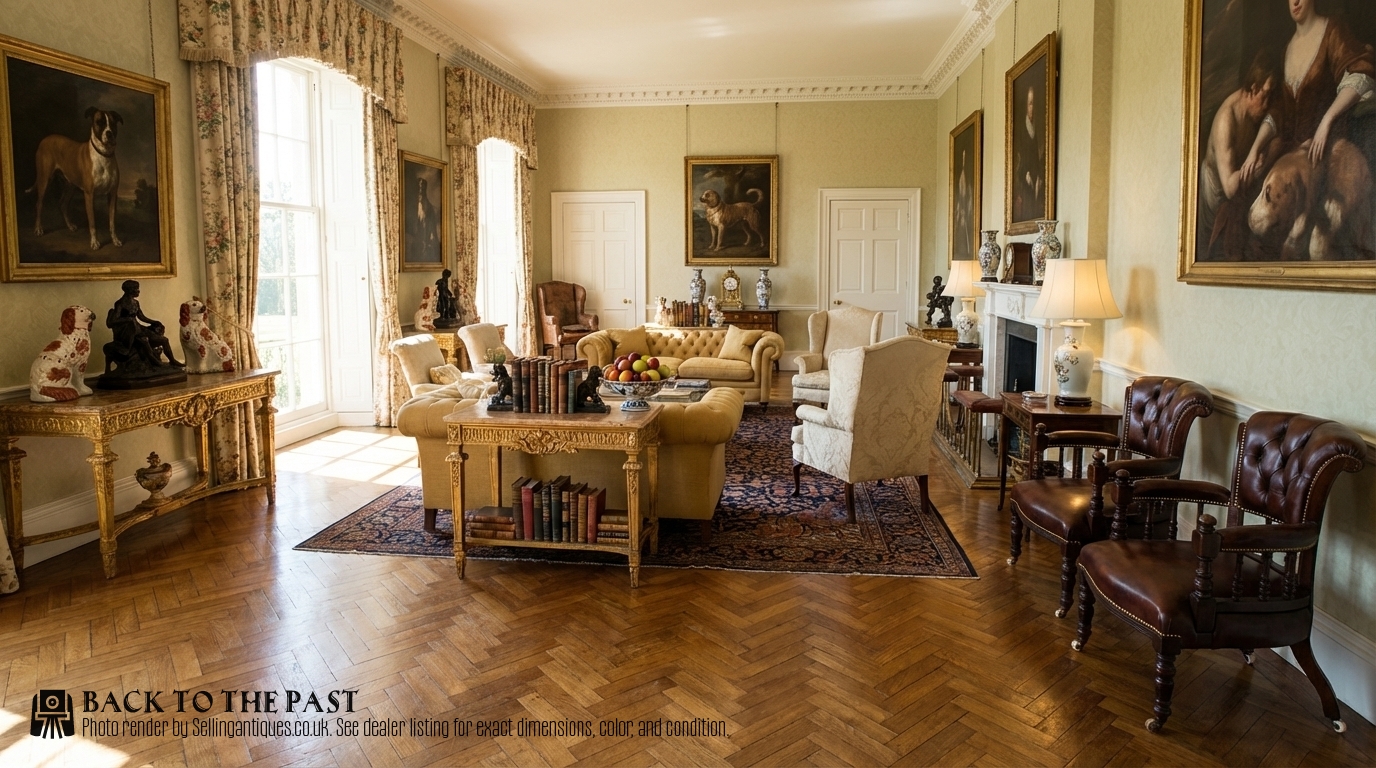
Victorian Captains Desk Chair
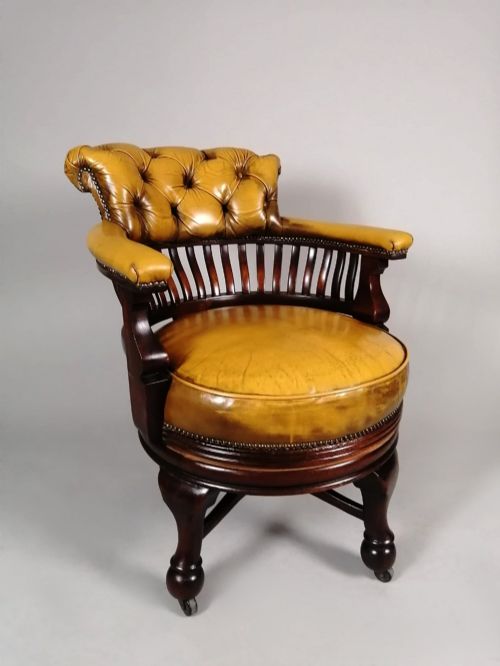
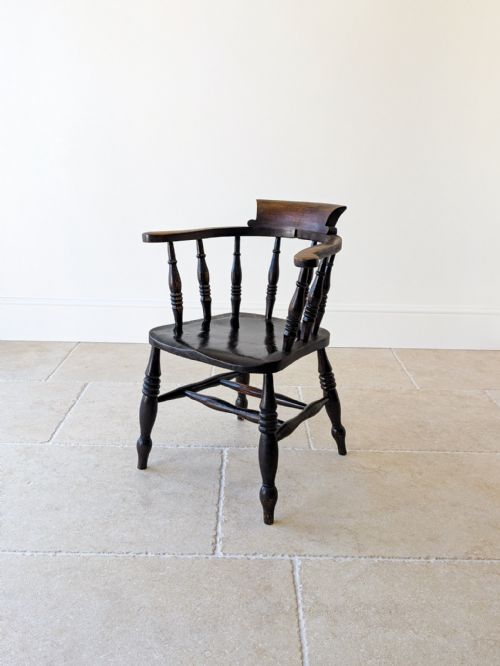
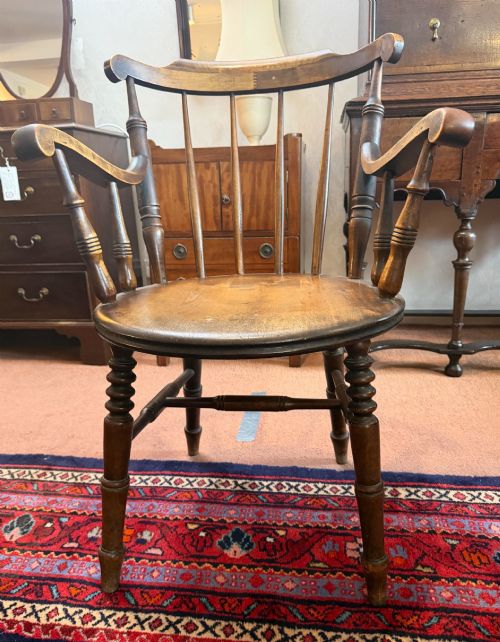
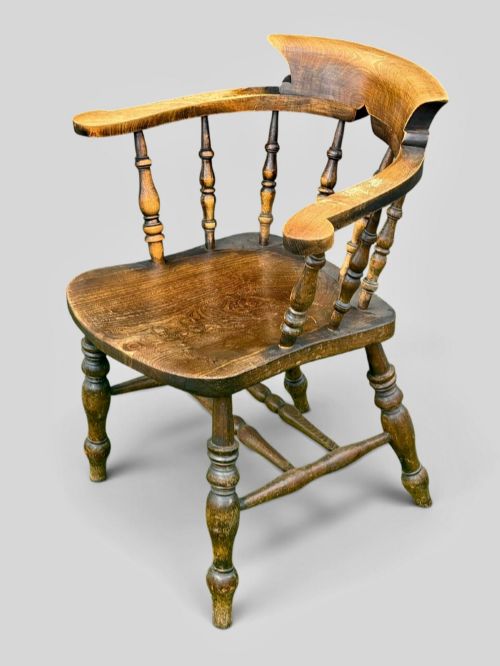
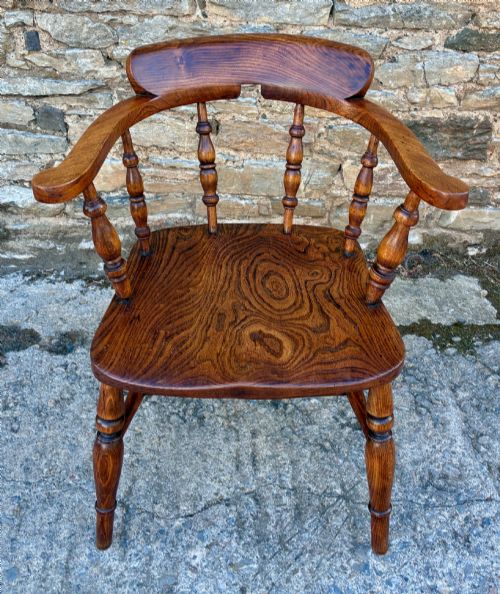
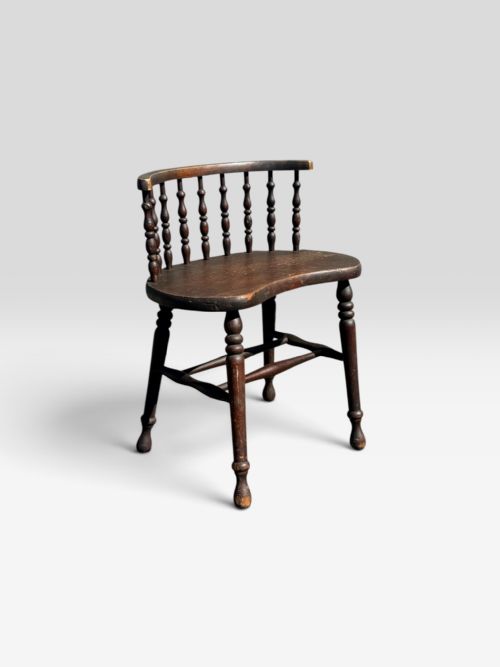
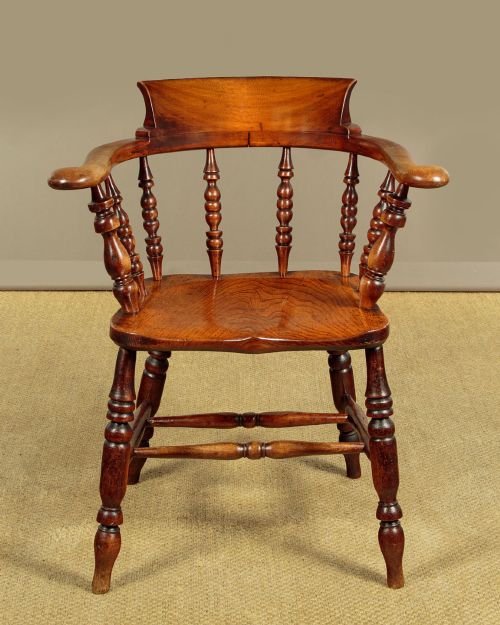
A victorian captains desk chair combines the low, curved back of a traditional Windsor or smoker's bow with the utilitarian swivel mechanism needed for office work. Most examples date from the nineteenth century, spanning periods from the eighteen-fifties through to nineteen-twenty, with Edwardian adaptations appearing toward the end of the timeline.
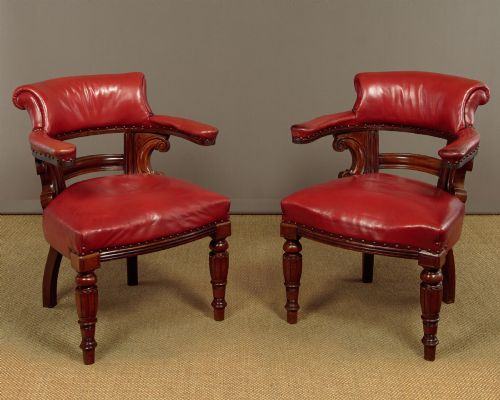
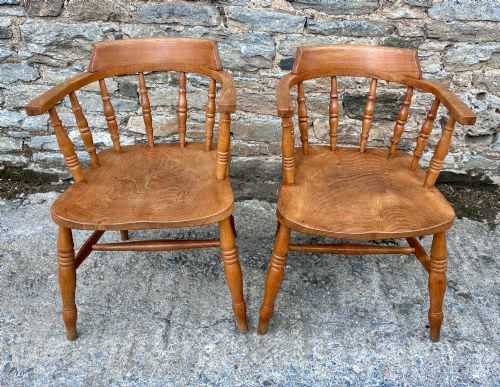
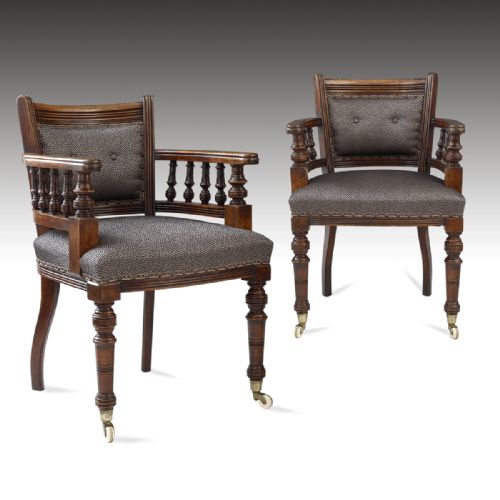
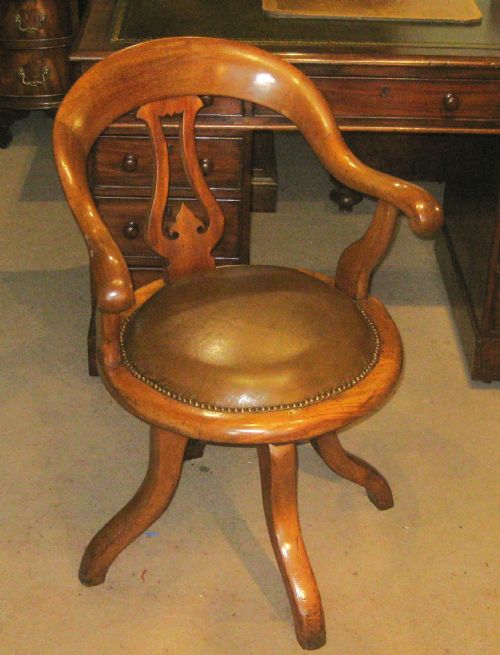
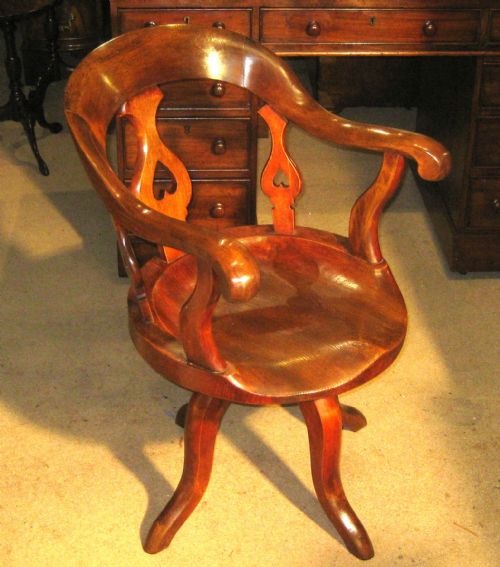
The form typically manifests as a robust armchair designed for a library, study, or counting house. Buyers encounter both stationary timber-seated models and swivel variants mounted on four-legged iron and brass spider bases.
Regional English country styles run parallel to more formal urban designs in mahogany, oak, and walnut. Many feature padded leather upholstery inset into the curved armrests and back rails.
How they were made
Makers constructed the curved hoop backs and arm bow rails from steam-bent timbers such as elm, ash, and beech. These resilient woods allowed craftsmen to achieve tight bends without fracturing the grain.
Solid mahogany and oak served for formal desk chairs, often shaped with carved spindles, saddle seats, and heavy turned pillars. Revolving mechanisms relied on cast iron screws, iron spiders, and brass fittings fixed beneath the wooden seat base.
Victorian Captains Desk Chair Retail Price Guide 2026
Typical asking prices for victorian captains desk chair among the pieces listed under this phrase on Sellingantiques today, from the lower quarter to the upper quarter. They describe what is for sale here now, not the wider market.
Listings feature oak, mahogany, elm, ash, walnut, beech, birch, and yew timber constructions.
What varies in quality
The calibre of a victorian captains desk chair depends on the weight and selection of the primary timber, seen in the rich grain patterns of golden mahogany or figured oak. Superior examples display refined hand-turned spindles and deep saddle-sculpted seats designed for prolonged sitting.
The engineering of the revolving mechanism marks the difference between standard production and top-tier workshop output. Smooth, wobble-free swivel actions combined with robust brass and iron hardware denote superior period construction.
Alfred Allen Furnishing Expert·Shannon Company of London
The Victorian Captains Desk Chair Glossary
- Smoker's bow
- A low-backed wooden Windsor armchair featuring a continuous curved arm rail and spindle supports. This form serves as the direct structural ancestor to many desk chairs.
- Revolving mechanism
- The swivel assembly fixed beneath the seat, usually comprising a central iron screw thread and spider legs. It allowed nineteenth-century clerks to pivot between desk and filing spaces.
- Saddle seat
- A wooden seat base hand-carved with hollows and contours to fit the human form. This shaping provided comfort before deep upholstery became standard.
- Spindle and lyre back
- A chair back incorporating vertical turned rods alongside a central pierced splat shaped like an ancient musical instrument. Makers utilised this decorative motif during the late nineteenth century.
Victorian Captains Desk Chair: Frequently Asked Questions
What is a captains desk chair?
A sturdy nineteenth-century armchair featuring a low, continuous curved back rail supported by turned spindles. These seats were originally built for office work, study rooms, and ships' cabins.
Many examples incorporate a swivel mechanism and a padded leather seat pad for extended daily use.
Were these chairs used at desks?
Yes, revolving variants were specifically designed for office desks and library tables. The swivel base allowed clerks and scholars to reach different parts of a room without moving the entire seat.
Stationary timber versions served a similar administrative function in counting houses and domestic studies.
How do I identify a Victorian period chair?
Look for timber selection, construction methods, and hardware typical of the nineteenth century. Solid mahogany, oak, and elm construction combined with hand-turned components indicate period manufacture.
Revolving versions will feature heavy cast iron or brass mechanical components beneath the wooden seat.
How should I care for the leather upholstery?
Keep the leather conditioned with appropriate balms to prevent the hide from drying and cracking over time. Avoid placing the chair in direct sunlight or close to heating vents.
Gentle dusting with a dry cloth protects the timber finish and the surrounding brass fittings.