



Victorian Canine Painting
A victorian canine painting captures the distinct character and prized status of dogs through centuries of skilled portraiture.
Victorian Canine Painting
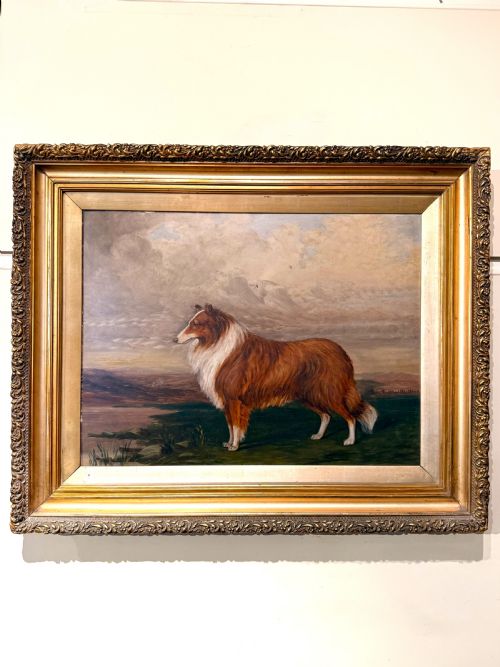
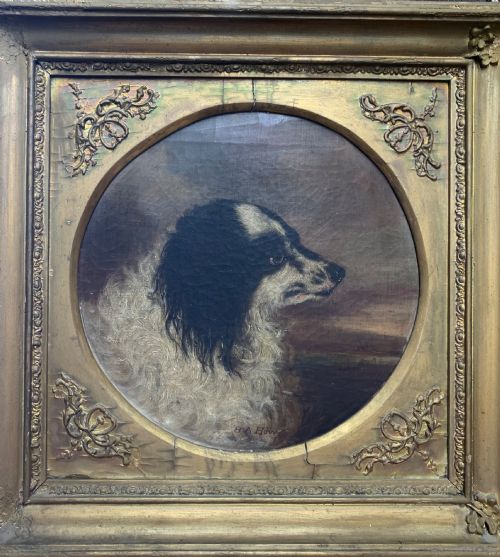
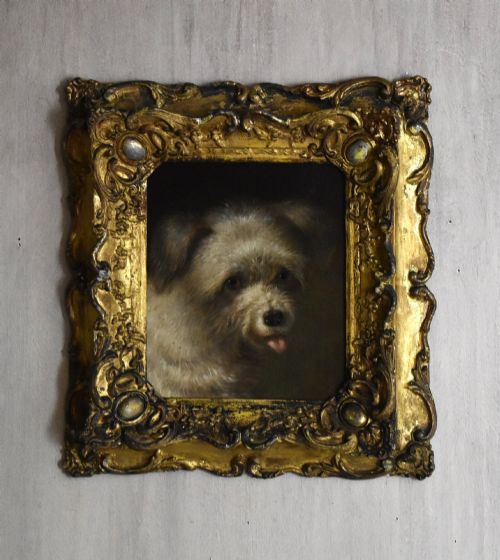
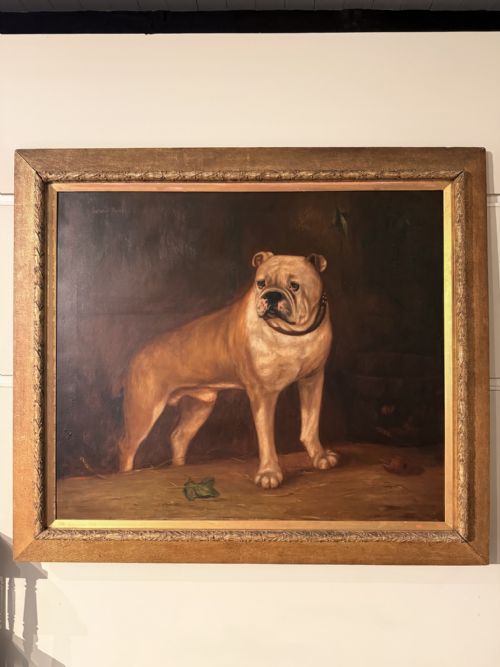
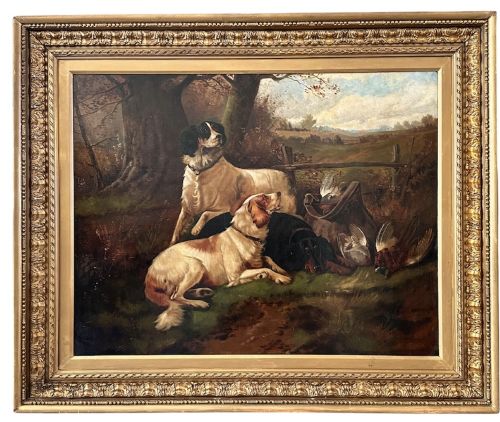
A victorian canine painting represents a rich tradition of animal portraiture spanning the nineteenth century and into the early twentieth century. These works capture specific breeds, from working spaniels and terriers to prized hunting hounds, rendered within detailed landscapes or intimate interior settings.
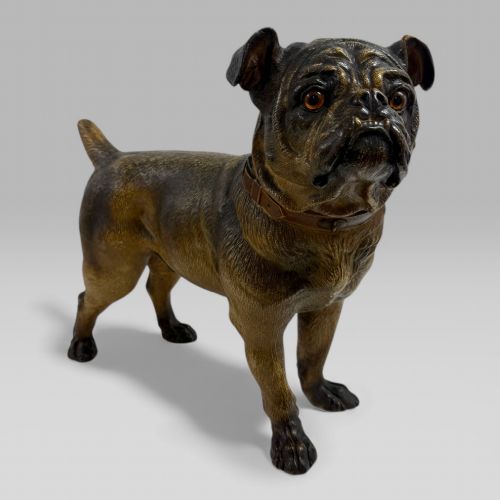
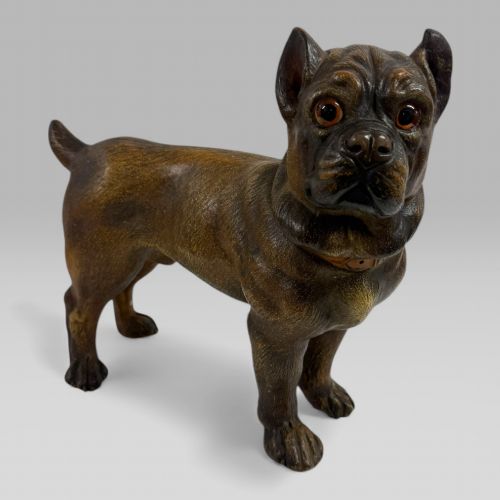
The selection on this page consists predominantly of oil on canvas or board, alongside watercolours, drawings, and occasional terracotta or bronze sculptures. Canvases range from modest studies to large, framed exhibition pieces depicting celebrated champions and beloved family pets alike.
Originating primarily from British studios and schools, these artworks reflect a period when animal painting established itself as a serious and respected genre. Collectors encounter both direct works by named artists and accomplished pieces created in the manner of prominent masters.
Materials and Technique
Artists relied upon oil paint applied to prepared canvas or wood panels, building rich textures to render the soft sheen of animal coats and expressive eyes. Pigments were often finished with protective varnishes that have deepened gracefully over time.
Frames form an integral part of these pieces, utilising giltwood, moulded wood, and gold leaf to complement the composition. Many works retain their period frames, which contribute substantially to the historic character of the painting.
Listings feature oil paintings, watercolours, and terracotta or bronze sculptures spanning the nineteenth century and the Edwardian era.
Assessing Quality
Quality in these works rests upon the artist's anatomical precision, the subtlety of brushwork in capturing fur and expression, and the compositional balance of the subject within its background. Superior pieces reveal a deep understanding of canine behaviour and structure rather than mere likeness.
The handling of light and depth distinguishes masterworks from simpler naive school examples, though both hold distinct appeal for collectors. Original framing, well-preserved canvas surfaces, and clear provenance elevate the standing of an individual piece.
Valentine T Garland·Martin Theodore Ward·John Sargent Noble·John Emms·John Frederick Herring Senior·Arthur Wardle·William Barraud·Sir Edwin Landseer·Colin Graeme Roe·John Trivett Nettleship·Jules Chardigny·Alfred Duke·George Earl
The Victorian Canine Painting Glossary
- Oil on Canvas
- Pigments bound in a drying oil applied to a stretched woven fabric support. This combination allowed artists to achieve rich colour blending and lasting durability.
- Giltwood
- Wood carved and coated with a thin layer of gold leaf or metallic powder. It provides a luminous, decorative border suited to nineteenth-century display.
- Sporting Art
- A genre of painting dedicated to field sports, horses, and hunting dogs. These scenes document rural traditions and prized animals of the landed gentry.
- Naive School
- Art produced by painters with little or no formal academic training. These works are characterised by charming perspective and direct, unpretentious execution.
- Cold Painted Bronze
- Metal sculpture finished with non-fired paints applied over a bronze casting. This technique was popular for small animal figures and decorative items.
Victorian Canine Painting: Frequently Asked Questions
What dog breeds appear most often?
Terriers, spaniels, setters, and collies dominate these historical artworks, reflecting the popular working and companion animals of the period. Terriers are frequently shown guarding or ratting, while sporting dogs appear alongside game or within sweeping rural landscapes.
Larger breeds such as bloodhounds, mastiffs, and hounds also feature prominently, often commissioned to record prized champions or beloved family companions of wealthy owners.
How do I identify the period of a painting?
Stylistic clues, canvas preparation, and framing techniques help establish the age of a piece. Nineteenth-century works often employ traditional glazing methods and earthy palettes characteristic of Victorian sporting art.
Signatures, dates inscribed on the reverse, and stretcher construction provide further confirmation. Comparing the brushwork and subject matter to documented works by known Victorian painters clarifies the timeline.
Were these paintings made as portraits?
Many of these pieces were direct commissions by owners wishing to immortalise a favoured pet, working dog, or prize-winning champion. Artists visited estates or hosted animals in their studios to capture true likenesses.
Other works were created as genre scenes or allegorical compositions intended for public exhibition and sale, blending observation of real animals with dramatic narrative.
How should I display a canvas?
Keep paintings away from direct sunlight, high humidity, and rapid temperature fluctuations to protect the canvas and oil pigments from cracking. Stable indoor environments preserve the structural integrity of both the artwork and its historic frame.
Ensure hanging hardware is secure, particularly with larger framed oils, and consult a professional conservator if the canvas requires cleaning or tension adjustment.