

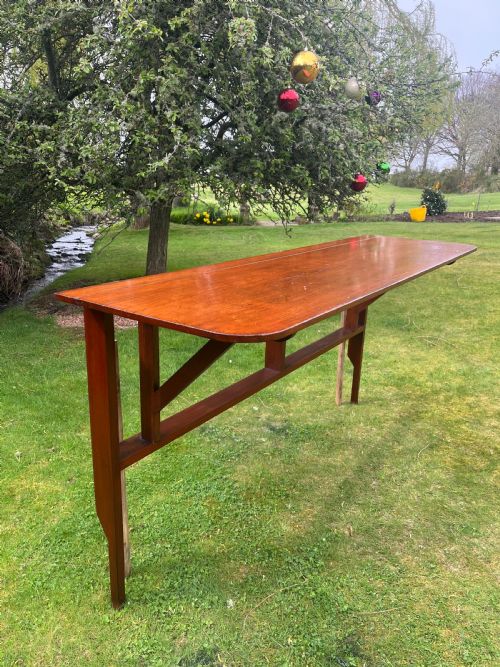


Victorian Butler Table
A victorian butler table combines a portable serving tray with a sturdy folding stand, offering practical surface space with effortless portability.
Victorian Butler Table
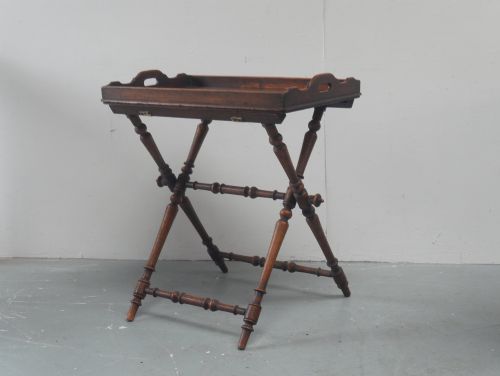
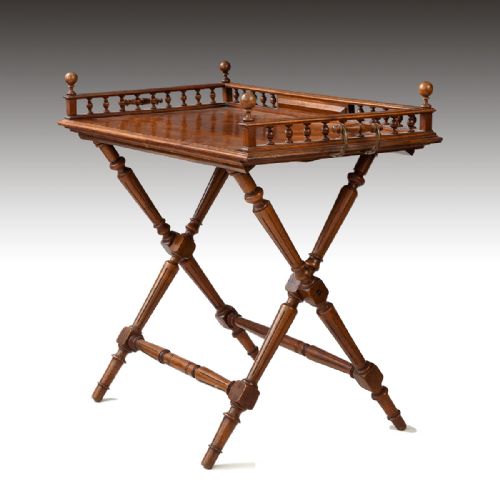
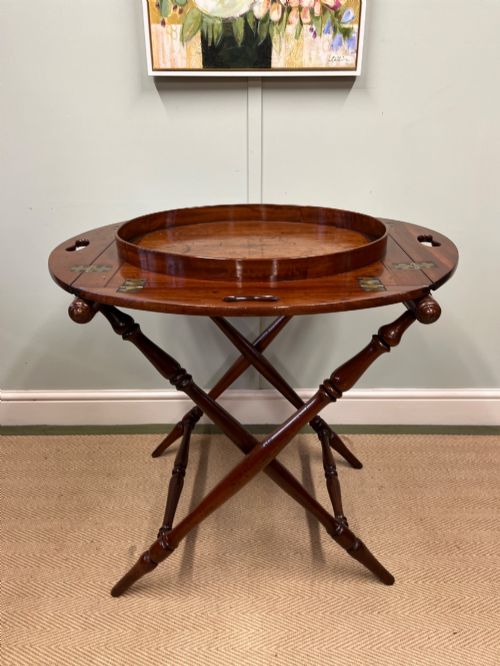
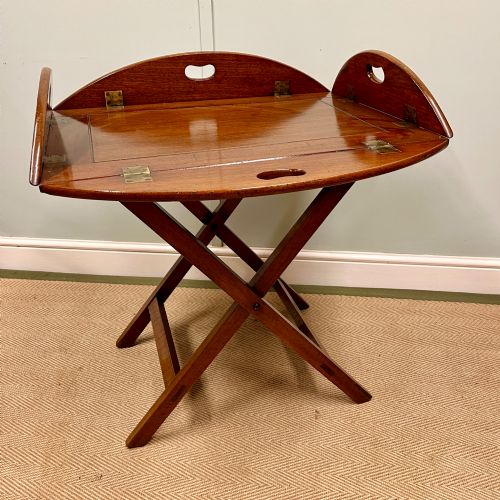
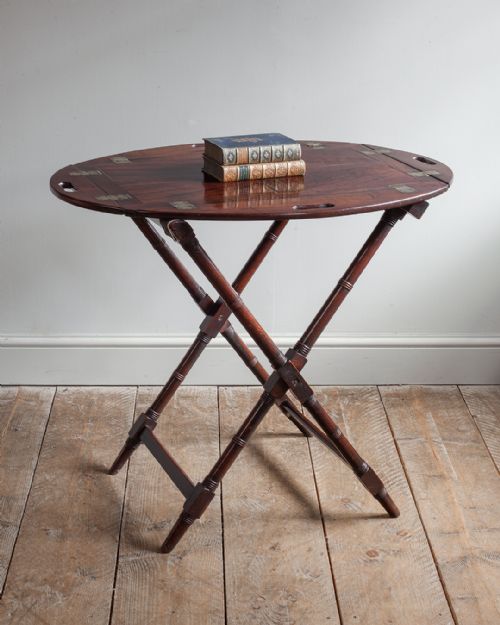
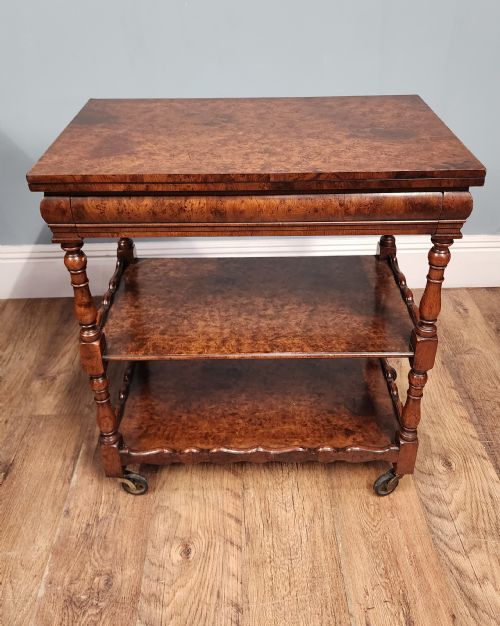
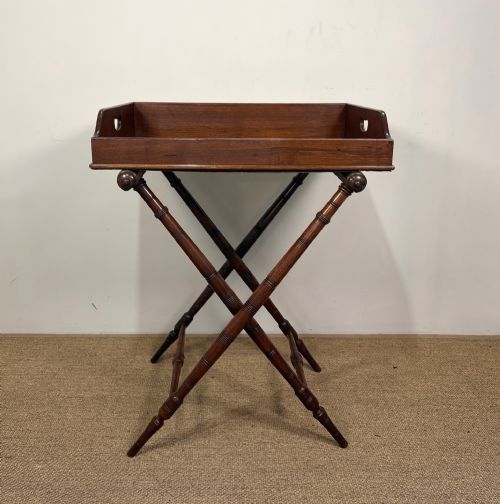
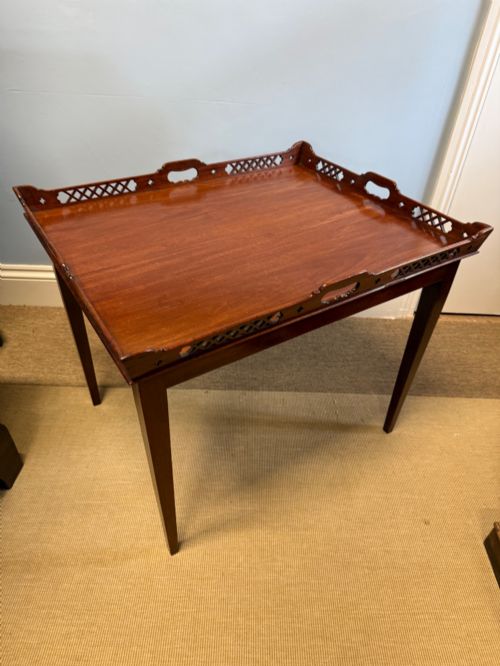
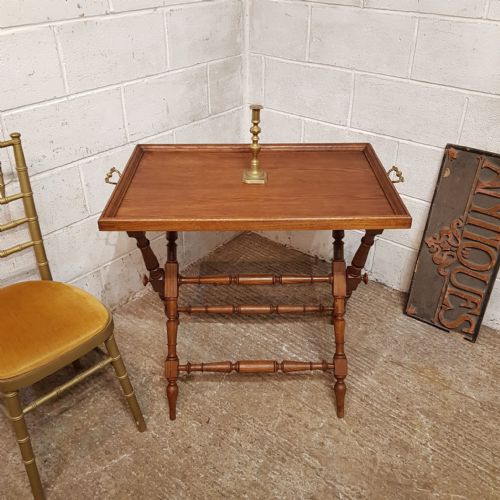
A victorian butler table typically consists of a removable, galleried tray resting upon a folding X-frame stand, designed for service in domestic interiors. When exploring these pieces, the most common version encountered is fashioned from mahogany or oak, often resting on a collapsible stand intended for easy storage when not in use.
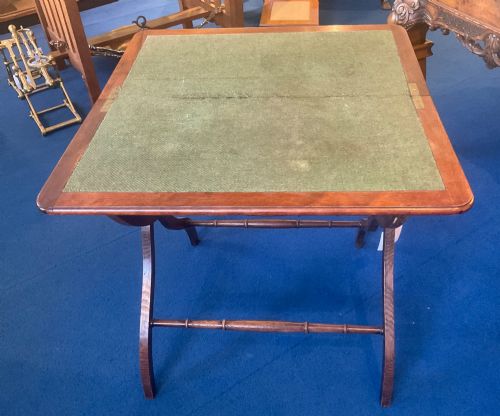
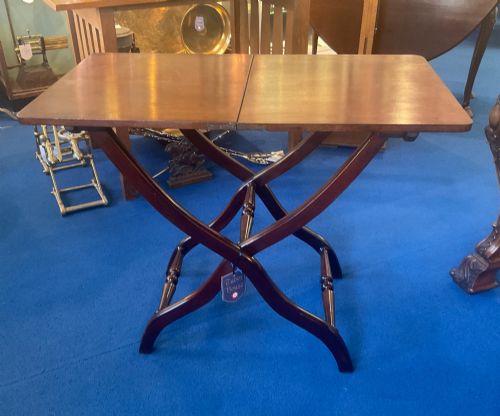
The form encompasses various functional adaptations, ranging from simple serving trays on simple stands to elaborate drinks tables, trolley units, and coaching tables. Examples span the nineteenth century, including specific stylistic interpretations such as Gothic Revival, Sorrento Ware marquetry, and chinoiserie papier-mâché.
Originating as utilitarian pieces for household staff to carry silver, china, or beverages, these tables now serve primarily as versatile occasional tables, coffee tables, or side tables in contemporary rooms.
How they were made
Cabinetmakers utilised dense hardwoods such as mahogany, oak, walnut, and rosewood for durability and rich grain appearance, frequently employing brass hinges or handles for folding mechanisms and carrying cut-outs. Trays often feature raised edges or galleries to secure items during transit, joined with traditional carpentry techniques.
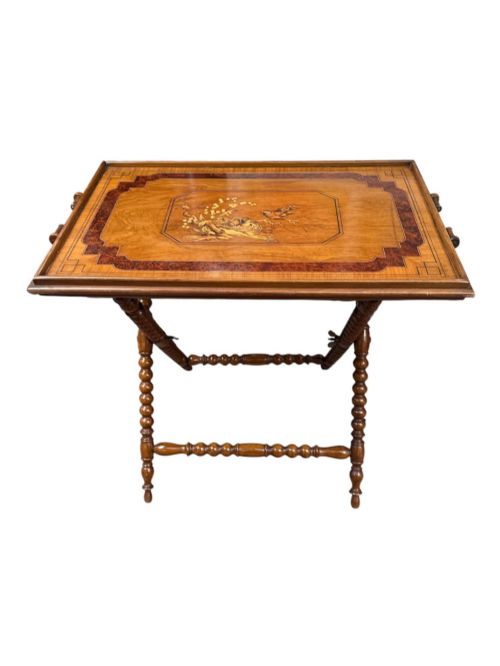
Surface decoration varied widely, incorporating marquetry inlay in woods like olivewood for Sorrento Ware, ebonised finishes with hand-painted floral motifs on papier-mâché, and intricate carved details on oak or walnut frames.
One exceptional listing brings a tangible piece of provenance directly from Bäckaskog Castle.
What varies in quality
The quality of a victorian butler table depends heavily on the selection of timber and the precision of the joinery connecting the tray and its folding stand. Superior examples exhibit finely figured mahogany or dense oak grains, alongside crisp hand-carving and well-fitted original stands rather than later replacements.
Decorative ambition separates standard utility pieces from exceptional ones, particularly where specialised techniques like Sorrento marquetry, detailed chinoiserie, or heavy brass hardware distinguish the piece.
The Victorian Butler Table Glossary
- Coaching table
- A portable folding table with an X-frame base, functionally similar to a butler table and often used interchangeably in nineteenth-century households for travel or flexible entertaining.
- Gallery
- A raised wooden border running around the perimeter of a tray top, intended to prevent glasses and decanters from sliding off during movement.
- Sorrento ware
- Woodwork decorated with intricate micro-mosaic marquetry, originating from the Italian town of Sorrento and frequently applied to nineteenth-century tabletop surfaces.
- Papier-mâché
- A composite material made from paper pulp and binding agents, pressed into moulds and finished with lacquer and paint, often seen on Victorian decorative trays.
Victorian Butler Table: Frequently Asked Questions
Were butler tables meant to be folded away?
Yes, the folding X-frame stands allowed domestic staff to pack away the furniture easily when the dining or drawing room was cleared.
This portability made them ideal for moving between rooms during large household gatherings.
Can I use an antique butler table as a coffee table?
Many people place these tables in sitting rooms as coffee tables because their height and surface area suit modern upholstery well.
The removable tray top also makes serving drinks straightforward when entertaining guests.
How do I distinguish between mahogany and oak versions?
Mahogany pieces generally display a deep reddish-brown tone with a straight, fine grain pattern that polishes to a smooth finish.
Oak examples show a more pronounced, textured grain with visible medullary rays, often carrying a slightly more rustic or robust appearance.