




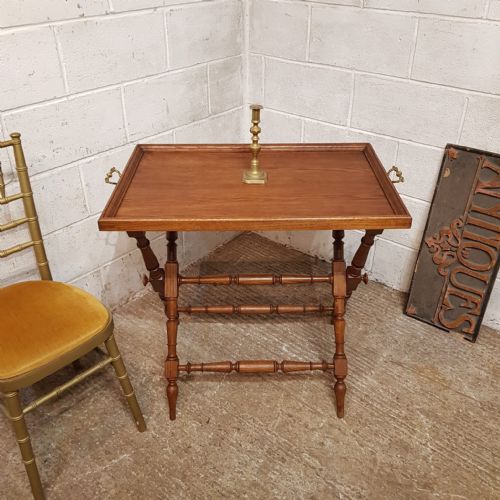


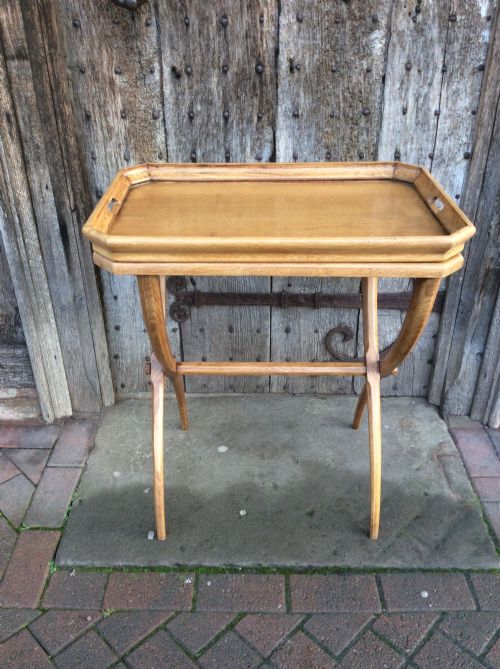
Oak Butler Tray Table
These oak butler tray table pieces combine practical serving surfaces with folding stands, offering versatile tables that suit everyday living spaces.
Oak Butler Tray Table
An oak butler tray table comprises a removable serving tray paired with a folding or fixed stand, functioning historically for domestic service and currently as flexible furniture. When you search for oak butler tray table, you encounter portable trays resting on stands that convert easily from serving pieces into occasional tables.
The versions most commonly met span the nineteenth century through to the nineteen-thirties, encompassing Victorian, Edwardian, and campaign styles. These pieces range from simple folding stands with plain trays to carved Gothic Revival examples and fitted drinks galleries.
Makers and manufacturers produced variations designed for specific domestic roles, including serving trays, coffee tables, and side tables. The survival of both nineteenth-century iterations and early twentieth-century pieces demonstrates their enduring utility across different eras of interior decoration.
Materials and construction methods
Carpenters utilised solid oak and wood veneers for the tray bodies and folding stands, occasionally incorporating brass hinges, handles, and gallery rails. The timber was selected for durability, providing a sturdy foundation whether constructed as a simple folding frame or a heavier Victorian stand.
Surface decoration on these trays includes carved detailing, geometric panels, and inset glass or paper elements, alongside campaign-style folding mechanisms designed for easy storage. Joinery techniques varied from basic pegged joints on nineteenth-century pieces to lighter framing on early twentieth-century examples.
Oak Butler Tray Table Retail Price Guide 2026
Typical asking prices for oak butler tray table among the pieces listed under this phrase on Sellingantiques today, from the lower quarter to the upper quarter. They describe what is for sale here now, not the wider market.
Listings feature solid oak and light oak constructions spanning the Victorian, Edwardian, and nineteen-thirty periods, incorporating brass and cut glass.
Assessing quality in construction and design
Quality in an oak butler tray table is determined by the weight and selection of the timber, the tightness of the joinery in the folding stand, and the crispness of any carved ornamentation. Finer pieces display substantial solid oak construction with well-fitted handles and robust brass hardware that secures the tray firmly to its support.
The sophistication of the design sets apart standard utility pieces from more ambitious examples, such as those featuring Gothic Revival carving, cartographer maps, or integrated silver plate and cut glass cruet sets. The retention of the original matching stand alongside the tray elevates the integrity of the piece.
The Oak Butler Tray Table Glossary
- Butler tray
- A portable wooden tray with raised sides, often fitted with cut-out handles, designed to lift off its support stand.
- Campaign style
- Furniture constructed to fold or dismantle easily for transport, typically featuring brass corners and recessed handles.
- Gallery tray
- A serving tray featuring an elevated raised border or pierced metal railing around the perimeter to secure items.
- Gothic Revival
- A nineteenth-century architectural and decorative style utilising pointed arches, heavy tracery, and deep carved motifs.
- Cruet set
- A matched collection of glass bottles for condiments and seasonings, occasionally housed in a miniature tray framework.
Oak Butler Tray Table: Frequently Asked Questions
How were butler trays used?
Originally, domestic staff utilised these trays to carry food, drinks, and tableware from the kitchens to the dining rooms or drawing rooms. The removable top allowed servants to set down the tray on a folding stand to serve guests directly without needing a permanent side table.
In modern interiors, people repurpose them as flexible coffee tables, drinks stations, or side tables that can be moved or folded away when floor space is required.
Are the trays fixed to the stands?
Most traditional butler trays sit loosely upon a separate folding X-frame or four-legged stand, allowing the tray to be lifted off independently for carrying. Some variations or later adaptations incorporate hinges or resting ledges to secure the tray more firmly to the base.
When examining a piece, check whether the tray and stand share matching timber patination and age, as trays and bases were frequently paired together over time.
How do I date an oak butler tray?
Dating relies upon examining the timber grain, construction joints, hardware materials, and stylistic markers such as Victorian carving or Edwardian gallery rails. Nineteenth-century examples often feature heavier solid oak and hand-cut joinery, whereas pieces from nineteen-thirty tend to show lighter framing.
The presence of specific hardware like brass campaign hinges or associated silver plate components helps narrow down the period of manufacture.
Can I use one as a coffee table?
These pieces function very well as coffee tables due to their convenient surface height and proportions relative to seating. Many nineteenth-century and early twentieth-century tray tables match the dimensions of standard low tables while offering the added character of antique woodwork.
Their sturdy oak construction handles daily use comfortably, and the raised edges prevent items from sliding off the surface.