




Victorian Burr Walnut Work Table
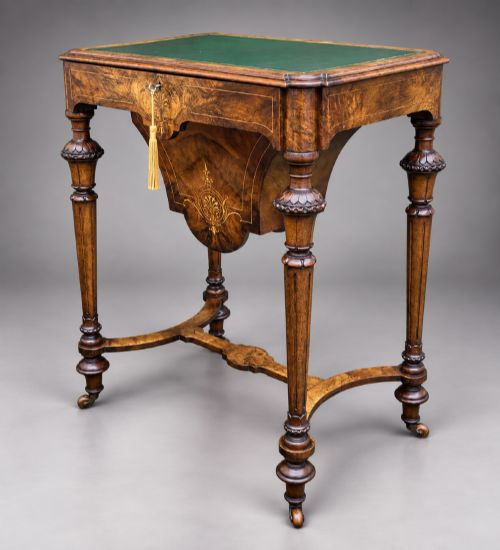
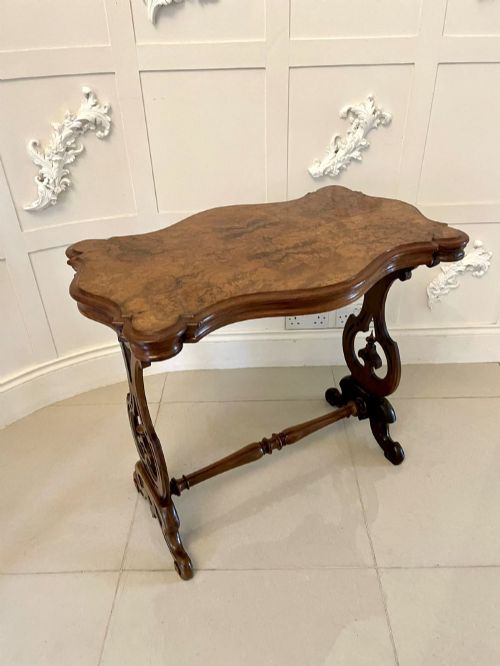
A victorian burr walnut work table brings rich timber grain and clever compartmented storage to a parlour or drawing room.
Victorian Burr Walnut Work Table
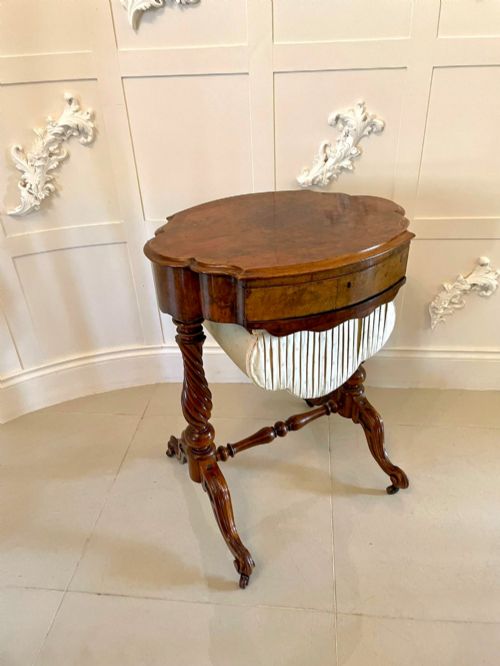
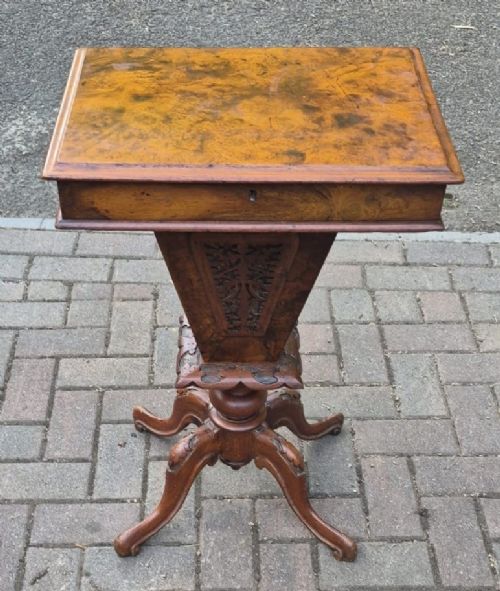
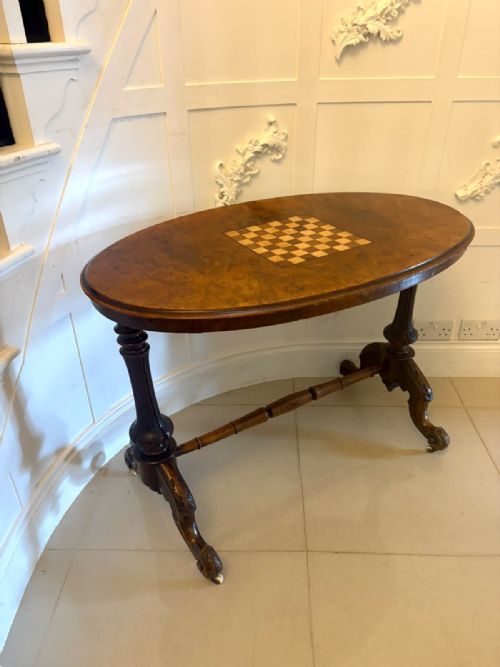
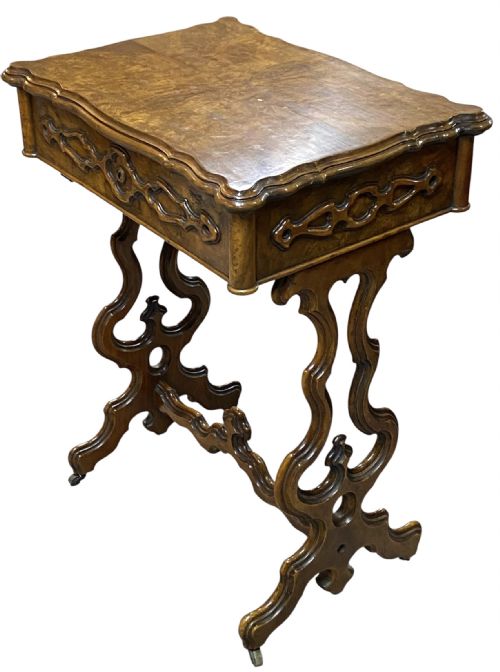
A victorian burr walnut work table is a multifunctional domestic piece designed for needlework, writing and games, appearing widely across the nineteenth century. These tables frequently combine a hinged lid opening to reveal a fitted interior with an under-mounted fabric work bag or a trumpet-shaped pedestal base. The form spans simpler rectangular side tables to elaborate multivero units featuring inlaid chess boards and compartments.
Most examples originate from the Victorian period, with specific dates clustering around the mid to late nineteenth century, predominantly between eighteen fifty and eighteen eighty. The repertoire includes occasional tables, centre tables and specialised sewing variants constructed to serve as decorative yet practical furnishings for the home. Buyers encounter numerous combinations where a single table doubles as a games board and a sewing receptacle.
Factors influencing quality
The distinction between standard and superior pieces rests largely on the complexity and execution of the timber veneers and surface ornamentation. Finer examples display symmetrical burr walnut figuring matched across the lid, complemented by crisp marquetry inlay and meticulous boxwood detailing rather than plain surfaces. The integration of multi-purpose functions, such as combined writing slopes, chess tops and fitted internal trays, also elevates the sophistication of the construction.
Proportion and structural detailing separate robust items from lesser ones, particularly in the carving of the pedestal supports and the neatness of the internal compartment dividers. The survival of original fitted interiors, complete with matching lids and intact fabric work bags, preserves the integrity and value of the table.
Listings span the nineteenth century, with construction dates ranging from eighteen fifty through to nineteen ten, alongside Edwardian examples.
Waring and Gillow
The Victorian Burr Walnut Work Table Glossary
- Burr walnut
- A specialised timber veneer taken from the excrescences or burls of a walnut tree, prized for its complex, swirling grain patterns. It forms the defining visual characteristic of these tables.
- Trumpet table
- A pedestal work table featuring an octagonal or rounded body that flares outwards toward the base, resembling the bell of a musical instrument. This shape commonly encloses a fabric sewing bag.
- Marquetry
- Decorative patterns formed by the insertion of contrasting pieces of wood veneer into a master panel. Artisans utilised this technique to create floral and geometric designs on table tops.
- Fitted interior
- The compartmentalized wooden tray or box set beneath the hinged lid of a work table. It typically includes small lidded compartments and slots for sewing tools.
- Canterbury
- A low, multi-sectioned piece of furniture designed for holding sheet music or books, occasionally incorporated into the design of nineteenth-century work tables.
Victorian Burr Walnut Work Table: Frequently Asked Questions
What was a work table used for?
These tables served as versatile hubs for domestic needlework, embroidery, and small writing tasks. Ladies of the household kept threads, needles, and sewing implements neatly organised inside the compartmented top.
Many examples also doubled as games tables by incorporating inlaid chess or draughts boards on the reverse or sliding lid surfaces. This dual functionality made them practical additions to nineteenth-century sitting rooms.
Are marquetry and inlay different?
Inlay involves embedding small pieces of contrasting material into a recessed cavity within a solid wood surface. Marquetry covers a broader area, utilising an entire assembly of veneered patterns cut together to form pictorial or floral designs.
Victorian work tables frequently combine both techniques on their outer lids to create decorative visual borders and central motifs.
Where should I place a work table at home?
These compact pieces fit well beside armchairs or sofas as occasional side or lamp tables. Their finished tops and decorative burr walnut veneers allow them to sit freestanding in the centre of a room.
The internal compartments also make them useful for storing small everyday items out of sight while maintaining a traditional aesthetic.