
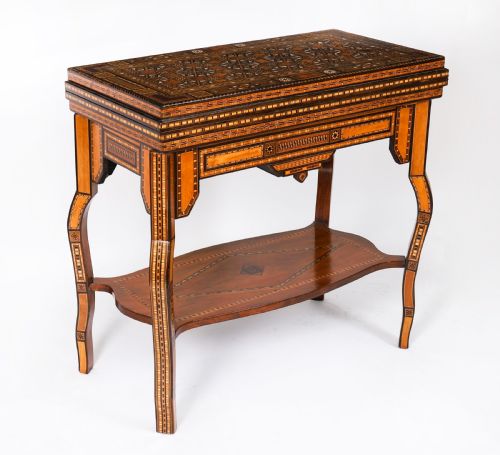


Marquetry Chess Table
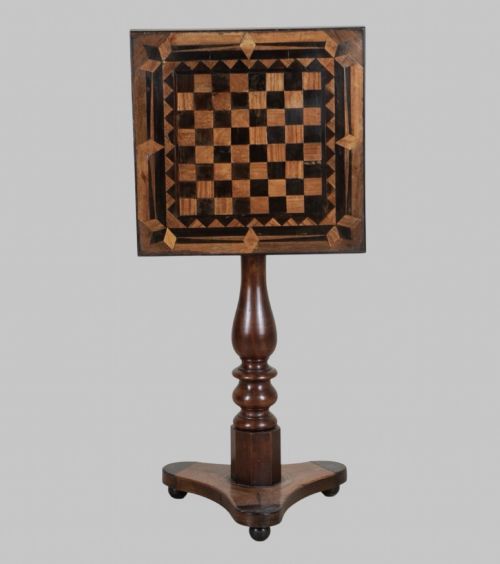
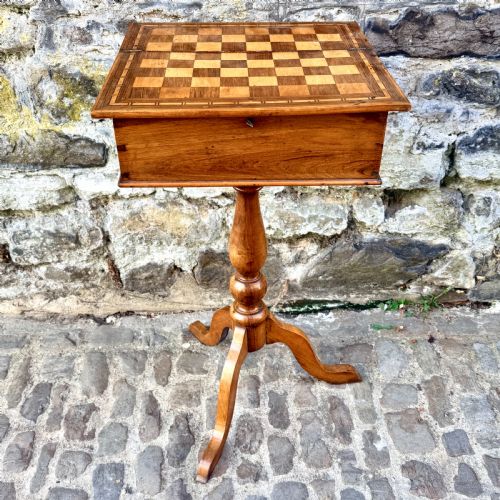
A marquetry chess table brings a surface of patterned veneers and inlaid boards into the room for serious play or quiet display.
Marquetry Chess Table
A marquetry chess table combines a dedicated gaming surface with the versatile form of a Victorian or Georgian occasional table.
Most examples found here date from the nineteenth century, including walnut, mahogany, and burr walnut constructions with inlaid chequer tops.
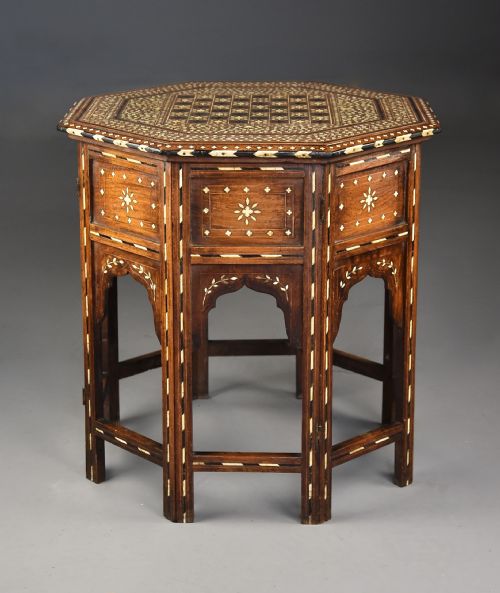
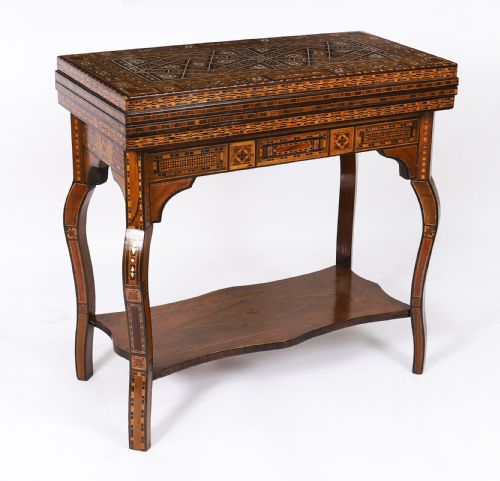
Beyond standard European forms, the selection includes Anglo-Indian, Levantine, and Syrian Ottoman designs featuring intricate geometric and floral inlay.
Many of these tables double as sewing or work tables, incorporating drawers or wool bags beneath the playing surface.
How they were made
Cabinet makers utilised contrasting timbers such as boxwood, walnut, and rosewood, cutting thin veneers to assemble intricate geometric or floral patterns.
The chequerboard top required precise alignment of light and dark woods, bordered by complex floral marquetry or specimen wood banding.
Structural elements relied on solid mahogany, oak, or walnut, shaped into tripod bases, pillar supports, or four-legged frames.
Listings feature nineteen-century production predominantly, spanning Victorian burr walnut models, Georgian occasional pieces, and intricate Levantine or Anglo-Indian variants.
What varies in quality
The precision and complexity of the inlay separate standard production from exceptional pieces, particularly in the rendering of floral marquetry and multi-game boards.
Choice of timber dictates overall character, with burr walnut and figured rosewood offering richer surface depth than plain secondary woods.
The stability of the pedestal base and the tight fit of internal sewing compartments or drawers indicate the original cabinet-making standard.
The Marquetry Chess Table Glossary
- Marquetry inlay
- Decorative patterns formed by fitting together small pieces of veneer into a solid wood ground. This technique allows for complex pictorial or geometric designs across the table top.
- Specimen wood
- Furniture constructed using a wide variety of different native and exotic timbers. The natural colour variations of each wood create a mosaic effect without applied dye.
- Chequer top
- A gaming surface divided into alternating light and dark squares for chess or draughts. It is typically integrated directly into the centre of the table.
- Tripod base
- A central pillar support resting on three curved legs. This configuration provides sturdy support for small occasional and games tables.
- Work table
- A multi-functional piece incorporating internal compartments, drawers, or fabric bags for sewing and needlework alongside the games board.
Marquetry Chess Table: Frequently Asked Questions
How do I maintain the inlaid surface?
Keep the timber nourished with a traditional beeswax polish applied sparingly with a soft cloth. Avoid placing the table in direct sunlight or near heat sources to prevent the veneers from lifting.
Dust regularly with a dry cloth and lift items rather than dragging them across the chequerboard surface to protect the delicate boxwood and fruitwood inlays.
Were these tables used only for chess?
Many examples on this page served multiple purposes, combining chess boards with backgammon layouts, card playing surfaces, and interior sewing wells. The inclusion of drawers and silk bags indicates they were centrepieces for domestic leisure and needlework.
Victorian households valued multi-functional furniture that could adapt from a writing or sewing desk to a gaming table during evening gatherings.
How do I distinguish regional inlay styles?
European Victorian and Georgian pieces generally feature symmetrical floral marquetry, burr walnut veneers, and polished mahogany frames. They follow classical revival forms with tripod or pillar bases.
In contrast, Anglo-Indian and Levantine tables display dense geometric strapwork, Arabic inscriptions, and micro-mosaic patterns utilising bone and diverse exotic fruitwoods.
Can I use an antique games table daily?
These tables are robust enough for gentle everyday use, provided you treat the antique veneer with reasonable care. Using coasters and avoiding excessive weight on drop leaves or tilting tops will preserve the structure.
Their sturdy nineteenth-century construction means they function well as lamp tables or occasional display surfaces when not in active use for games.