
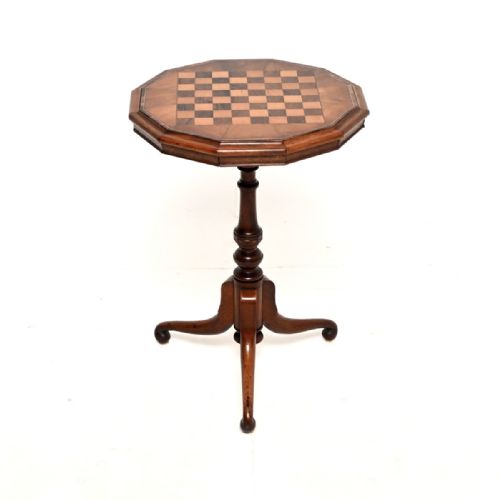
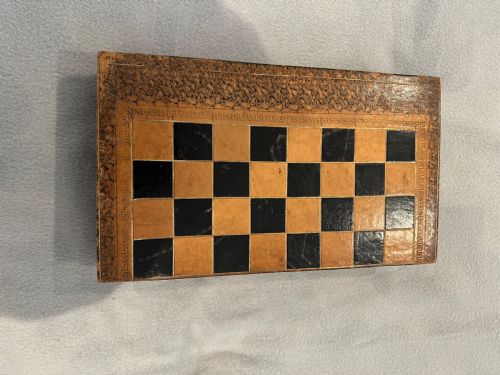
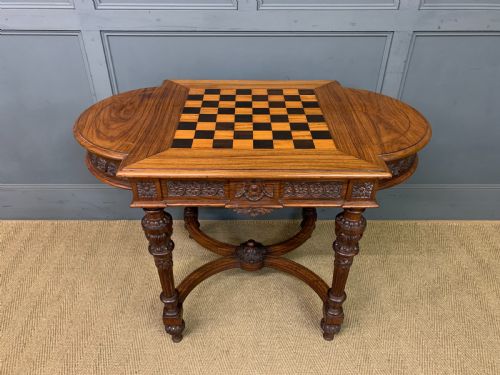


Victorian Chess Board Table
These Victorian chess board table examples combine practical parlour furniture with dedicated play surfaces, offering a surface for matches and display alike.
Victorian Chess Board Table
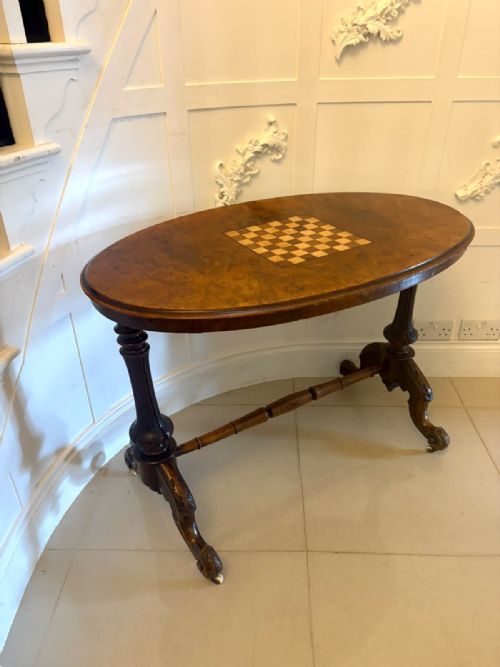
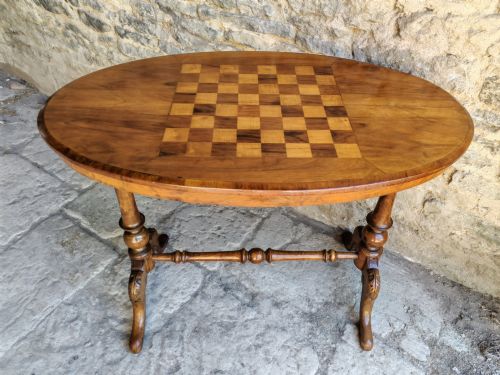
A victorian chess board table brings together domestic utility and parlour entertainment through dedicated playing surfaces integrated into nineteenth-century furniture. The pieces seen across these listings most frequently take the form of occasional tables, games tables, and sewing tables featuring inlaid boards.
Makers produced these items in various woods during the nineteenth century, ranging from simple walnut and mahogany side tables to elaborate Anglo-Indian rosewood designs and burr walnut pedestal forms. Many examples incorporate drawers, compartments, or reversible tops that conceal additional gaming boards beneath.
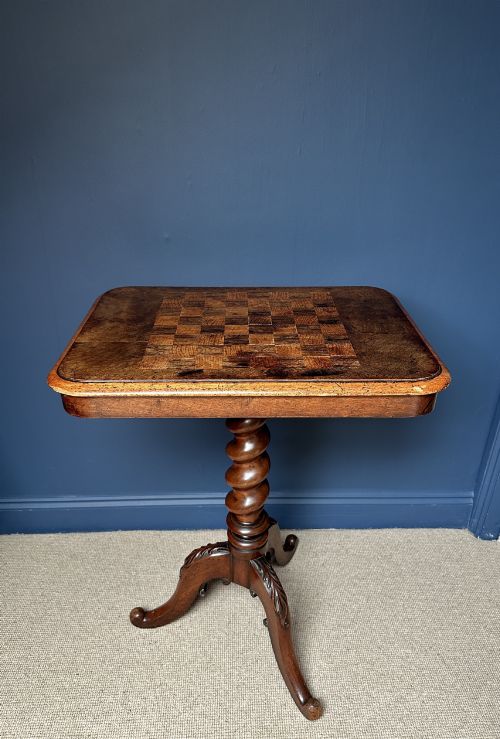
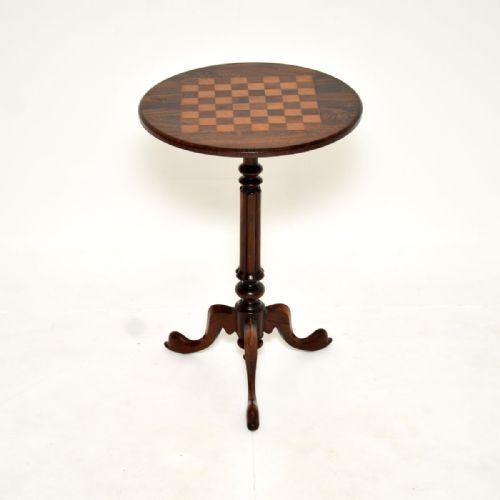
Buyers searching this phrase encounter both standalone pedestal tables and compact side tables designed for nineteenth-century reception rooms. The selection spans straightforward chess top surfaces up to multi-game compendiums and trumpet-shaped sewing tables equipped for multiple pastimes.
Materials and Construction
Cabinet makers utilised dense hardwoods such as walnut, burr walnut, mahogany, and rosewood for the structural frames and primary surfaces of these tables. These timbers provided stability and rich grain patterns suited to nineteenth-century drawing rooms.
The characteristic playing surfaces rely on precise wood inlay, frequently combining lighter boxwood with darker veneers to delineate the distinct squares. Craftsmen also applied intricate carving to pedestals, tripod legs, and frieze drawers, balancing decorative appeal with structural support.
Listings feature walnut, rosewood, and mahogany, with burr walnut appearing frequently alongside inlaid wood chess boards.
Craftsmanship and Proportion
The standard of a victorian chess board table depends heavily on the quality of its timber selection, particularly the figuring of burr walnut or the grain consistency of rosewood. Superior examples exhibit seamless veneer work and precise alignment in the inlaid squares without gaps or warping.
Structural integrity and secondary functions distinguish finer pieces from standard production. Tables that incorporate smooth-sliding drawers, secure pivoting mechanisms, or multi-game interiors demonstrate a higher level of original cabinet making.
The Victorian Chess Board Table Glossary
- Burr walnut
- A figured timber obtained from the wart-like growths on walnut trees, prized for its swirling grain patterns on table tops. Cabinet makers used veneers of this wood to create decorative surfaces in nineteenth-century furniture.
- Inlay
- A technique where pieces of contrasting wood are inserted into a recessed surface to form a pattern or chess board. This method creates a flush, smooth playing area.
- Tripod base
- A three-legged support structure commonly found beneath the pillars of nineteenth-century occasional and games tables. It provides stability while allowing clearance for chairs.
- Games compendium
- A fitted box or table containing equipment and boards for multiple pastimes such as chess, draughts, backgammon, and cribbage. These items demonstrate the Victorian appetite for parlour entertainment.
Victorian Chess Board Table: Frequently Asked Questions
What is a Victorian chess table used for?
These pieces served as dual-purpose furniture for nineteenth-century drawing rooms, providing both a stable surface for social pastimes and an everyday occasional table for lamps or sewing.
Owners would play matches on the inlaid board during parlour gatherings and keep gaming pieces or sewing supplies stored in the built-in drawers or compartments beneath.
How do I identify a Victorian chess table?
Look for characteristic nineteenth-century timber choices such as burr walnut, rosewood, and mahogany, alongside traditional construction methods like hand-cut dovetails in the drawers.
The presence of an integrated or inlaid wood chess board on the top, often accompanied by pedestal bases or tripod legs, points directly to this period.
Are all these tables strictly for chess?
Many examples on this page offer versatility beyond a single game through multi-functional designs and reversible tops.
Several pieces incorporate boards for backgammon and cribbage, or feature leather-lined writing surfaces alongside the chess board.
Where should I place a chess table at home?
These tables suit reception rooms, studies, or hallways where their decorative wood veneers and compact footprints can be appreciated.
Positioning them near natural light allows the inlaid boxwood and dark wood squares to function as a striking focal point.