


Victorian Burr Walnut Mirror
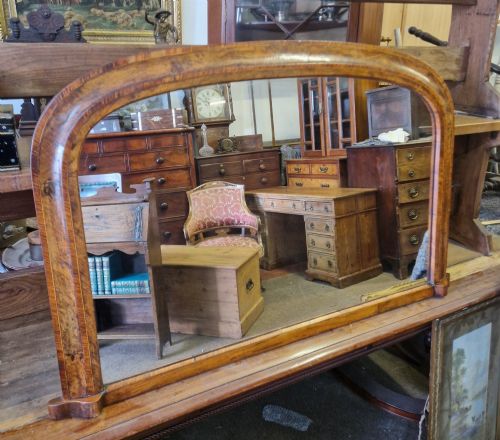
A victorian burr walnut mirror brings warmth and intricate grain to a room, whether set into a massive overmantel or fitted to a dressing table.
Victorian Burr Walnut Mirror
When searching for a victorian burr walnut mirror, buyers encounter several distinct domestic forms ranging from overmantel glasses to dressing table glasses and wall mirrors.
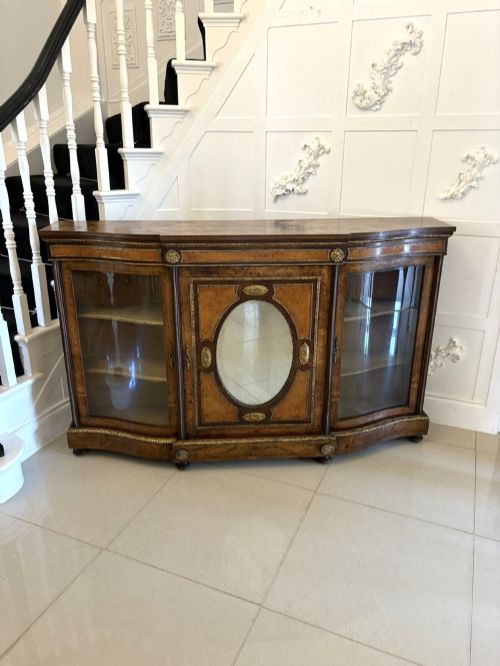
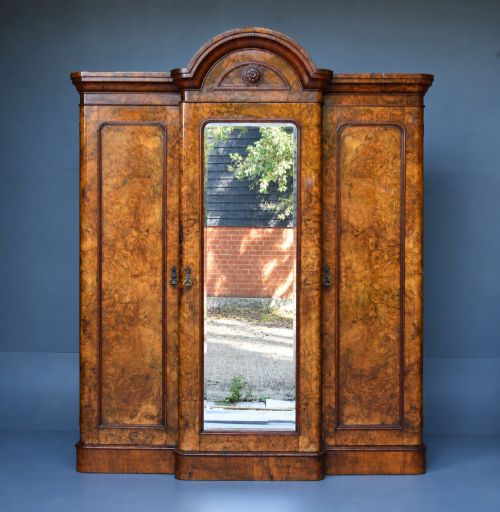
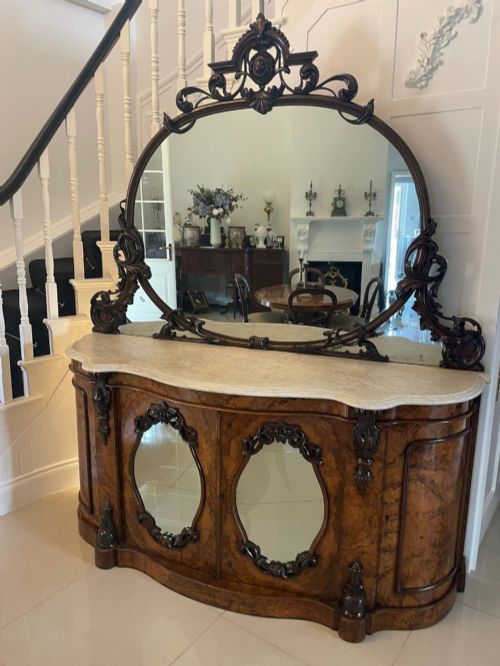
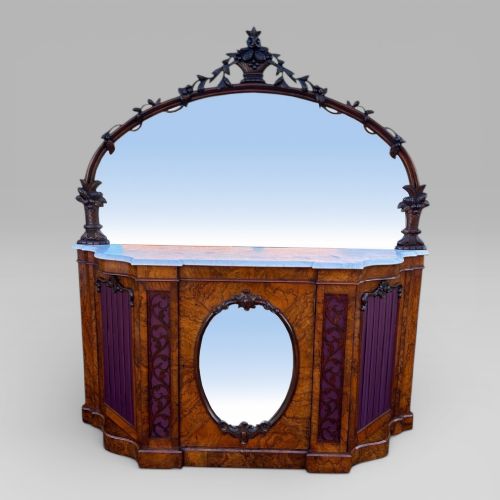
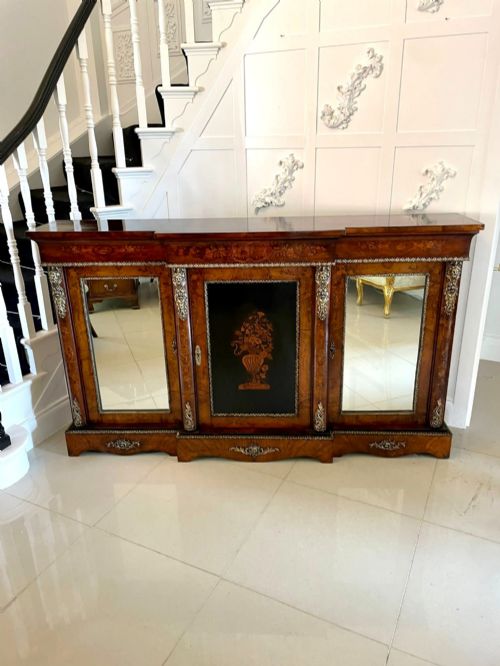
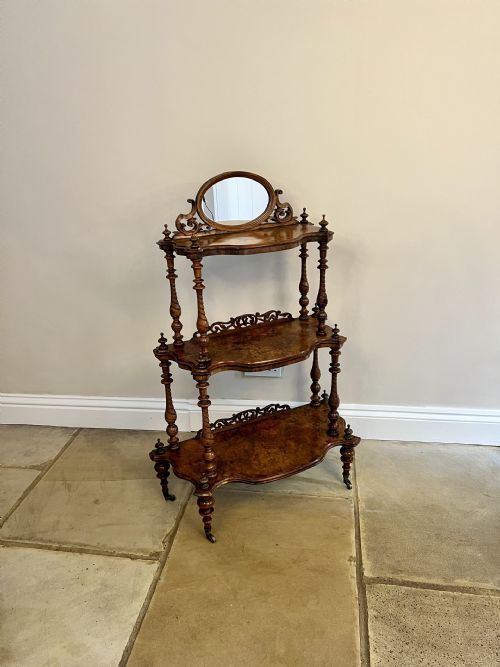
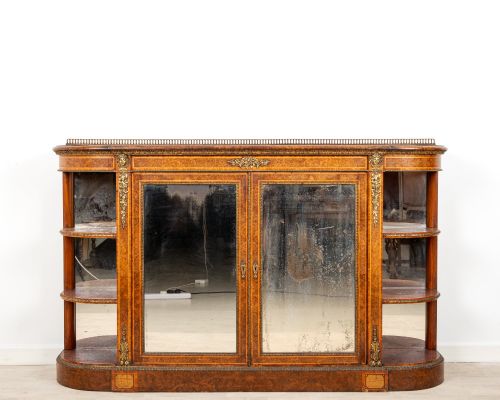
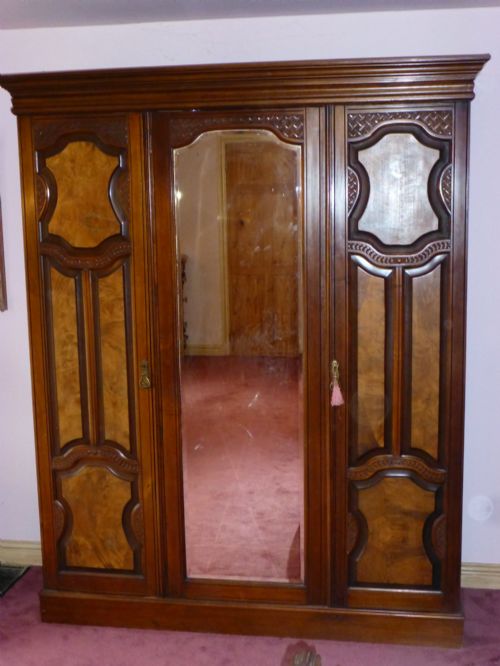
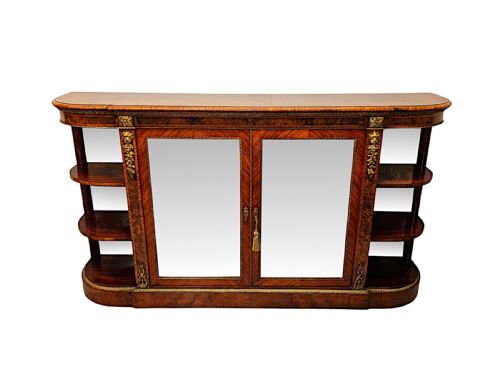
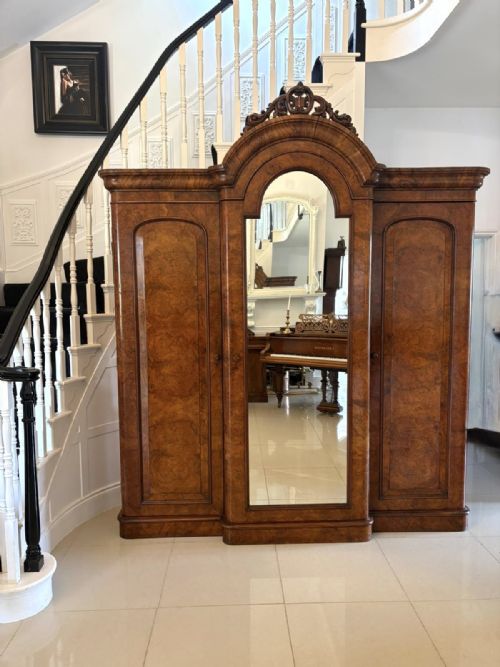
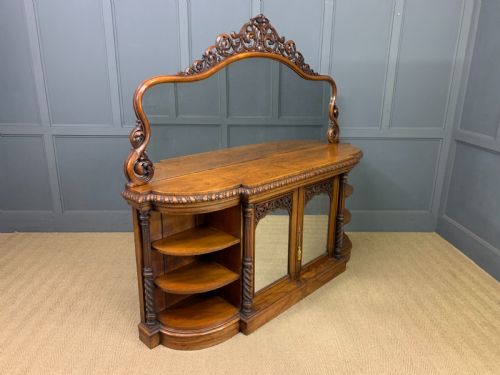
Many of these pieces are integrated into larger furniture items, such as mirror-backed credenzas, chiffoniers, wardrobes, and duchess dressing tables.
The most common versions on this page combine figured burr walnut timber with glass plates, dating primarily from the nineteenth century.
Materials and Construction
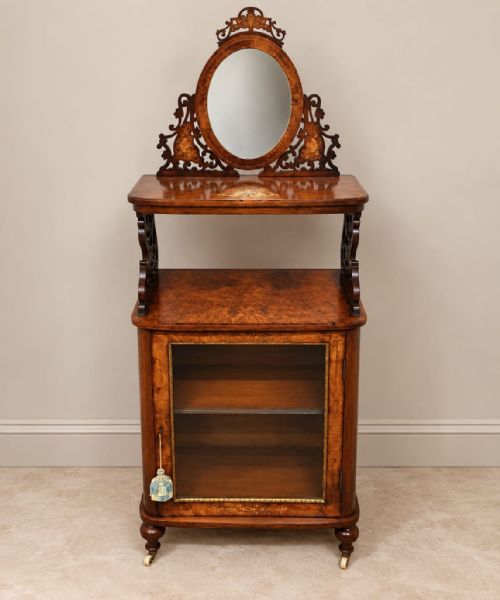
Cabinetmakers selected burr walnut for its swirling, highly figured grain patterns, slicing the knot growths into thin veneers to lay over solid secondary timbers.
Many pieces incorporate brass mounts, ormolu, and carved wooden elements to accent the rich brown tones of the walnut veneer.
Mirror glass was set into frames or backing boards, frequently accompanied by inlaid marquetry, satinwood banding, and ebonised details.
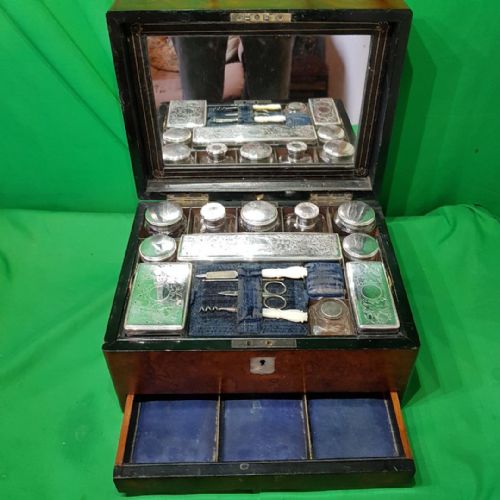
Some Victorian travelling sets packed tiny folding mirrors alongside velvet compartments so owners could check their appearance on the move.
Markers of Excellence
Quality in these pieces rests upon the density and placement of the burr walnut veneer, where symmetrical grain matching elevates the visual impact.
The crispness of carved wooden details and the integration of ormolu mounts or brass hardware distinguish standard production from exceptional examples.
Makers who supplied high-end establishments utilised superior framing techniques and heavy, clear mirror glass that remains stable within its housing.
Holland and Sons·Gillows
The Victorian Burr Walnut Mirror Glossary
- Burr walnut
- A veneer sliced from the deformed growths or burrs on walnut trees, prized for its swirling, mottled grain patterns. It forms the primary decorative surface on mid-nineteenth-century furniture.
- Credenza
- A sideboard or cabinet, often fitted with mirror doors or accompanied by a mirror back. These pieces served grand Victorian reception rooms.
- Ormolu
- Gilded bronze mounts applied to furniture. This technique added metallic contrast to dark wood surfaces during the nineteenth century.
- Compactum
- A large fitted wardrobe combining hanging space, drawers, and shelves. These often incorporated central mirror doors.
- Marquetry
- Inlaid patterns of wood veneer forming decorative motifs. Craftsmen used contrasting timbers like satinwood alongside walnut.
Victorian Burr Walnut Mirror: Frequently Asked Questions
What is a mirror back credenza?
A mirror back credenza is a low cabinet featuring an attached superstructure with a vertical glass plate. These items stood in Victorian dining rooms and parlours.
The reflective glass amplified candlelight and displayed decorative porcelain or ornaments placed on the surface below.
How do I date a burr walnut mirror?
Dating relies on stylistic clues such as carving depth, wood framing thickness, and the type of edge bevel on the glass. Mid-century examples often display Rococo revival curves.
Later Victorian pieces from the 1880s and 1890s lean towards aesthetic movement lines or darker ebonised framing details.
Were these mirrors part of larger suites?
Many mirrors originated as fixed components of larger bedroom suites, attaching directly to dressing tables, duchess chests, or wardrobes. Cheval mirrors stood independently on floor pivots.
Overmantel mirrors hung separately above fireplace mantels, matching the broader woodwork of the room.
How do I care for burr walnut veneer?
Burr walnut veneer requires stable indoor humidity and protection from direct sunlight to prevent timber shrinkage and finish cracking. Gentle dusting preserves the polished surface.
Avoid liquid cleaners and wax accumulations that obscure the natural grain patterns of the wood.