




Victorian Burr Walnut Etagere
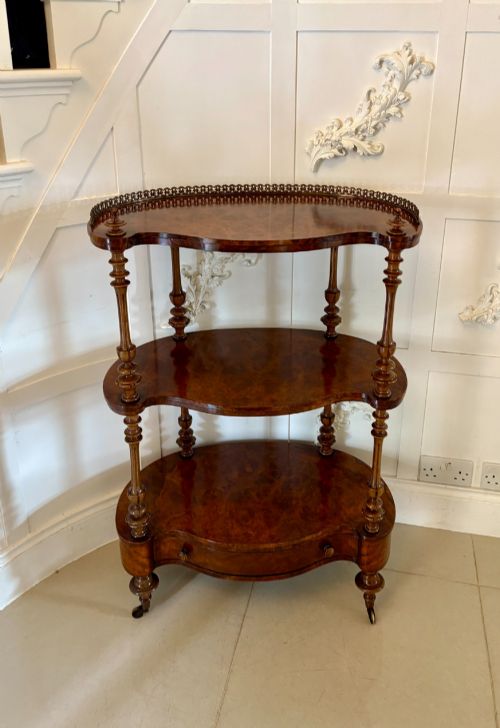
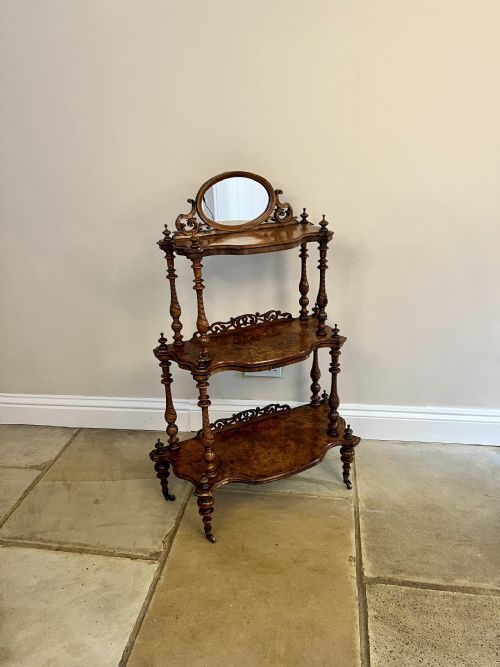
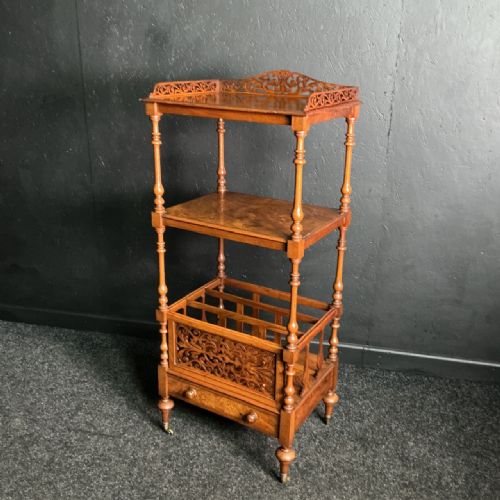
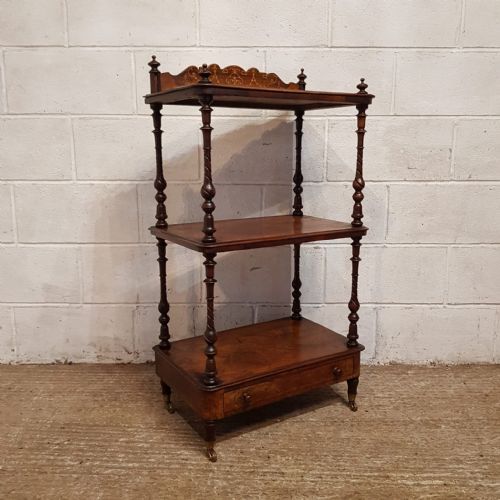
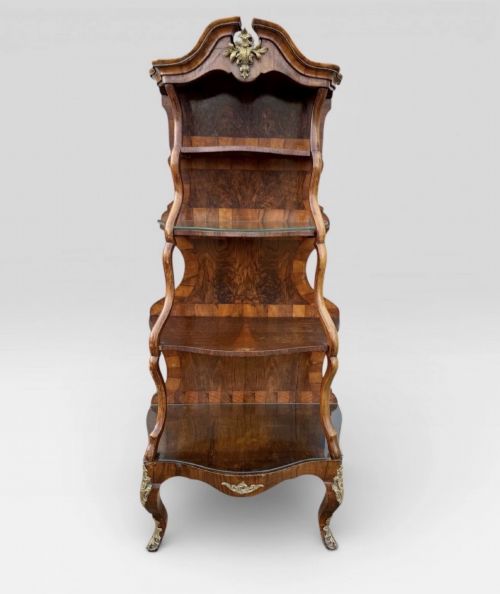
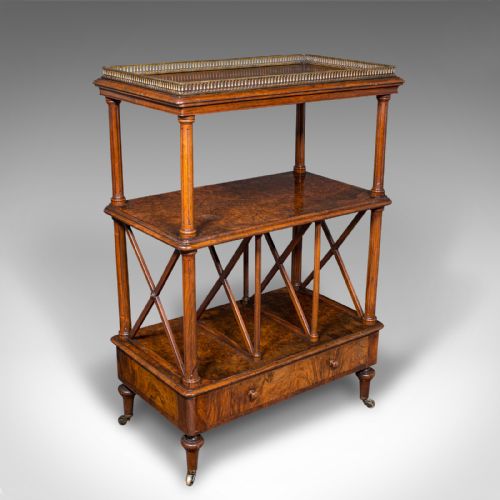
A Victorian burr walnut etagere brings figured timber and open tiers to a room, offering display space with nineteenth-century polish.
Victorian Burr Walnut Etagere
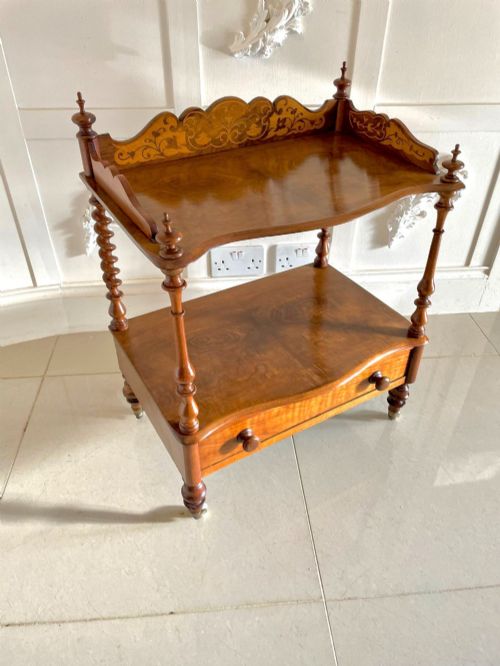
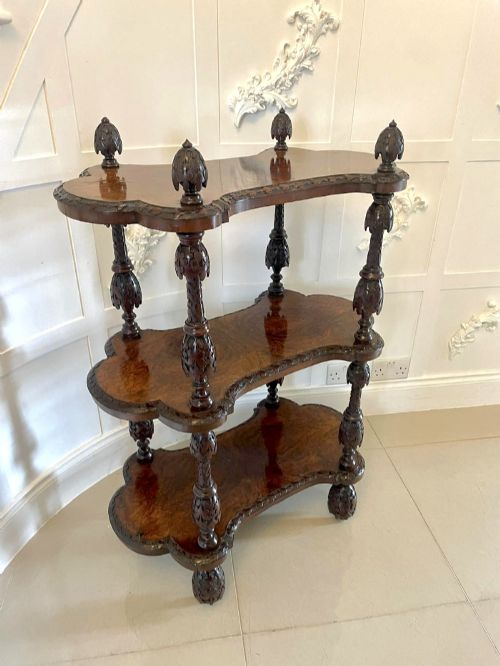
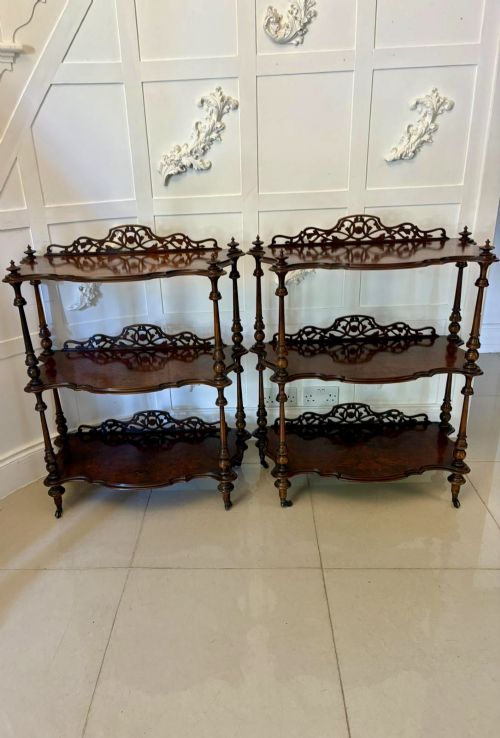
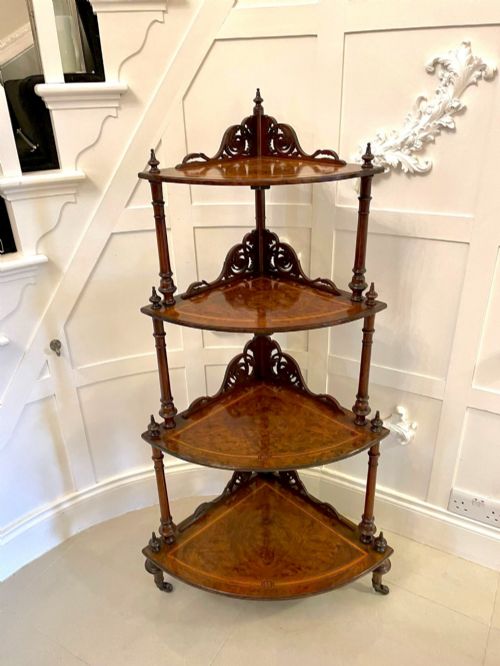
A Victorian burr walnut etagere is a multi-tiered display piece designed to hold decorative objects, books, or lamps. When searching for this phrase, buyers encounter open shelving units, corner whatnots, side cabinets, and three or four tier display stands.
The pieces appearing here span the nineteenth century, including specific dates such as eighteen-fifty, eighteen-sixty, and eighteen-eighty, alongside broader Victorian and Regency categorisations. Forms range from serpentine shapes and demi-lune consoles to kidney-shaped and freestanding tables.
Most items belong firmly to the Victorian period, utilising timber with rich figuring and decorative marquetry inlay. These stands function primarily as display furniture, designed to showcase prized possessions in a drawing room or parlour.
What varies in quality
The fineness of the burr walnut figuring dictates much of the visual appeal, alongside the crispness of any marquetry inlay or carved detail. Pieces described with exhibition quality or precise cabinetwork display superior execution in their serpentine curves and overall proportions.
Structural complexity also separates standard items from exceptional examples, such as those with multiple tiers, corner configurations, or integrated side cabinets and display consoles. The handling of brass mounts and glass components further marks the distinction between ordinary production and high-grade nineteenth-century workshop output.
Victorian Burr Walnut Etagere Retail Price Guide 2026
Typical asking prices for victorian burr walnut etagere among the pieces listed under this phrase on Sellingantiques today, from the lower quarter to the upper quarter. They describe what is for sale here now, not the wider market.
Listings feature walnut, brass, glass, and mirror materials shaped into etageres, corner whatnots, and display consoles across the nineteenth century.
Holland & Sons
The Victorian Burr Walnut Etagere Glossary
- Etagere
- A piece of furniture consisting of a set of open shelves for displaying small objects. These tiered stands developed in France before becoming popular in nineteenth-century Britain.
- Burr walnut
- A prized timber harvested from walnut tree growths, known for its swirling, highly figured grain patterns. Cabinetmakers sliced this wood into thin veneers for decorative surfaces.
- Marquetry
- The art of applying pieces of veneer to a structure to form decorative patterns and pictures. Floral and geometric designs in lighter woods frequently contrast with the darker walnut background.
- Serpentine
- A furniture shape characterised by a line of alternate convex and concave curves. This undulating profile appears on the front edges and shelves of finer nineteenth-century stands.
- Demi-lune
- Half-moon shaped furniture designed to sit flush against a wall. These console tables and whatnots save floor space while providing a curved display surface.
Victorian Burr Walnut Etagere: Frequently Asked Questions
What is the difference between an etagere and a whatnot?
An etagere generally emphasises open display tiers for ornaments, whereas a whatnot historically served a similar multi-shelved function for books, china, or curiosities.
In nineteenth-century usage and modern listing titles, the terms frequently overlap to describe tiered wooden display stands.
Where were etageres placed in Victorian homes?
These tiered stands typically stood against drawing room walls, in corners to utilise awkward spaces, or beside seating areas.
Their open shelves allowed homeowners to exhibit small decorative objects, porcelain, and lamps where guests could easily admire them.
How can I date a Victorian burr walnut etagere?
Dating relies on stylistic clues such as the presence of Rococo Revival curves, specific inlay patterns, and construction methods characteristic of the mid to late nineteenth century.
Some pieces carry specific date attributions from eighteen-fifty to eighteen-ninety based on design traits and historical records.
Are corner whatnots as functional as standard ones?
Corner whatnots provide tiered display space while fitting neatly into room angles, making them practical for smaller apartments or tight layouts.
They offer the same decorative burr walnut surfaces and marquetry details as freestanding rectangular versions.