


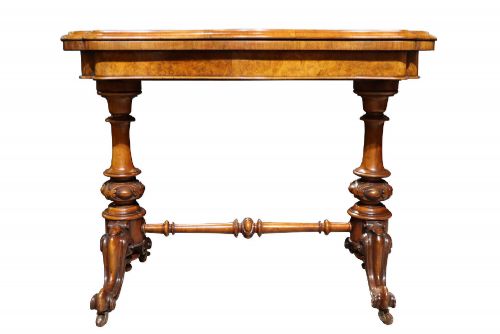
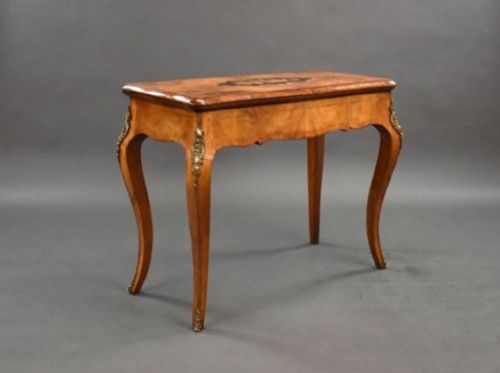
Victorian Burr Walnut Card Table
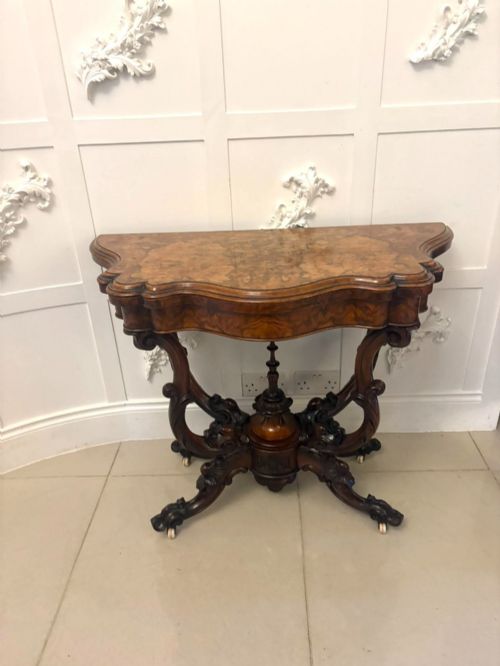
A Victorian burr walnut card table brings mid-nineteenth-century timber work and a folding top into a modern sitting room.
Victorian Burr Walnut Card Table
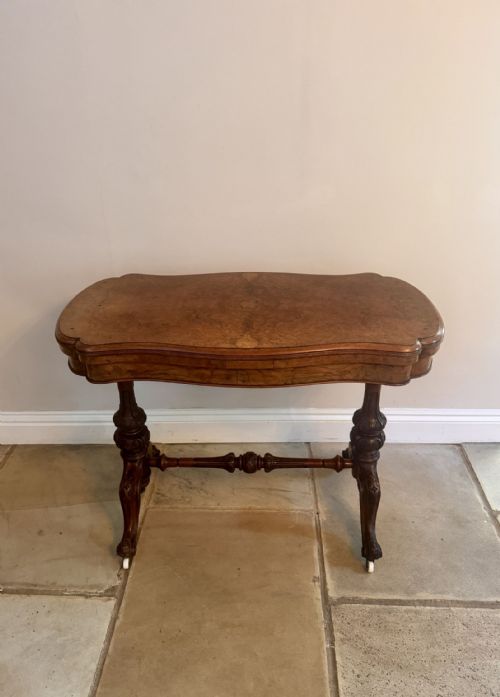
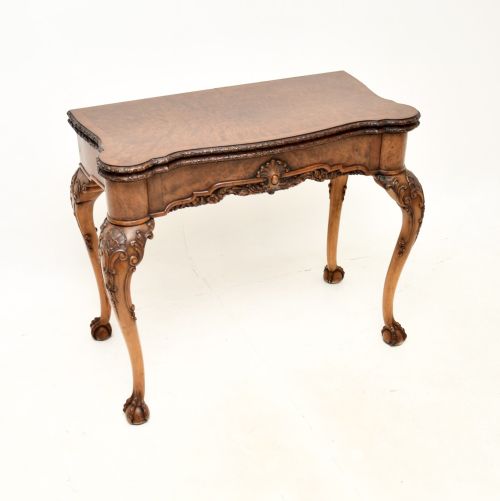
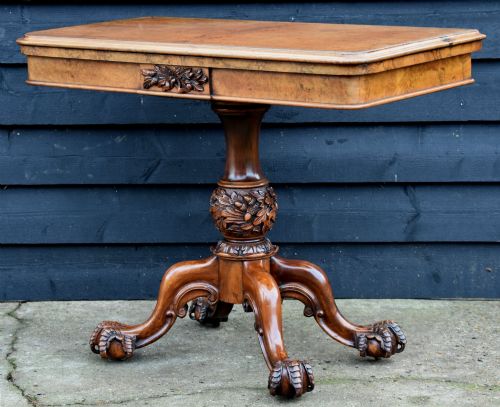
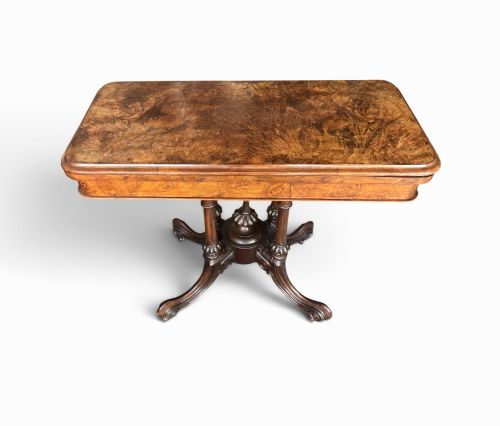
A Victorian burr walnut card table is a specific nineteenth-century form designed for parlour games and social gatherings. The pieces recorded here span the Victorian era, nineteenth century, and the decades up to nineteen-twenty, predominantly using burr walnut and plain walnut timbers.
Most examples function as fold-over tables that reveal a baize-lined playing surface when opened. Alongside dedicated card tables, the listings include console tables, loo tables, games and sewing tables, and occasional side pieces.
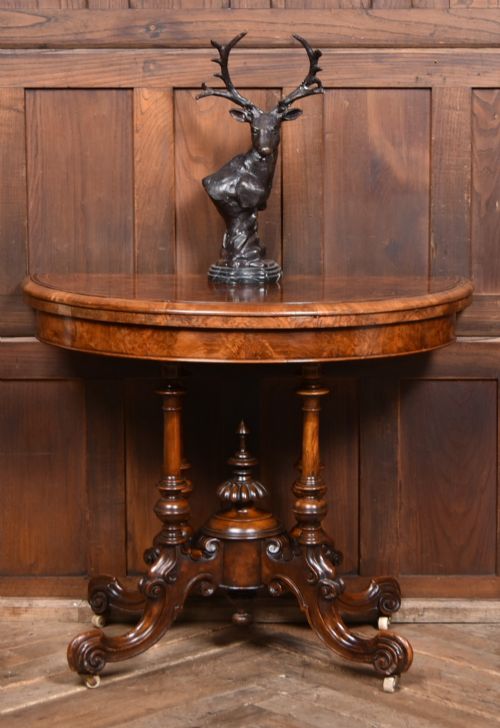
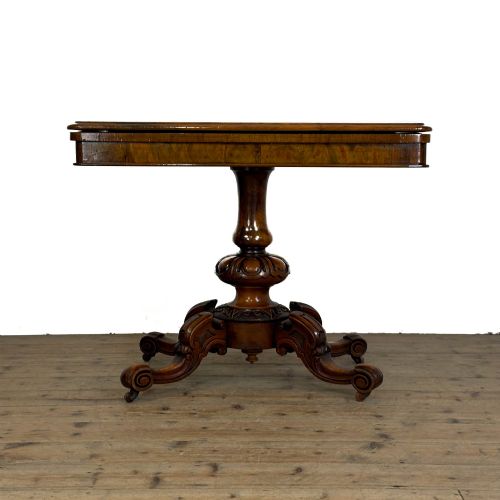
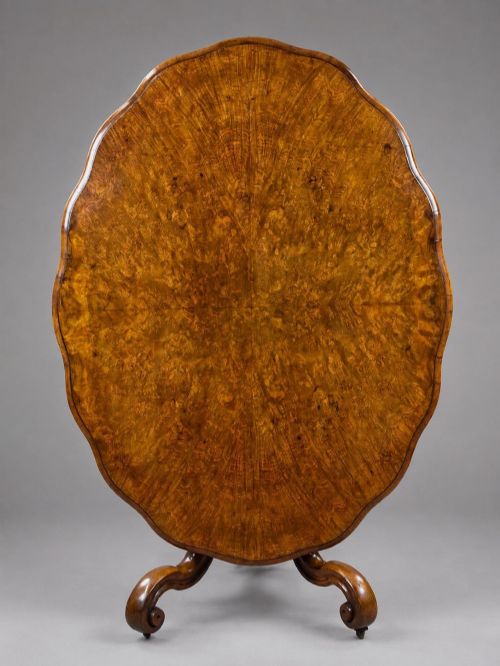
Makers working within these styles utilised varied silhouettes, from serpentine fronts to classical pedestals supported by carved bases. Buyers encountering these objects find a combination of display surface and functional furniture rooted in nineteenth-century domestic life.
Materials and construction methods
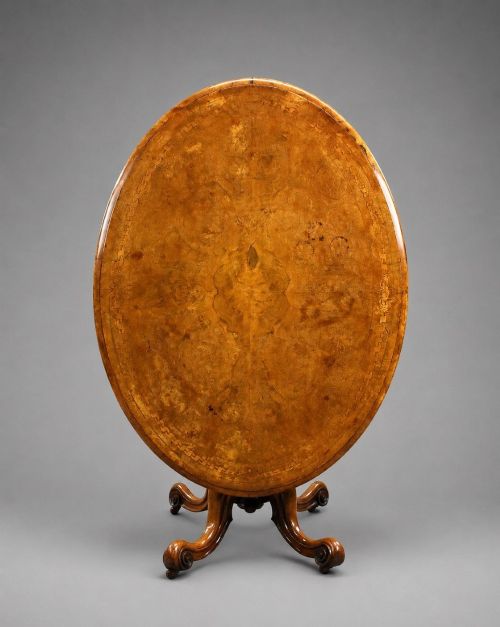
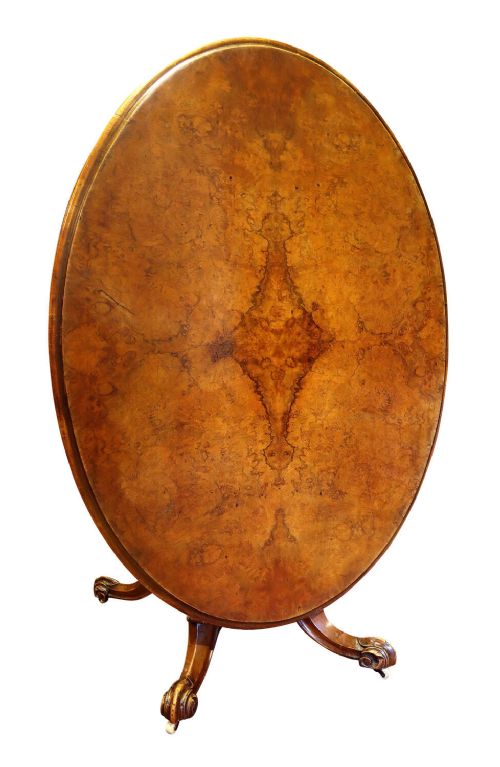
Cabinet makers constructed these pieces using solid walnut frameworks overlaid with highly figured burr walnut veneers. The distinct swirling grain patterns of the burr wood provided decorative impact on the fold-over tops and friezes.
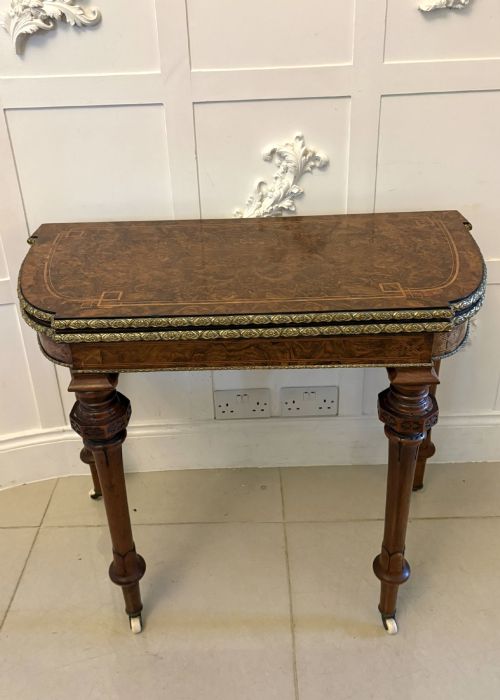
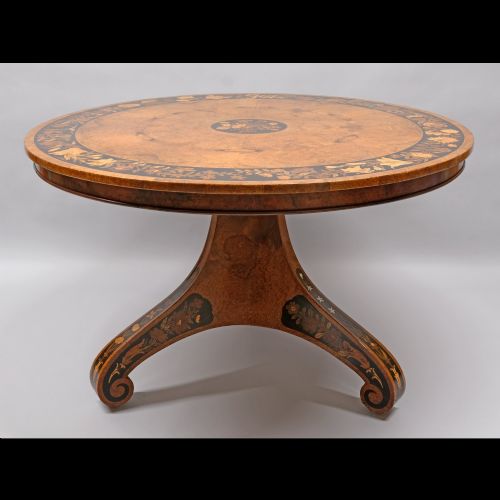
Detailing relied on boxwood inlay, floral marquetry, and ebonised wood accents to define borders and panels. Metal mounts in brass or ormolu appear alongside ceramic elements, while carved wooden supports anchor the pedestals.
Site listings demonstrate that burr walnut card tables frequently incorporate boxwood inlay, floral marquetry, and serpentine edges across Victorian and nineteenth-century examples.
Factors separating examples across the range
Quality in these tables rests on the selection and matching of the burr walnut veneer across the folding top. Superior pieces display symmetrical grain patterns that flow seamlessly when the table opens.
The precision of the boxwood inlay and floral marquetry indicates the skill of the workshop. Heavier carving on the basket bases and structural supports separates standard production pieces from the finest cabinet work.
Holmes Baldock·Edwards & Roberts·Gillows of Lancaster
The Victorian Burr Walnut Card Table Glossary
- Burr walnut
- Timber taken from the warted growths on walnut trees, showing intricate swirling grain patterns. Cabinet makers prized this wood for decorative veneering on prominent surfaces.
- Marquetry
- The art of applying pieces of veneer to a structure to form decorative patterns and floral designs. Boxwood inlay often accompanied this work on Victorian surfaces.
- Serpentine
- A furniture shape featuring a double-curved edge that bulges outward in the centre and curves inward at the sides. This outline appears frequently on mid-nineteenth-century tabletops.
- Ormolu
- Gilded bronze mounts applied to furniture for decorative enrichment. These metallic elements highlight the revival styles popular during the period.
- Loo table
- A large round or oval parlour table used for the nineteenth-century card game loo. Many share the tilting mechanisms and pedestal bases found on related games tables.
Victorian Burr Walnut Card Table: Frequently Asked Questions
How did Victorians use a card table?
These tables served as dual-purpose furniture for nineteenth-century drawing rooms. Closed against the wall, they functioned as console or side tables for lamps and ornaments.
When guests arrived, the hinged top folded open to reveal a baize-lined surface for cards, chess, and draughts.
How do I care for burr walnut veneer?
Burr walnut requires stable indoor humidity and protection from direct sunlight to prevent the timber from drying out or fading. Gentle dusting with a dry cloth maintains the polished finish without harming the delicate grain.
Avoid placing damp items or hot cups directly on the antique wooden surface.
How can I tell the exact period?
Dating relies on combining the construction techniques, timber choices, and stylistic details visible on the piece. Mid-nineteenth-century examples often feature elaborate marquetry and carved pedestal bases associated with the height of the Victorian era.
Later nineteenth-century iterations incorporate Aesthetic Movement lines or simpler structural forms.
Are these tables practical for daily use?
The fold-over design provides a flexible surface that adapts easily to modern living spaces as a console or occasional table. Opening the top requires care to protect the original hinges and internal wooden framing.
Daily use works well provided the table avoids heavy loads and extreme temperature shifts.