





Victorian Bronze Inkstand
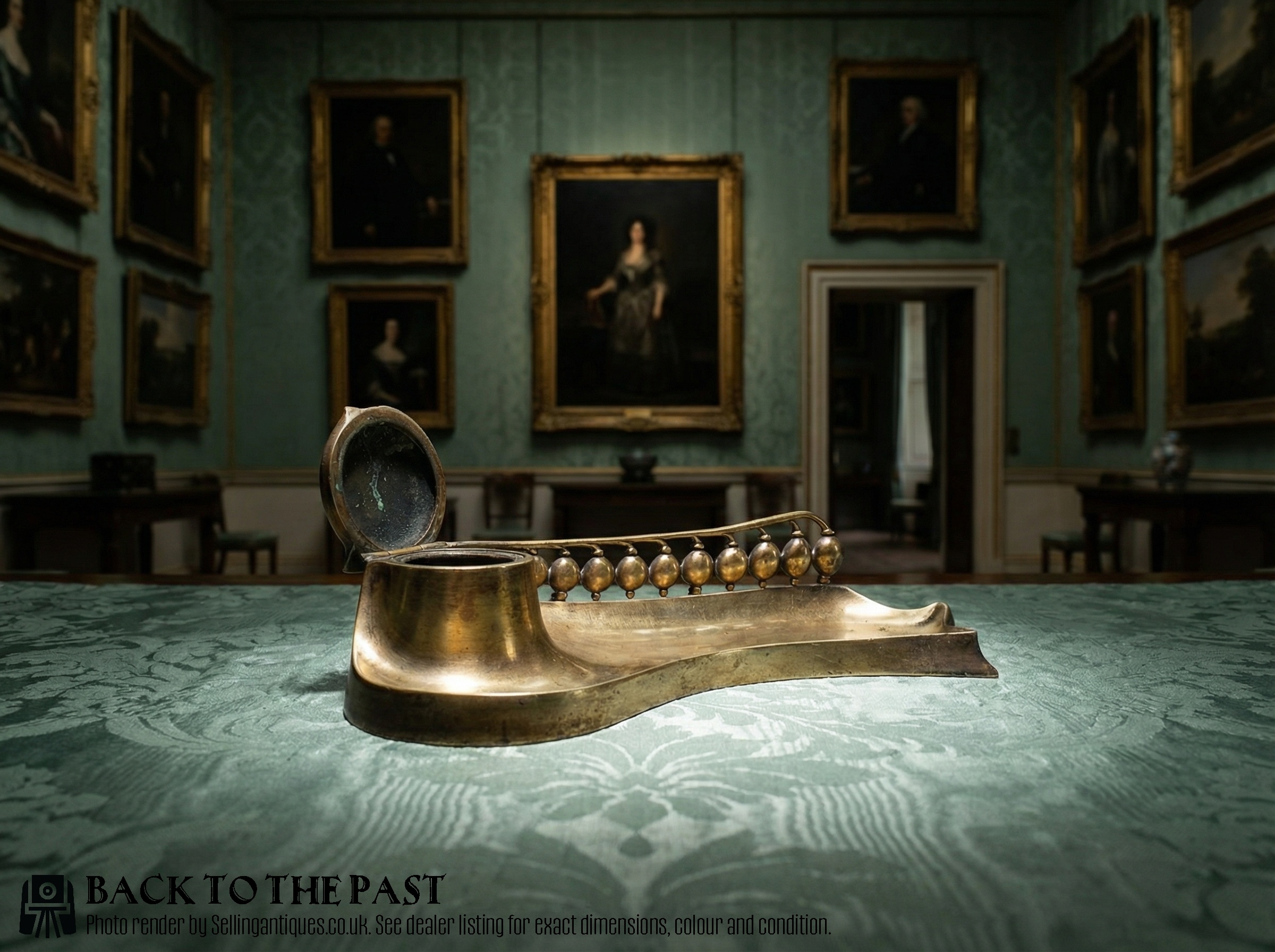
A victorian bronze inkstand is a heavy desk accessory that anchors a writing table, offering both utility and nineteenth-century craftsmanship.
Victorian Bronze Inkstand
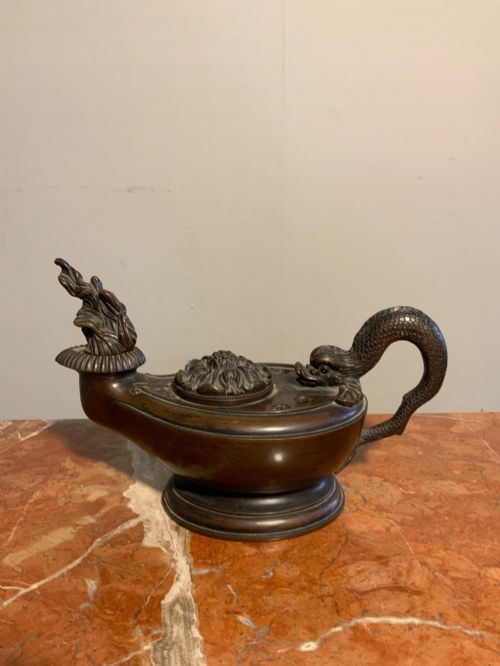
A victorian bronze inkstand brings together practical desk accessories and sculptural metalwork from the nineteenth century. You encounter pieces ranging from simple patinated bronze models to elaborate French Empire, Art Nouveau, and Neoclassical desk sets.
The selection here includes desk stands, inkwells, and larger desk sets incorporating marble, glass, and enamel. Many pieces originate from French workshops or British makers, reflecting varied continental and domestic tastes during the period.
Figural novelties appear frequently among these listings, depicting animals such as dogs, ostriches, monkeys, and stags, alongside architectural Grand Tour souvenirs. These items served a daily purpose in correspondence while displaying ornamental detail on a library or study desk.
Materials and casting techniques
Bronze, gilt bronze, ormolu, and brass form the structural foundations of these pieces, often combined with heavy vert marble, onyx, or coromandel-wood bases. Artisans cast the metal components to create detailed figural subjects and architectural mounts.
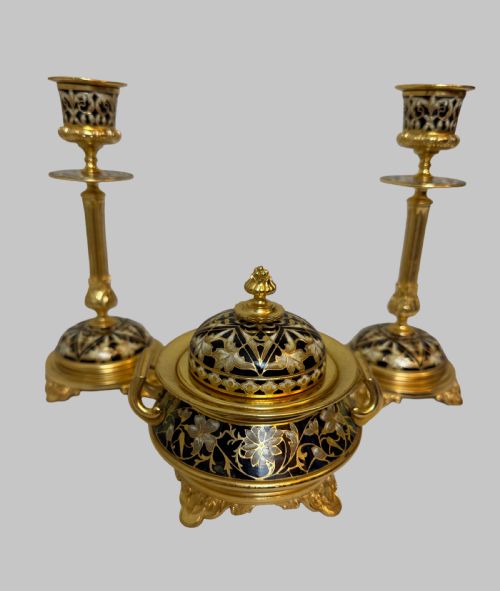
Gilding, champlevé enamel, and patination treatments finish the metal surfaces, while fitted glass inserts hold the ink within the heavy mounts. Workshops paired cast metal with polished stone to give the desk stands substantial weight and presence.
Victorian Bronze Inkstand Retail Price Guide 2026
Typical asking prices for victorian bronze inkstand among the pieces listed under this phrase on Sellingantiques today, from the lower quarter to the upper quarter. They describe what is for sale here now, not the wider market.
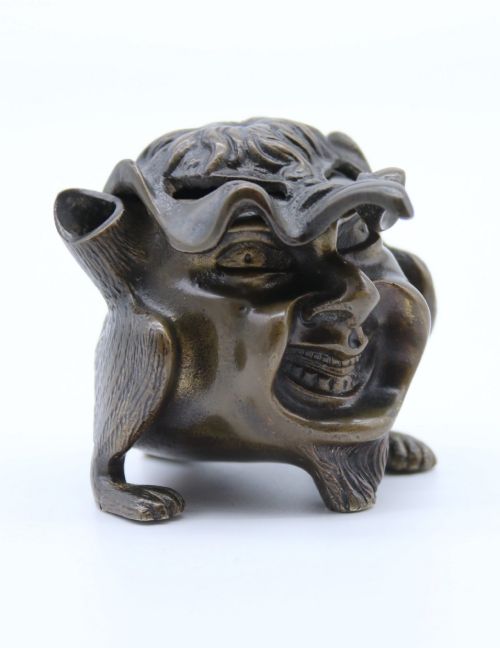
Desk accessories take the form of playing kittens, a grotesque creature, a clown named Pierrot, and King Charles Spaniels.
Markers of execution and finish
Quality in a victorian bronze inkstand rests on the crispness of the metal casting and the depth of the chasing work on figures and foliage. Superior pieces display finely articulated fur, feathers, or architectural moulding rather than soft, generalized contours.
The choice of supporting materials also elevates a piece, such as thick vert marble or onyx bases paired with well-preserved champlevé enamel or original glass ink inserts. Integrated details like pen rests and hinged lids that align properly distinguish finer workshop production from standard output.
A. MARIONNET·Bergmann·Moser
The Victorian Bronze Inkstand Glossary
- Ormolu
- Gilded bronze, where a layer of gold amalgam is applied to a bronze base and heated to leave a durable metallic finish. This technique was widely employed on nineteenth-century French desk stands.
- Champlevé
- An enamelling technique where troughs or cells are hollowed out of the metal surface and filled with vitreous enamel powder before firing. It frequently decorates nineteenth-century French desk sets and candlesticks.
- Patinated bronze
- Metal that has been treated with chemical solutions to create a controlled surface colour or dark tone. It highlights the modelled details of figural inkwells without relying on gilding.
- Grand Tour
- The cultural journey undertaken by nineteenth-century travellers who collected small bronzes, marbles, and architectural souvenirs. These items often found their way into domestic inkstands and desk accessories.
- Desk tidy
- A multi-functional desk accessory designed to hold pens, stamps, and ink pots in a single arrangement. They often incorporate novelty animal figures or lidded compartments.
Victorian Bronze Inkstand: Frequently Asked Questions
How were these inkstands used?
A victorian bronze inkstand served as the central writing station on a library desk or bureau. Owners dipped quill or steel nib pens into the glass inkwells housed within the metal and stone stands.
Inkstands often included integrated pen rests and covered compartments for stamps, keeping writing materials organised during the height of handwritten correspondence.
How do I care for bronze and ormolu?
Dust your inkstand gently with a soft, dry brush to prevent dirt from settling in the recessed chased details of the metal. Avoid harsh liquid cleaners or chemical polishes, which can strip the original patination or vintage gilding.
Keep the piece away from direct sunlight and damp environments to protect any fitted marble bases, enamel work, or glass ink inserts.
How do I distinguish French from English pieces?
French pieces often incorporate rich ormolu mounts, vert marble bases, and champlevé enamel, reflecting the decorative styles of the Second Empire and Paris workshops. Figural subjects may lean toward classical Neoclassical themes or ornate architectural forms.
English examples frequently feature cast bronze animals like dogs and stags, utilising simpler timber or patinated bronze bases suited to domestic Victorian studies.
Are the glass ink inserts original?
Many surviving inkstands retain their original blown or cut glass ink inserts, though replacements occur due to centuries of daily use and cleaning. Inspect the fit of the glass within the bronze collar to see how snugly it rests in the housing.
Original inserts typically show appropriate surface wear and minor manufacturing bubbles consistent with nineteenth-century glass production.