


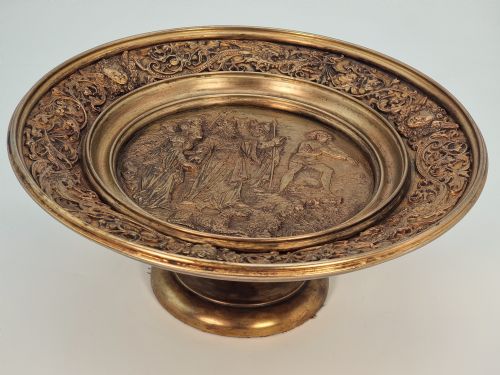


Victorian Bronze Bowl
These nineteenth-century metal vessels range from heavy tazzas to glass and porcelain combinations, chosen for their distinct casting and decorative detail.
Victorian Bronze Bowl
When you search for a victorian bronze bowl, you encounter a variety of nineteenth-century decorative metalwork designed primarily for display or formal service. The selection spans centrepieces, tazzas, comports, and jardinieres originating from British, French, Italian, and Asian workshops.
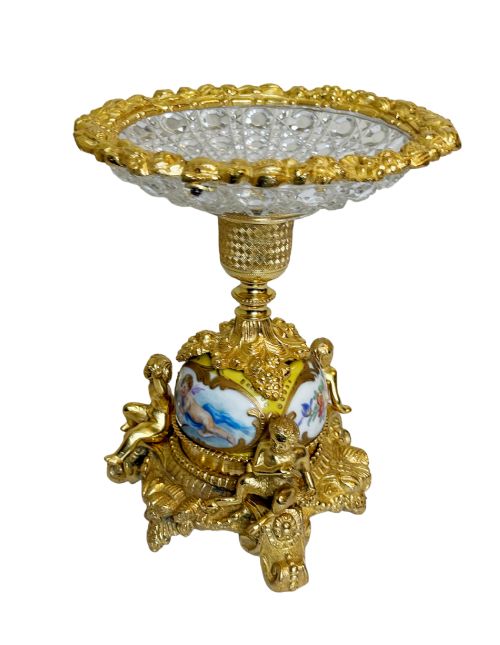
You are most likely to meet French gilt bronze examples incorporating porcelain, enamel, and cut glass alongside Japanese and Siamese planter bowls. These pieces reflect the eclectic taste of the period, drawing on French Rococo Revival, Second Empire, and Aesthetic Movement influences.
Forms include pedestal bowls raised on marble bases, lidded tazzas, and large serving dishes mounted with cherubs, dragons, or agate cabochons. Each object demonstrates the nineteenth-century preference for combining cast metal with contrasting materials like onyx, crystal, and mother-of-pearl.
How they were made
Maker's workshops utilised traditional casting methods to shape bronze, ormolu, and brass into intricate bases and mounts. These metal elements were frequently fire-gilded or silver plated to achieve a brilliant surface finish.
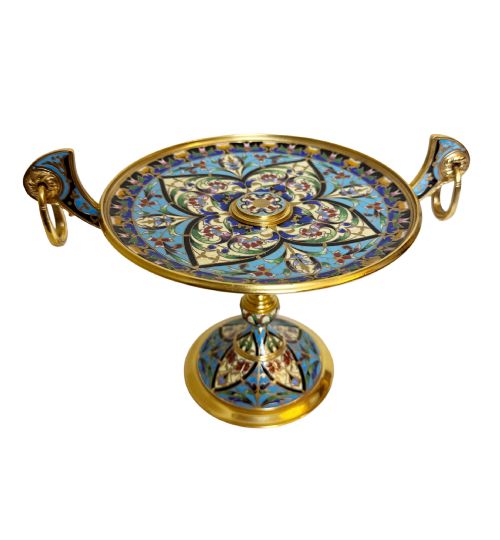
Artisans combined cast metal with delicate insets, fusing champlevé and cloisonné enamel directly onto the bronze framework. Glass vessels, Sevres style porcelain plates, and carved agate were then secured within these metal mounts.
Finishing involved hand-chasing the cast bronze details to sharpen motifs such as foliage, figures, and geometric borders. The resulting components were assembled with threaded pins or screws, anchoring the porcelain or glass securely.
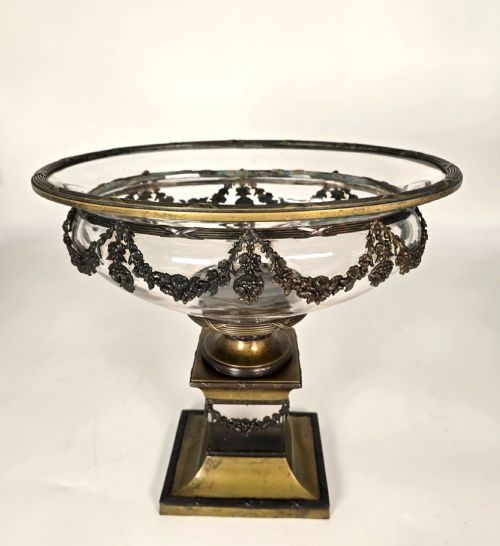
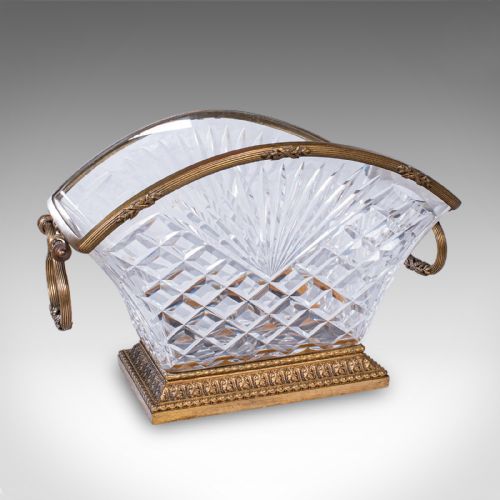
Listings feature nineteenth-century bronze bowls paired with cut crystal, Sevres style porcelain, cloisonne enamel, and agate cabochons.
What varies in quality
The sophistication of the casting and hand-chasing marks the distinction between standard production and exceptional work. Finer examples display crisp detail in figural mounts and foliage without smoothing from secondary finishing.
Material integration also dictates the tier of the piece, particularly where porcelain, hand-cut crystal, or cloisonne enamel are fitted seamlessly into the metal framework. The weight of the cast bronze and the complexity of the secondary stones indicate the original ambition of the workshop.
The Victorian Bronze Bowl Glossary
- Tazza
- A shallow saucer-shaped vessel mounted on a stem and foot, commonly utilised for display or serving. These pieces often feature cast bronze handles and decorative enamel borders.
- Jardiniere
- A large decorative bowl or planter designed to hold plants or floral arrangements. They frequently incorporate Japanese bronze work or French ormolu mounts.
- Champleve
- An enamelling technique where troughs or cells are sunk into the surface of the bronze and filled with vitreous colour before firing. This method creates rich patterned surfaces alongside the metal.
- Comport
- A raised dish or bowl placed centrally on a dining table for fruit or sweetmeats. Nineteenth-century versions commonly pair porcelain or glass dishes with gilt bronze stands.
- Ormolu
- Gilt bronze created by applying a finely ground high-carat gold mercury amalgam to a cast bronze object. The piece was then heated to vaporise the mercury, leaving a golden coating.
Victorian Bronze Bowl: Frequently Asked Questions
What is a tazza used for?
A tazza served as a decorative pedestal dish on nineteenth-century dining tables or sideboards. They held fruit, sweetmeats, or simply acted as sculptural display pieces.
These elevated vessels allowed artisans to showcase intricate casting, enamel work, and porcelain inserts at eye level.
How do I clean a bronze bowl?
Maintenance requires only dusting with a soft, dry cloth to prevent dirt accumulation on the metal and enamel surfaces. Avoid using harsh chemical polishes that strip original patination or gilding.
For pieces with glass or porcelain inserts, lift the bowl away from the metal mount before cleaning the separate components individually.
What is the difference between a jardiniere and a centrepiece?
A jardiniere functions specifically as a heavy planter bowl for holding greenery or floral displays. They are robustly constructed in bronze or ceramic to withstand moisture.
Centrepieces are shallower decorative vessels like tazzas and comports designed purely for visual impact on a table or cabinet.
Are these bowls always French?
Many surviving examples originate from nineteenth-century French workshops influenced by the Rococo Revival, Empire taste, and Belle Epoque styles. However, the period also produced significant items from British, Italian, Japanese, and Siamese makers.
Asian export bronzes and Grand Tour souvenirs from Italy form a substantial part of the nineteenth-century record alongside European porcelain mounts.