


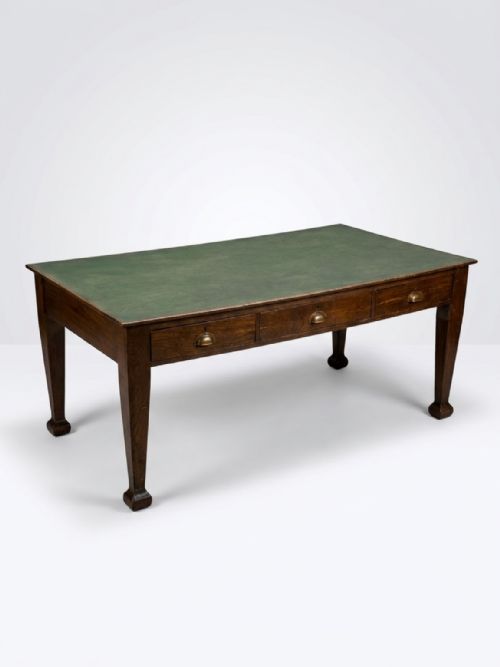
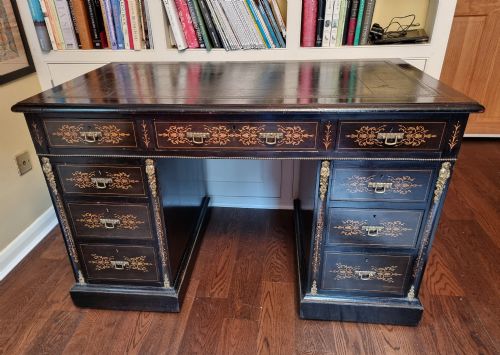
Victorian Brass Top Table
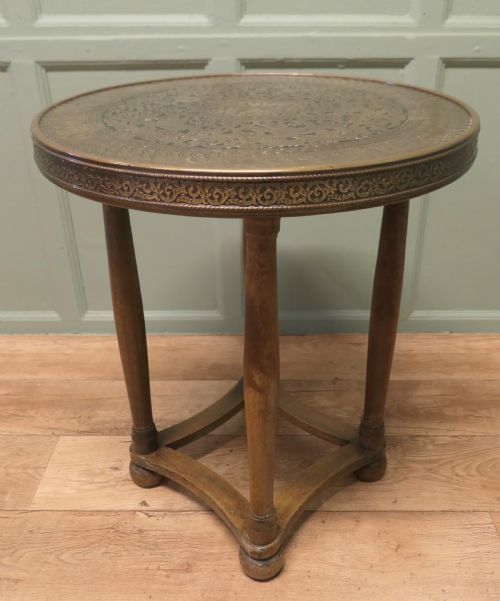
When you search for a victorian brass top table, you are looking for a striking piece that combines metallic lustre with rich timber.
Victorian Brass Top Table
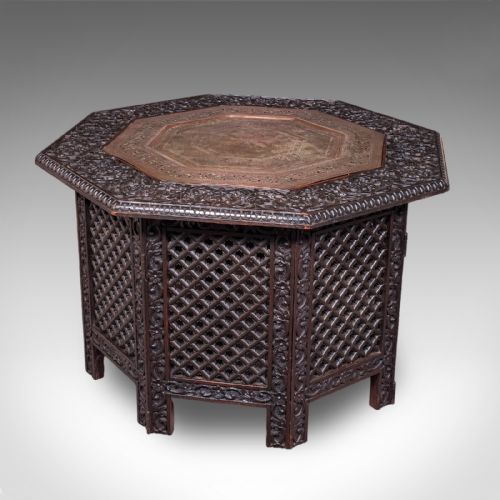
A victorian brass top table brings together functional nineteenth-century surfaces and metallic craftsmanship, often pairing a gleaming brass top with timber supports.
The selections available here range from small occasional and drinks tables to larger lamp stands featuring ebonised or oak bases.
Many examples date from the later decades of the nineteenth century, showcasing the period's fondness for mixed media and decorative metalwork.
How they were made
The construction relies on combining sheet brass with sturdy hardwoods like oak, mahogany, and walnut for the structural bases and turned stands.
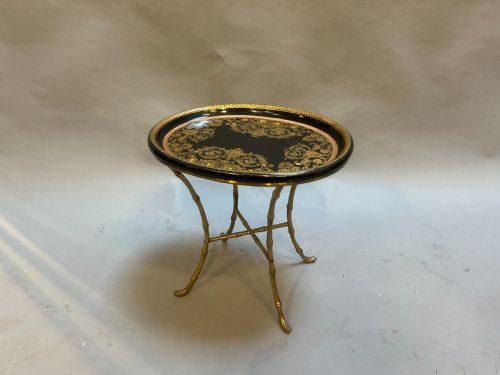
Makers often utilised inset or fitted brass trays as the primary tabletop, supported by ebonised or carved wooden frames fitted with castors.
Listings for a victorian brass top table frequently pair metallic surfaces with oak, mahogany, and ebonised wood supports dating from the nineteenth century.
What varies in quality
The distinction between standard examples and finer pieces lies in the weight of the brass, the depth of any engraving, and the choice of secondary woods.
Tables featuring integrated stands with adjustable mechanisms or finely carved timber supports generally represent a higher grade of nineteenth-century workshop production.
James Shoolbred·Maple and Co·Edwards and Roberts·Frank Giles·Blyth and Son
The Victorian Brass Top Table Glossary
- Brass top
- A tabletop surface constructed entirely of brass or featuring a prominent brass tray insert, often engraved or polished to a bright finish.
- Ebonised base
- A wooden support structure stained and polished to resemble expensive ebony, frequently used to contrast with bright metal tops.
- Occasional table
- A small, movable table designed for specific, intermittent use within a nineteenth-century interior scheme.
- Pie crust edge
- A raised, decorative carved rim often found on circular table tops of the period.
Victorian Brass Top Table: Frequently Asked Questions
How do I clean a brass top?
Maintenance requires a soft cloth and a gentle metal cleaner suitable for historic surfaces to preserve the natural patina without stripping the age.
Avoid harsh abrasive compounds that might scratch the polished metal or damage adjacent wooden frames.
Were these tables used for dining?
Most surviving examples serve as occasional, drinks, or lamp tables rather than primary dining furniture due to their compact surface area.
Their lightweight construction made them easy to move around nineteenth-century reception rooms as needed.
How do I date a brass table?
Dating relies on examining the construction methods of the wooden base, the thickness of the brass sheet, and any maker stamps present.
Nineteenth-century pieces often display hand-beaten details and traditional joinery distinct from later twentieth-century reproductions.