





Victorian Brass Scales
When you search for victorian brass scales, you find precision instruments that combine utility with decorative presence, designed for weighing everything from letters to provisions.

Victorian Brass Scales
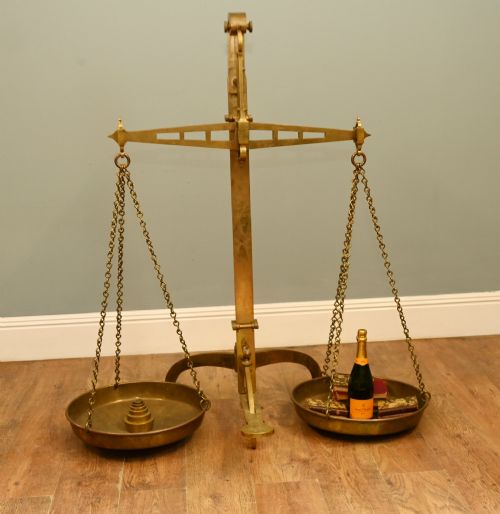
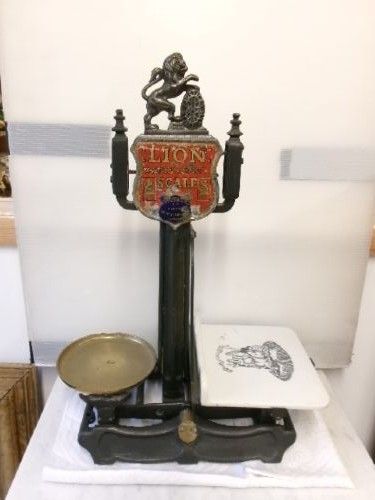
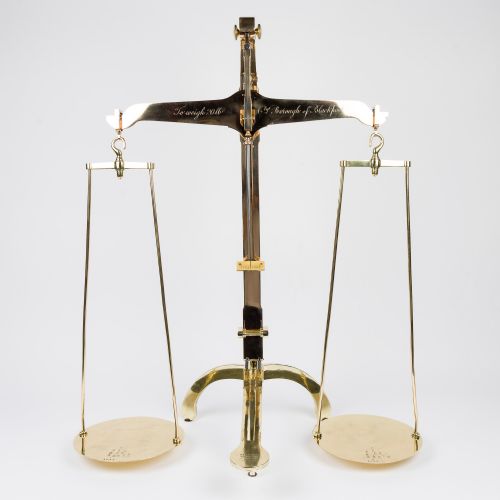
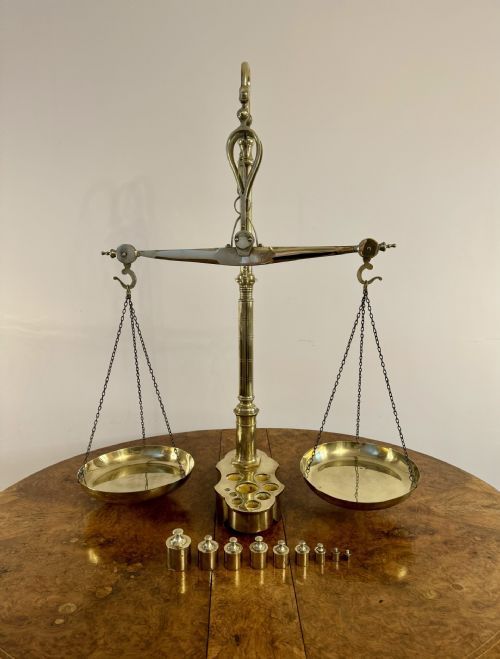
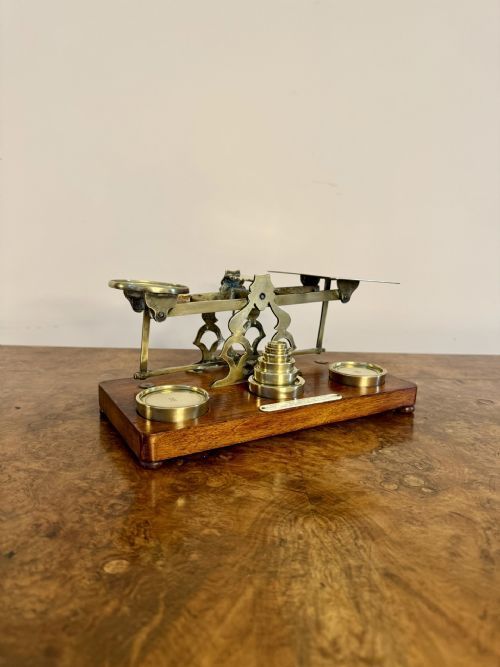
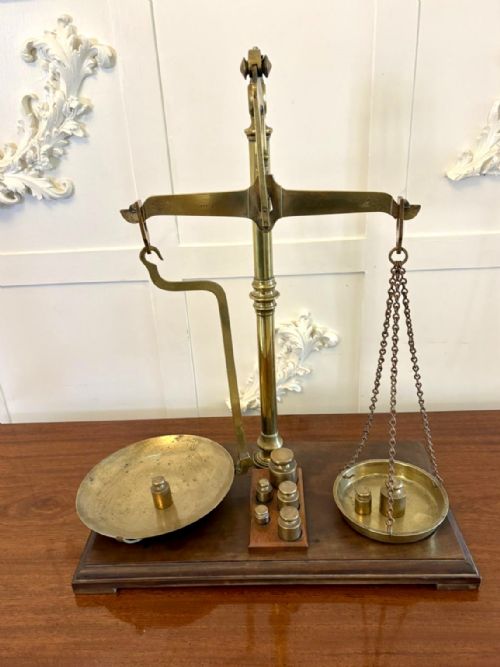
Victorian brass scales encompass a diverse range of weighing implements, from delicate postal balances mounted on mahogany or walnut bases to robust shop and counter beam scales paired with bell weights. The most common varieties encountered in this selection are postal and letter scales, often featuring graduated brass weights stored neatly within the wooden base or arranged beside the beam.
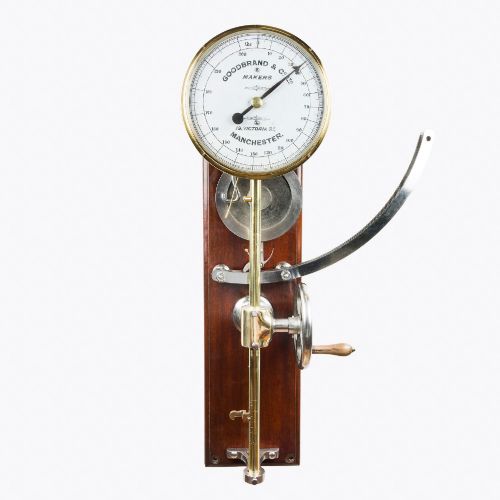
Beyond domestic correspondence, these items include specialised trade equipment such as apothecary balances, dairy scales, and grocers' beam scales produced for commercial and municipal use. Many surviving examples bear verification stamps or maker inscriptions from major industrial centres, linking utilitarian objects to specific trades and institutions of the period.
How they were made
Makers constructed the primary structural components from cast and turned brass, polished to a bright finish or left with a warm, aged patina. Beams, pans, and decorative columns rely on precise casting and hand-finishing to ensure the balance point remains true.
Wooden elements such as mahogany, oak, and walnut form the supportive bases and fitted box enclosures, frequently joined with dove-tailing and shaped with mouldings. Secondary materials like iron, steel, and glass appear in mechanical linkages, knife-edge pivots, and protective dial covers.
Victorian Brass Scales Retail Price Guide 2026
Typical asking prices for victorian brass scales among the pieces listed under this phrase on Sellingantiques today, from the lower quarter to the upper quarter. They describe what is for sale here now, not the wider market.
Some miniature letter balances were made small enough to slip into a waistcoat pocket for checking postage on the move.
What varies in quality
The distinction between standard utility pieces and finer examples lies in the crispness of the brass casting, the precision of the beam movement, and the completeness of the original weight sets. Superior pieces retain matching serial numbers or maker signatures across both the balance and its corresponding weights.
Cabinetwork also dictates grade, where finely figured mahogany or walnut bases with integrated drawer compartments for weights indicate higher-tier production compared to plain softwood or basic iron-framed variants.
De Grave Short And Co·S Mordan And Co·Day And Millward·Parnall And Sons·W And T Avery
The Victorian Brass Scales Glossary
- Beam scale
- A weighing device consisting of a horizontal lever suspended from a central fulcrum with pans hanging from each end. This mechanism relies on gravitational equilibrium to determine mass.
- Bell weight
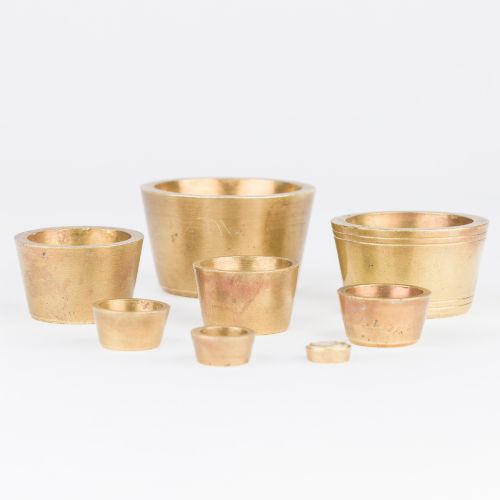
- A cylindrical brass weight shaped like a small bell with a vertical loop handle at the top. These weights were standard for commercial grocers and trade scales.
- Postal scale
- A compact balance designed specifically for weighing letters and parcels to calculate correct postage rates. They frequently incorporate graduated square or rectangular brass weights.
- Fulcrum
- The pivot point upon which the balancing beam rests and rotates. Its knife-edge design minimises friction to maintain measurement accuracy.
- Apothecary balance
- A sensitive scale utilised by chemists for measuring medicinal compounds in grains and drams. These instruments often feature enclosed glass housing to prevent air currents from affecting the reading.
Victorian Brass Scales: Frequently Asked Questions
How do I clean brass scales safely?
Dust the surfaces gently with a soft, dry cloth to preserve the existing patina and any historical finish. Avoid using abrasive commercial metal polishes that can wear away engraved maker marks or remove desirable age coloration.
For wooden bases, apply a modest amount of beeswax or suitable furniture wax using a clean cloth, buffing gently to nourish the grain without touching the metallic components.
Are these scales still accurate for weighing?
While many mechanical beam scales retain their balance, they are generally collected as decorative or historical objects rather than calibrated instruments for modern measurement. Over decades of use, knife-edge pivots can experience wear that affects absolute precision.
If you intend to test them, use verified reference weights rather than contemporary household items to check whether the indicator pointer returns to a true centre.
How can I tell postal scales from apothecary scales?
Postal scales typically feature a single flat platform or a small cradle designed for letters, often accompanied by a set of flat, nested square weights stored in the wooden base. Their overall design prioritizes quick domestic or office correspondence use.
Apothecary scales are built with two suspended pans hanging from a delicate beam, enclosed in glass cases or accompanied by fractional weights in wooden block stands. Their construction reflects the need to measure minute quantities of medicinal ingredients away from drafts.
What do the inspection stamps mean?
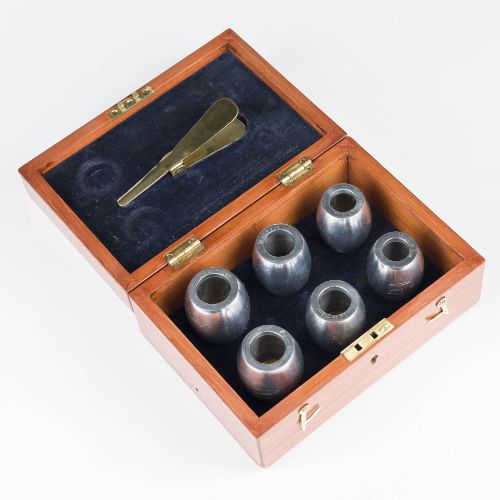
Stamp markings on the brass or lead plugs indicate that the scale was officially inspected and verified for commercial trade use by local weights and measures authorities. These stamps often name specific boroughs, cities, or municipal counties.
Such inscriptions help date the piece to a particular regional administration and confirm that the instrument met legal standards for commerce during its working life.