





Victorian Brass Plaque
A victorian brass plaque brings the warmth of nineteenth-century metalwork into a room, offering both decorative depth and historical character.
Victorian Brass Plaque
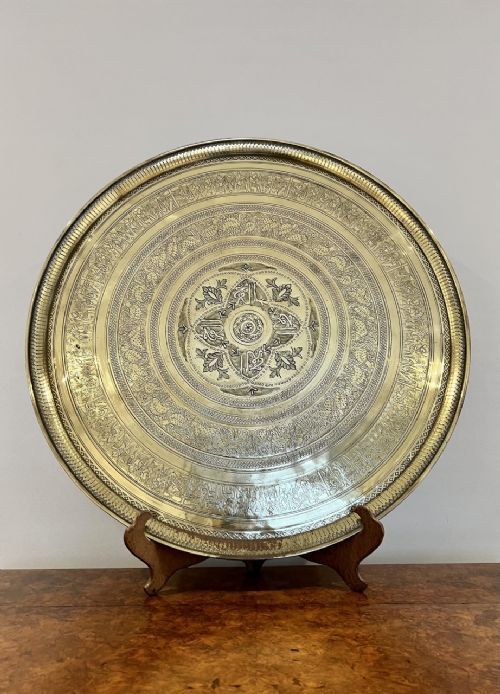
A victorian brass plaque is a decorative or commemorative metal piece produced during the nineteenth century, often taking the form of wall hangings, chargers, or inset markers on furniture and boxes. These items serve as focal points of metalwork artistry, displaying mythological scenes, portraits, or regional craftsmanship from workshops of the period.
The specimens encountered here span various forms, from large engraved circular trays and repousse shields to specific makers' plaques attached to iron safes and presentation boxes. Many examples integrate smoothly into interiors through classic wall mounts or inset panels on cabinetry and writing slopes.
Originating largely from British and continental workshops, these items reflect the diverse aesthetic movements of the nineteenth century, including neoclassical motifs and aesthetic movement designs. Buyers find pieces ranging from utilitarian maker labels to highly detailed artistic reliefs depicting figures such as Neptune or Diana the huntress.
Materials and technique
Makers utilised sheet brass, cast brass, and mixed metals, often employing hammering, engraving, and repousse techniques to raise designs from the metal surface. These methods allowed artisans to achieve deep relief work and intricate surface detailing on shields, chargers, and wall plaques.
Certain pieces combine brass frames or mounts with porcelain, glass, or oak, anchoring metalwork to wooden backdrops or housing ceramic insets within cabinets and presentation boxes. This combination of materials highlights the nineteenth-century preference for textural contrast in decorative arts.
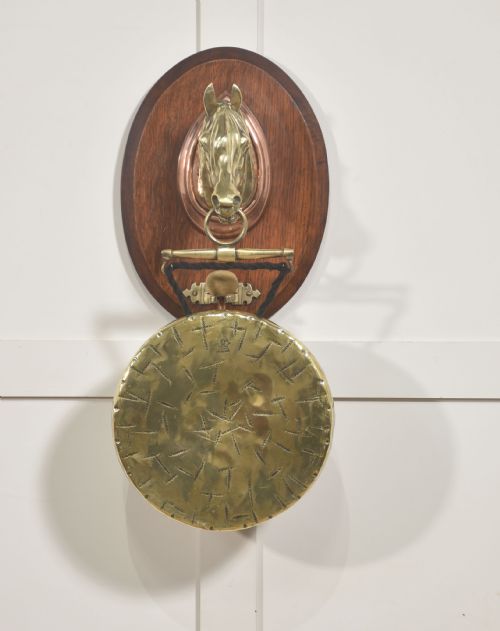
Objects range from wall-hanging dinner gongs with horse head mounts to monumental engraved chargers and safe maker plates.
Judging quality
Quality rests in the crispness of the chasing and engraving, where deeper, sharper lines in the metal separate superior artistic output from flat, mechanical stamping. The weight and gauge of the brass sheet or casting also signal the grade of the piece.
Artistic execution dictates the upper tier of these items, particularly in figural representations where proportion, facial expression, and anatomical accuracy demonstrate the hand of a skilled artisan rather than routine production.
Tann·Milners of Liverpool·Frank Giles
The Victorian Brass Plaque Glossary
- Repousse
- A metalworking technique where the metal is hammered from the reverse side to form a raised design in relief on the front. This method creates tactile depth on chargers and shields.
- Charger
- A large decorative circular plate or dish intended for display on a wall or sideboard rather than for dining use. These pieces often feature extensive engraved or hammered decoration.
- Aesthetic Movement
- A late nineteenth-century design style that emphasised visual beauty and decorative arts over narrative or moral themes. Pieces from this movement often incorporate stylised animal or floral motifs.
- Neoclassical
- A style inspired by the classical art and architecture of ancient Greece and Rome, characterised by formal symmetry and classical figures. This aesthetic appears frequently in nineteenth-century plaques and platters.
Victorian Brass Plaque: Frequently Asked Questions
How were brass plaques displayed in Victorian homes?
Homeowners typically hung wall plaques and large chargers directly on drawing room walls or placed them upon mantelpieces to catch the lamplight. Smaller plaques often served as maker labels or decorative insets on furniture and presentation boxes.
This dual function meant metalwork moved easily between functional cabinetry and dedicated wall art, reflecting the Victorian taste for ornamenting every available surface.
What subjects appear on these metal plaques?
Common subjects include classical deities such as Neptune and Diana the huntress, historical battles, and commemorative naval themes like the centenary of HMS Thunderer. Animal motifs and Gothic church references also appear among the engraved designs.
Makers drew inspiration from classical revivalism and contemporary military pride, ensuring the imagery matched the formal interiors of the period.
How do I care for antique brass?
Antique brass requires minimal intervention, needing only a soft, dry cloth to remove dust and prevent the buildup of grime. Preserving the dark, natural patination accumulated over the decades maintains the historical integrity of the metal.
Aggressive cleaning or modern chemical polishes strip away the aged surface that collectors value, altering the authentic appearance of nineteenth-century pieces.
Are these pieces marked by makers?
Some pieces bear maker stamps, registry marks, or engraved signatures, particularly those associated with nineteenth-century safe manufacturers, cabinet makers, or regional metalwork guilds. Utility plaques on iron boxes often record the specific firm and London address.
Unsigned pieces remain common, relying on stylistic evidence, material composition, and manufacturing techniques to indicate their approximate nineteenth-century origin.