
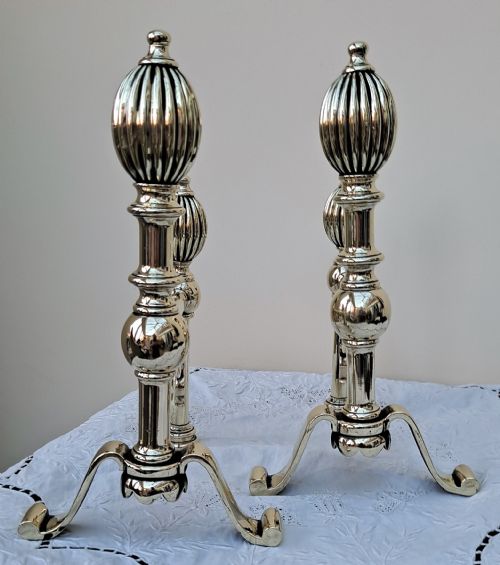


Victorian Brass Hearth Rests
Victorian brass hearth rests are hardworking fireside accessories that keep your fire irons tidy and bring genuine period warmth to a room.
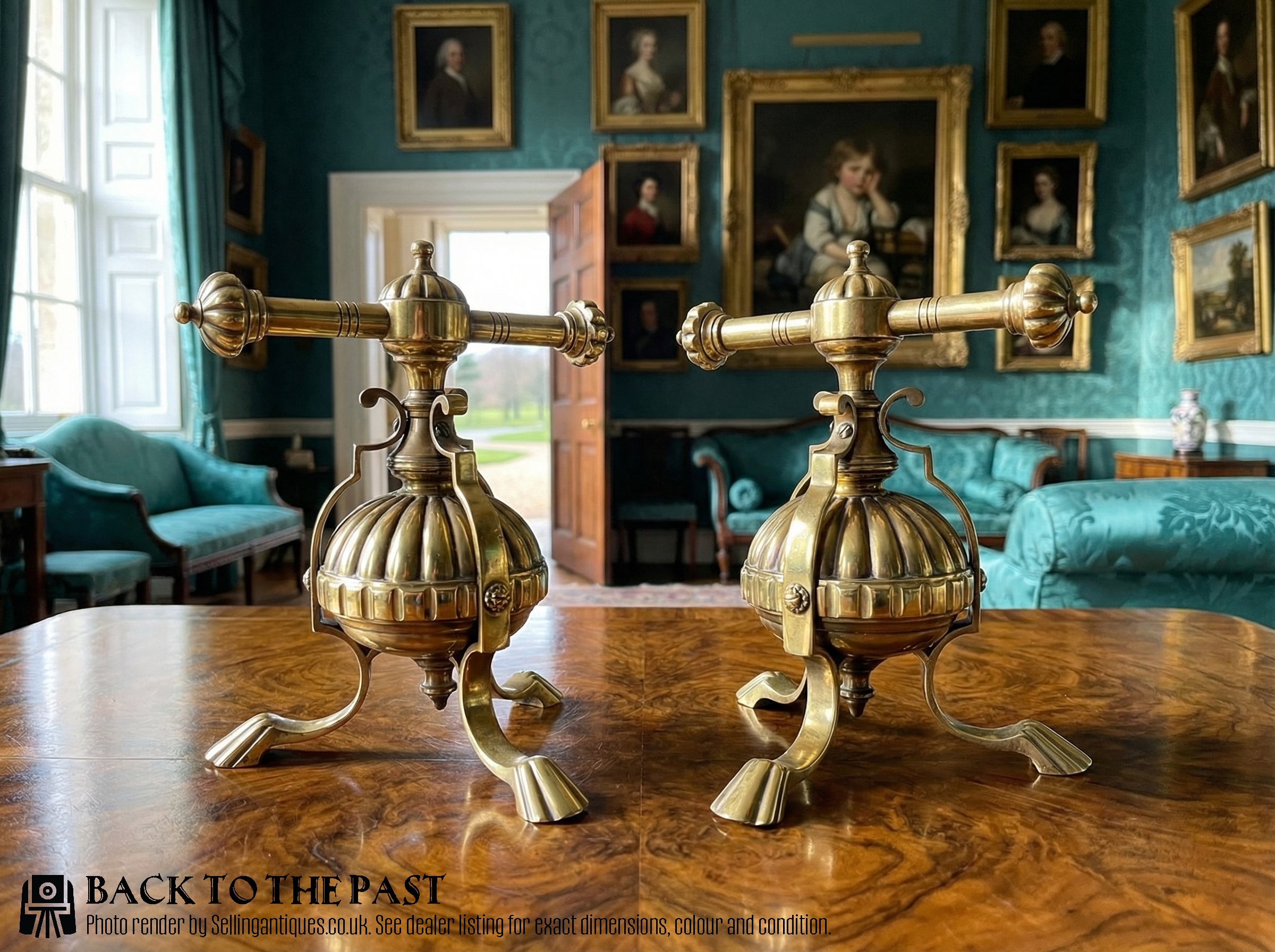
Victorian Brass Hearth Rests
Victorian brass hearth rests encompass pairs of fire tool rests, andirons, and companion sets designed to organise the hearth. These pieces anchor the fireplace arrangement, keeping pokers, tongs, and shovels neatly in place beside the grate.
Most examples you encounter on this page date from the Victorian period, including specific years like 1860 and 1890, alongside related Edwardian pieces. They appear alongside fire dogs and fenders, reflecting the traditional layout of a nineteenth-century chimney breast.
Makers and designers of the era drew on varied aesthetics, producing items in straightforward Victorian styles as well as more ornate Aesthetic Movement and Neoclassical designs. You will also find occasional Arts & Crafts pieces and functional kettle stand trivets.
How they were made
The construction of these hearth pieces relies heavily on brass, often paired with iron, steel, polished steel, cast iron, gilt bronze, and copper. Metalworkers cast, forged, and polished these materials to create sturdy supports capable of withstanding daily fireside use.
Foundry techniques of the nineteenth century allowed makers to combine heavy structural iron bases with bright brass fittings and tool rests. This mixed-metal approach provided both the weight needed for stability and the decorative gleam characteristic of the period.
James Cartland & Sons stamped their brass fire tool dogs in 1890 so future generations would know who held the poker.
What varies in quality
Quality in these hearth rests is defined by the crispness of the casting and the substance of the metal used. Heavier gauges of brass and solid iron cores indicate a piece built for lasting service rather than decorative display alone.
Design detail also separates standard utility items from finer examples, particularly where decorative styles like the Aesthetic Movement or Neoclassical motifs are cleanly executed. Well-defined mounts and careful finishing on brass and steel elements elevate the overall character of the set.
James Cartland & Sons
The Victorian Brass Hearth Rests Glossary
- Andirons
- Fire dogs used to support logs in an open hearth. They frequently incorporate rests or hooks designed to hold companion fire irons.
- Hearth rests
- Low stands or brackets positioned on the hearth to hold fireplace tools off the floor. They protect the hearth surface and keep pokers within easy reach.
- Aesthetic Movement
- A late nineteenth-century design style emphasising visual beauty over narrative meaning. Pieces from this movement often feature refined lines and stylised ornamentation.
- Neoclassical
- A revival style drawing on classical Greek and Roman motifs. You will notice symmetrical forms, urn details, and clean proportions on these pieces.
- Companion set
- A matched group of fireside tools usually comprising a poker, tongs, shovel, and sometimes a brush, presented together with a stand or rests.
Victorian Brass Hearth Rests: Frequently Asked Questions
What are victorian brass hearth rests used for?
These accessories organise the fireplace by holding pokers, tongs, and fire irons safely off the floor. They sit on the hearth beside the grate for daily convenience.
Beyond simple utility, they frame the fireplace and introduce period brasswork to the hearth arrangement.
How do I date a set?
Dating relies on stylistic clues, materials, and construction methods associated with the nineteenth century. Victorian pieces often combine cast brass with iron or steel.
Specific design movements like the Aesthetic Movement or Neoclassical styles help narrow the period down alongside marked maker details.
Are they durable enough for daily use?
Most pieces were built from solid brass, iron, and steel to withstand regular heat and heavy use. Their substantial weight keeps them stable on the hearth.
Simple cleaning and polishing keep the metal surfaces protected and functional for everyday fireside routines.
What is the difference between andirons and hearth rests?
Andirons are larger fire dogs originally built to support logs burning in an open grate. Many Victorian pairs include integrated hooks or rests specifically for holding tools.
Dedicated hearth rests are smaller stands or brackets made solely to organise fire irons without supporting heavy firewood.
How do I clean brass hearth pieces?
Routine dusting and gentle wiping maintain the finish without removing the aged character accumulated over decades. Avoid harsh abrasives that strip the metal.
Many collectors prefer leaving a warm, aged patina rather than polishing the brass to a bright mirror finish.