
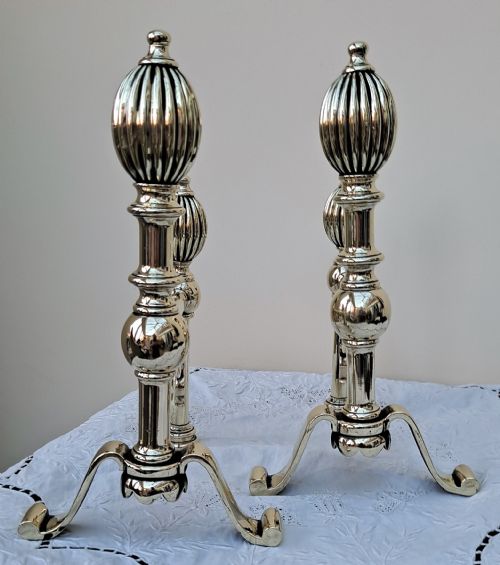


Brass Fireplace Rests
Brass fireplace rests are sturdy hearth furniture designed to hold logs, tools, or kettles, bringing practical warmth and bright metalwork to a period fireplace.
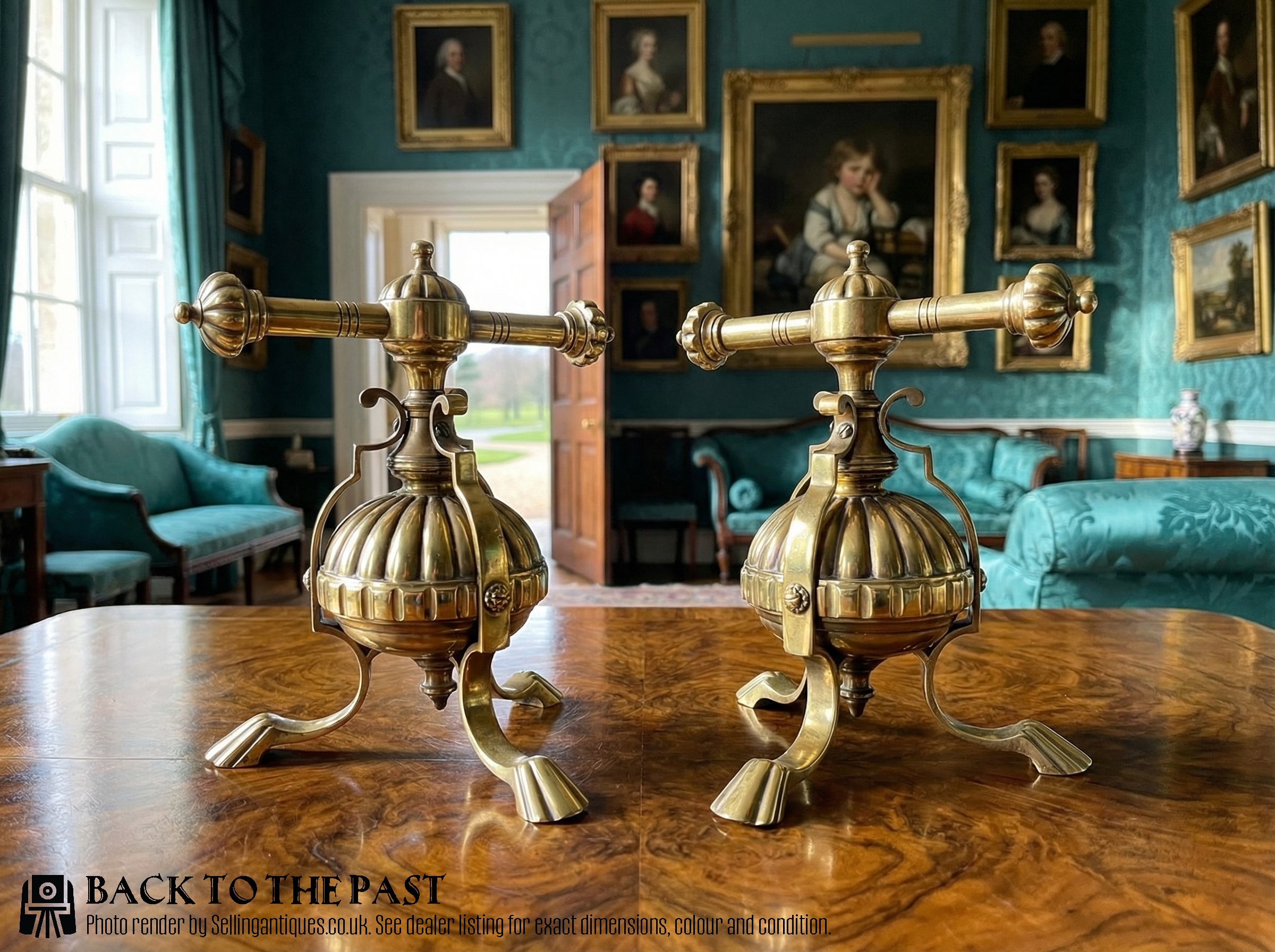
Brass Fireplace Rests
Brass fireplace rests encompass heavy andirons, fire dogs, and tool rests designed to organise the hearth and support fuel or pokers. These pieces frequently appear alongside complementary fire irons, fenders, and trivets to complete a traditional fireplace setting.
Buyers browsing brass fireplace rests will most commonly encounter Victorian examples from the nineteenth century, alongside Edwardian designs and occasional pieces from the Aesthetic Movement or Arts and Crafts period. English workmanship dominates the selection, though French Rococo items also surface.
The objects function both practically and decoratively, protecting the hearth floor while reflecting the firelight off polished surfaces. Pairs of fire dogs and tool rests form the backbone of this category, often incorporating iron or steel for structural strength.
How they were made
Manufacturers combined solid brass castings with iron and steel components to ensure the rests could withstand heavy logs and intense heat. Polished steel shafts and cast iron frames provided the necessary weight, while brass and gilt bronze formed the visible decorative elements.
Craftsmen utilised traditional casting techniques, sometimes incorporating copper details or gilt brass finishes to create varied surface textures. Aesthetic Movement and Arts and Crafts pieces relied on simpler lines, contrasting with the ornate moulding found on Victorian and French Rococo examples.
What varies in quality
The heft of the metal casting and the crispness of the chased or moulded details distinguish finer examples from simpler utilitarian items. Heavier brass components and securely seated iron bars indicate superior structural integrity.
Makers such as James Cartland and Sons produced marked pieces where the finishing and proportion reflect deliberate workshop standards. The integration of matching fire irons or uniform patination across a pair elevates the overall standard of the set.
James Cartland and Sons
The Brass Fireplace Rests Glossary
- Andirons
- Supports for logs in a fireplace, also known as fire dogs. They usually feature an upright decorative front and a horizontal bar behind.
- Fire fender
- A low metal guard placed around the hearth to contain ash and embers. They are frequently paired with matching brass fireplace rests and irons.
- Gilt bronze
- Bronze that has been coated with a thin layer of gold or gold-coloured alloy. This finish appears on French Rococo examples to provide a rich surface sheen.
- Trivet
- A small metal stand raised on feet, used for holding a kettle near the fire. These accessories share materials and stylistic traits with standard fireplace rests.
- Aesthetic Movement
- A late nineteenth-century design style emphasising visual beauty over narrative content. Pieces from this period display refined form and understated ornament.
Brass Fireplace Rests: Frequently Asked Questions
What is the difference between fire dogs and tool rests?
Fire dogs are larger andirons built primarily to support logs within the hearth fire. Tool rests feature specific notches or hooks designed to hold pokers, tongs, and shovels neatly to the side.
Many Victorian sets combine both functions, providing substantial dogs that double as rests for the accompanying fire irons.
How do I date a set of brass fireplace rests?
Dating relies heavily on stylistic cues, such as the ornate curves of French Rococo pieces versus the linear simplicity of Arts and Crafts designs. Victorian examples often display robust casting and heavy brass construction popular in the nineteenth century.
Maker marks, where present, help pinpoint the exact workshop and decade of production. Associated items like steel fenders or iron tools can also corroborate the era.
Are these rests suitable for an active fireplace?
Most pieces are built from durable cast iron, steel, and solid brass intended for real hearth use. They withstand high temperatures and support logs effectively.
Care should be taken with gilt surfaces or delicate nineteenth-century finishes to avoid heat damage or abrasive cleaning.
How do I clean polished brass and steel?
Routine dusting and gentle wiping preserve the existing metal surface without removing historical character. Avoid harsh chemical dips that strip the aged patination accumulated over decades.
Polished steel parts require occasional light oiling to prevent rust in damp environments, while brass benefits from simple soft cloth buffing.