


Brass Fire Iron Rests
Brass fire iron rests are hearthside supports for tongs, pokers and shovels, keeping your fireside tools tidy and within arm's reach.
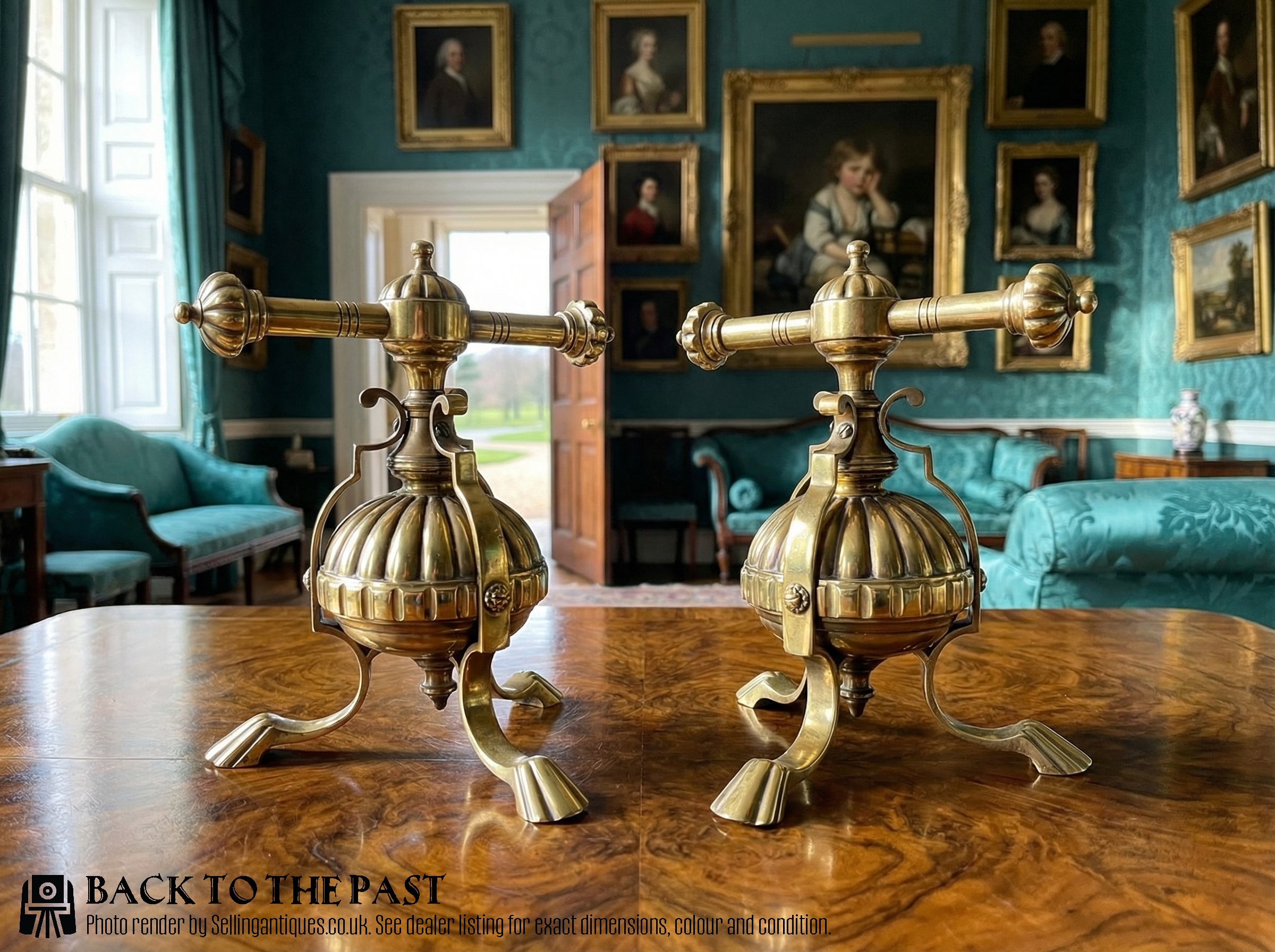
Brass Fire Iron Rests
Brass fire iron rests are specialised hearth accessories designed to keep pokers, tongs and shovels orderly beside an open fire. When searching for brass fire iron rests, buyers encounter various forms including pairs of small dogs, andirons, and dedicated tool rests.
The pieces appearing on this page span the nineteenth century, including Victorian, Edwardian, and Aesthetic Movement designs. English and French workshops produced these items in quantity, often matching them to companion sets of fire tools.
Victorian examples dominate the selection, frequently combining bright brass with cast iron or steel elements for stability. Buyers frequently find them paired with fire dogs or andirons to support both fuel logs and dangling tools.
Materials and construction methods
Makers utilised brass extensively for visible decorative surfaces, casting and polishing the metal to create a bright or gilt finish. Iron and steel provided the necessary weight and internal strength for pieces that endured daily hearth use.
Foundry work involved sand casting or gravity pouring, followed by hand chasing and polishing of details. Assemblers joined brass components to iron frames using threaded bolts and heavy rivets.
Some nineteenth century makers thoughtfully added tiny drip pans to catch soot from ash-covered pokers.
Assessing quality and finish
Quality rests on the crispness of the casting and the thickness of the metal used in construction. Finer examples display sharp definition in Rococo scrolls or Neoclassical motifs without smoothing from excessive later polishing.
Weight serves as a reliable indicator of substance, with better pieces offering solid heft through substantial brass sections and supportive iron backings. Superior finish work shows careful attention to hidden joints and sturdy structural assembly.
James Cartland & Sons
The Brass Fire Iron Rests Glossary
- Andiron
- A metal support used in pairs to hold logs in an open fireplace. They often incorporate hooks or rests for fire irons.
- Aesthetic Movement
- A late nineteenth century design style emphasising visual beauty over narrative content. It influenced decorative brassware with stylised natural motifs.
- Chenet
- The French term for an andiron or fire dog. These French pieces frequently display elaborate Rococo casting.
- Cast Iron
- A hard, brittle alloy of iron and carbon poured into moulds. It provides heavy structural weight beneath decorative brass plating.
- Gilt Brass
- Brass treated with a thin layer of gold or gold-coloured wash to enhance surface brilliance. It catches the firelight effectively.
Brass Fire Iron Rests: Frequently Asked Questions
What are brass fire iron rests used for?
These pieces hold fireplace tools such as pokers, tongs and shovels off the floor. They keep the hearth organised and prevent tools from rolling onto the rug.
Most designs combine support hooks with decorative finials that complement the fire fender and grate.
How do I date an antique fire iron rest?
Dating relies on stylistic clues such as Victorian Neoclassical symmetry, French Rococo scrolls, or Aesthetic Movement linearity. Construction marks like hand-cut screw threads and heavy sand-cast surfaces also point to nineteenth century origins.
Comparing the metal composition and wear patterns against dated archival examples helps narrow the period further.
How do I clean antique brass hearth pieces?
Gentle dusting with a soft cloth preserves the historic surface patina that collectors value. Avoid harsh chemical abrasive cleaners that strip away age and soften crisp cast details.
Light application of traditional metal polish on non-historic items should be done sparingly to maintain character.