
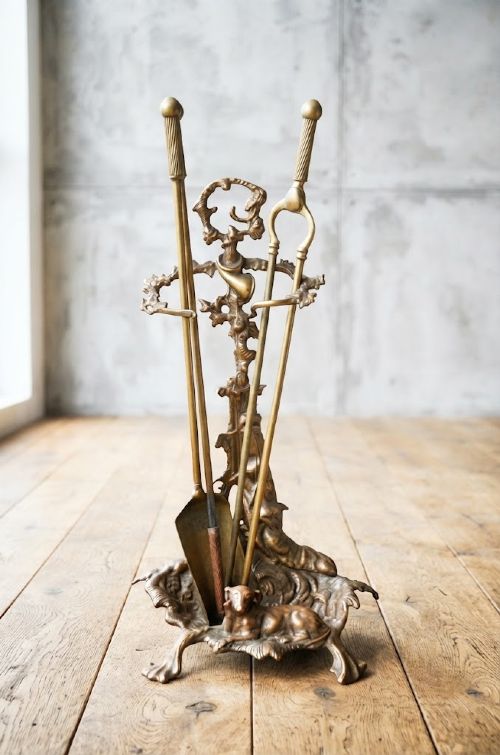

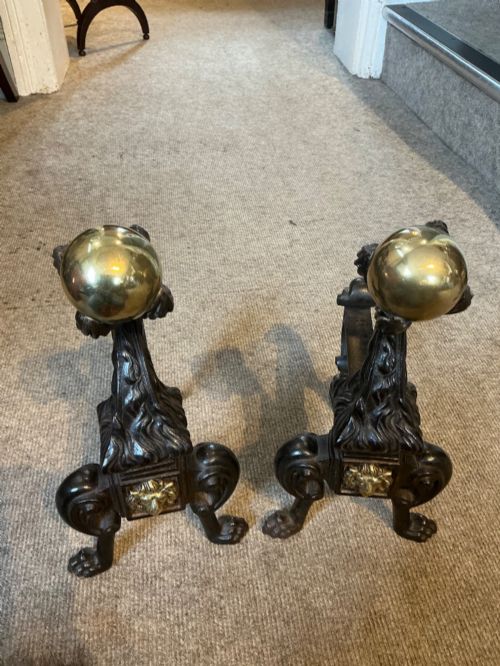


Victorian Fireplace Tool Dogs
Victorian fireplace tool dogs are hearth furniture designed to hold irons, and you buy them to bring order and period character to an open fire.
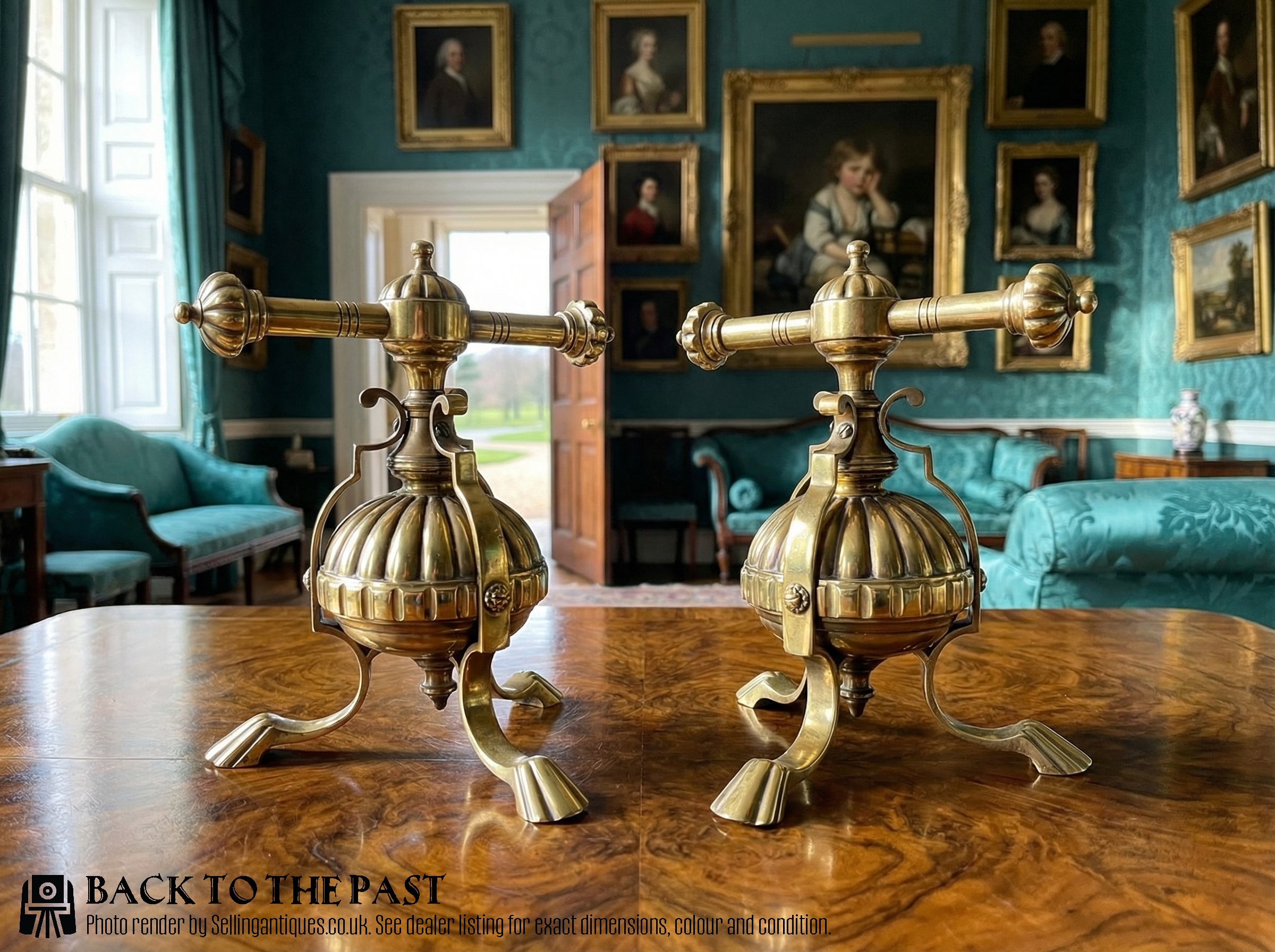
Victorian Fireplace Tool Dogs
Victorian fireplace tool dogs combine the function of conventional andirons with integrated rests or stands for holding fireside irons. They appear across the Victorian period, including specific dates such as eighteen-sixty, eighteen-eighty, eighteen-ninety, and nineteen-hundred.
The objects recorded here include pairs of fire tool rests, hearth stands, companion sets with fire dogs, and andirons showing stylistic influences from the Aesthetic Movement, Arts and Crafts, and Art Nouveau periods.
Makers and forms span English workshops producing cast and polished brass, cast iron, wrought iron, steel, and copper combinations. They function as both utilitarian hearth accessories and decorative metalwork centrepieces.
How they were made
Makers utilised casting techniques for brass, cast iron, and copper components, producing shaped rests, claw and ball feet, and decorative columns. Iron and steel provided the structural strength required for supporting heavy fire irons.
Polished finishes and mixed metal details, such as brass combined with copper or cast iron, demonstrate the Victorian preference for textural contrast. Wrought iron elements show manual forging and shaping by period metalworkers.
Listings feature brass, cast iron, and copper materials across Victorian, Arts and Crafts, and Aesthetic Movement styles.
What varies in quality
Quality rests upon the weight and thickness of the cast brass or iron, separating heavy, rigid companion pieces from lighter alternatives. Well-defined casting detail in decorative motifs, such as hunting scenes or claw and ball designs, marks superior production.
The inclusion of matched fire iron sets alongside the dogs indicates higher original status. Surface finish and the retention of original polished brass or mixed metal components also distinguish better examples.
James Cartland & Sons
The Victorian Fireplace Tool Dogs Glossary
- Fire Dog
- A metal support placed in a hearth, similar to an andiron, often featuring horizontal rests or loops to hold fireplace tools. These kept pokers and tongs close to the fire.
- Andiron
- A horizontal metal support raised on legs, used in pairs to support logs in an open fireplace. Victorian variants frequently incorporated tool rests into their design.
- Companion Set
- A collection of matching fireside tools, usually including a poker, tongs, shovel, and brush, often accompanied by a stand or dogs. They provided a unified aesthetic for the hearth.
- Aesthetic Movement
- A late nineteenth-century design style emphasising visual beauty over narrative meaning. Pieces from this movement often feature stylised natural forms and refined metalwork.
- Neoclassical
- A style drawing inspiration from classical antiquity, visible in the symmetry and formal ornament of certain Victorian fire dogs. It relies on clean architectural proportions.
Victorian Fireplace Tool Dogs: Frequently Asked Questions
What do fireplace tool dogs do?
Fireplace tool dogs support burning logs while simultaneously holding pokers, tongs, or shovels on integrated rests. They organise the hearth by keeping essential tools upright and accessible beside the fire.
By combining andirons and tool storage into one fixture, they save floor space in the fender. They serve both a practical role in tending fires and a decorative function in the room.
How do I date Victorian fire dogs?
Dating relies on stylistic clues, such as Aesthetic Movement or Art Nouveau motifs, alongside registration marks or maker details stamped into the metal. The transition from heavy cast iron to polished brass also helps place pieces within the nineteenth century.
Earlier Victorian examples often display robust neoclassical forms, while later pieces from the eighteen-nineties lean towards lighter decorative styling. Examining the construction methods offers further context for when the metal was cast.
Are brass and iron mixed on these?
Yes, many Victorian pieces combine brass elements with iron, steel, or copper components to achieve visual contrast. Brass provided a bright, polished surface for the visible front sections.
Iron and steel were utilised for structural parts that faced intense heat or required high tensile strength. This mixed-metal approach was characteristic of nineteenth-century hearth accessory production.
Do companion sets always include dogs?
Not all companion sets include dogs, as many utilised freestanding umbrella stands or simple hearth plates instead. When dogs were included, they were designed specifically to hold the matching fire irons across their rests.
Sets featuring integrated tool dogs represent a more substantial form of hearth furniture. They required dedicated space at the front of the fireplace opening.