

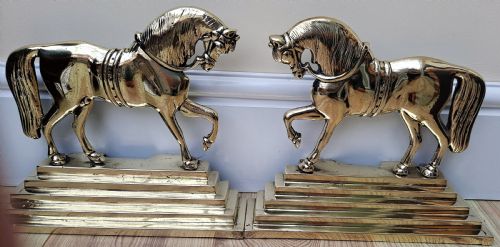

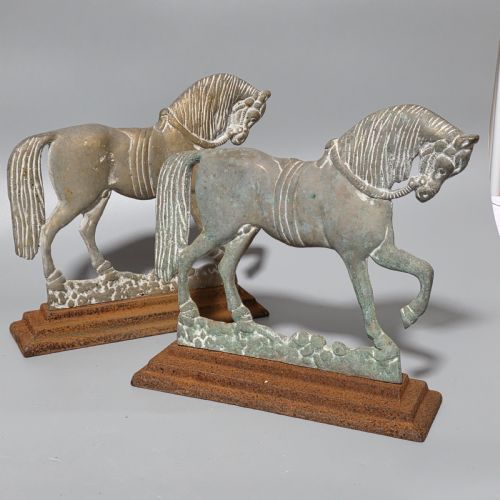


Antique Door Porters Pair
These antique door porters pair heavy metal utility with decorative presence, holding heavy doors open while anchoring a room with period character.
Antique Door Porters Pair
An antique door porters pair consists of weighted objects designed to keep interior doors securely open. Buyers searching for an antique door porters pair encounter sturdy metal pieces shaped to hold firm against draughts.
The pieces appearing here span the nineteenth century and the Edwardian era, taking the form of horses, dogs, cherubs, lions, and architectural chimney ornaments. Many examples bridge the boundary between utilitarian doorstops and fireplace ornaments.
Materials and construction
Foundry work dominates the construction of these items, utilising cast iron and cast brass to provide the necessary weight. Bronze and gilt bronze also appear among the heavier examples, giving a more refined metallic surface.
Makers integrated handles or raised loops into the upper portions of the designs to allow easy lifting. Surface finishes include original paint highlights and polished brass alongside patinated bronze surfaces.
Antique Door Porters Pair Retail Price Guide 2026
Typical asking prices for door porters pair among the pieces listed under this phrase on Sellingantiques today, from the lower quarter to the upper quarter. They describe what is for sale here now, not the wider market.
Distinguishing quality
The refinement of the casting defines the upper tier of these pieces, showing crisp facial expressions on animals and distinct detail in cherubic or heraldic motifs. Softer outlines and simplified casting marks point toward standard production items.
Substance and balance dictate practical quality, with heavier combinations of brass and cast iron offering superior stability on the floor. Surface wear tells a tale of authentic age rather than diminished structural merit.
William Tonks and Sons
The Antique Door Porters Pair Glossary
- Door porter
- A heavy movable object placed against a door to prevent it from swinging shut. These items often double as fireplace ornaments.
- Cast brass
- Molten brass poured into a mould to create detailed three-dimensional forms. This method allows for decorative animals and figures.
- Cast iron
- A strong, heavy iron alloy used to add ballast to the base of door stops. It ensures the piece stays firmly planted on the floor.
- Gilt bronze
- Bronze coated with a thin layer of gold to give a rich, reflective finish. This treatment appears on decorative Victorian items.
- Chimney ornament
- A decorative object designed for display near a fireplace. Many pieces served this dual purpose alongside door holding.
Antique Door Porters Pair: Frequently Asked Questions
What is an antique door porters pair used for?
These weighted objects hold heavy interior doors open against draughts and movement. They sit firmly on the floor near the threshold.
Beyond simple utility, their decorative forms bring sculptural character to hallways and principal rooms.
How do I date an antique door porters pair?
Dating relies on stylistic clues and the specific casting metals used in the construction. Victorian examples often feature animals or classical figures with distinct foundry marks.
Nineteenth-century pieces generally show heavier iron weighting and hand-finished brass surfaces compared to later editions.
Where should I place these in a room?
Position them against heavy interior doors where natural draughts tend to cause swinging. They function equally well resting beside a hearth as decorative ornaments.
Keep them in spaces with durable flooring where their considerable weight will not cause damage.
What metals are commonly found in these pairs?
Brass and cast iron form the core materials for the majority of surviving examples. Combinations of both metals appear frequently to add necessary weight to hollow brass shells.
Bronze and gilt bronze also occur on finer decorative Victorian and Edwardian items.