


Victorian Brass Handle Pans
Victorian brass handle pans are robust hearth and kitchen utensils that bring authentic nineteenth-century utility and warmth to modern interiors.
Victorian Brass Handle Pans
Victorian brass handle pans encompass a practical group of nineteenth-century culinary and hearth vessels, spanning preserving pans, jam pails, saucepans, and chestnut roasters. These pieces bridge the gap between working kitchenware and decorative fireplace accessories.
Pieces emerge in styles described as Victorian, Victorian country, and rustic farmhouse, reflecting their origins in domestic and hearth environments.
Materials and construction
Construction relies heavily on sheet copper and heavy cast brass, often joined with visible rivets along the seams and handles. Wrought iron and tin also appear on specific components like handles and interior linings.
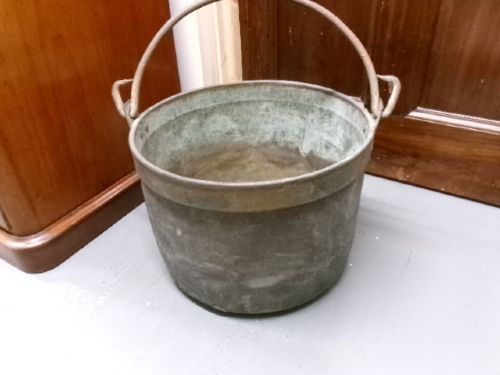
Vessels frequently incorporate swing handles and double handles cast in brass, secured to robust copper or brass bodies designed to withstand intense hearth heat.
Factors of quality
Quality rests upon the weight of the metal and the integrity of the original construction, where heavier gauge copper and substantial brass handles indicate superior domestic or institutional grade equipment.
The subtlety of hand-riveting and the preservation of original surface textures distinguish utilitarian survivals from later alterations, while well-balanced handles and intact iron fittings demonstrate structural survival.
The Victorian Brass Handle Pans Glossary
- Preserving pan
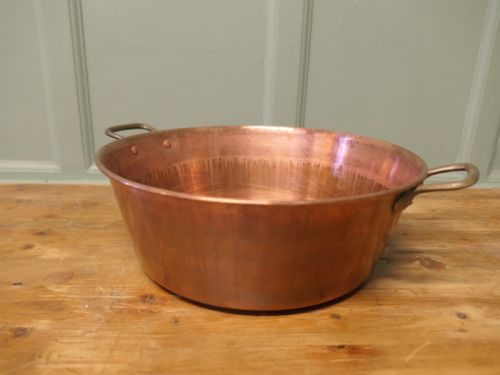
- A wide, open vessel designed for fruit preservation and jam making, typically featuring a swing handle for easy tipping. These pots allow even evaporation across a hearth fire.
- Chestnut roaster
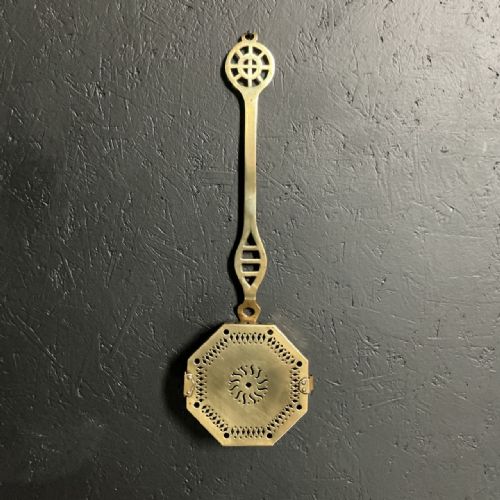
- A specialised long-handled pan with a lidded compartment intended for roasting chestnuts over open coals. They combine functional hearth utility with decorative brasswork.
- Fish kettle
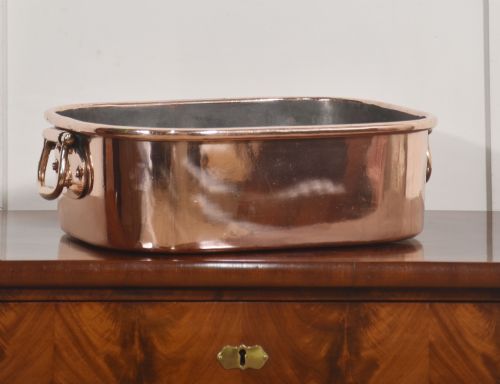
- An elongated, oval vessel built to poach whole fish evenly. Their distinct proportions suit the specific demands of nineteenth-century seafood preparation.
- Swing handle
- A movable bail handle attached to opposite sides of a pan by fixed lugs. This design allows the handle to drop flat against the side during storage.
Victorian Brass Handle Pans: Frequently Asked Questions
What were victorian brass handle pans used for?
These vessels served everyday domestic functions in nineteenth-century kitchens, from boiling jams and preserving cream to roasting chestnuts and heating beds.
Over time, many transitioned from working cookware to decorative hearth accessories displayed near fireplaces.
How do you clean antique copper and brass?
Maintenance typically involves gentle washing with warm soapy water and drying thoroughly to protect the original metallic surfaces.
Many collectors prefer to preserve the darkened patina accumulated over the nineteenth century rather than polishing the metal to a bright shine.
Are these pans safe for modern cooking?
Most nineteenth-century pans were constructed with materials and interior linings that may not meet modern food safety standards for daily culinary use.
Buyers generally utilise them as decorative objects, plant containers, or storage pieces within rustic farmhouse settings.
How can you tell the age of a pan?
Age is indicated by construction methods such as hand-riveting, heavy cast brass components, and period-specific material combinations like copper bodies with iron handles.
Stylistic cues and manufacturing traits align these pieces with the Victorian era and the late nineteenth century.