
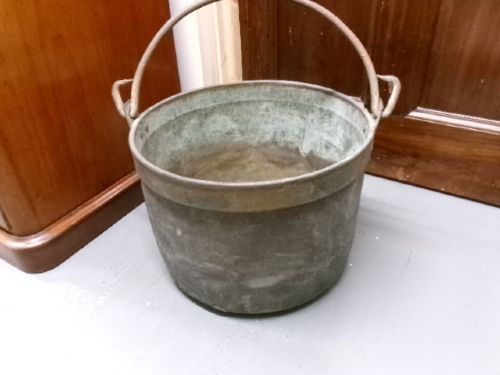


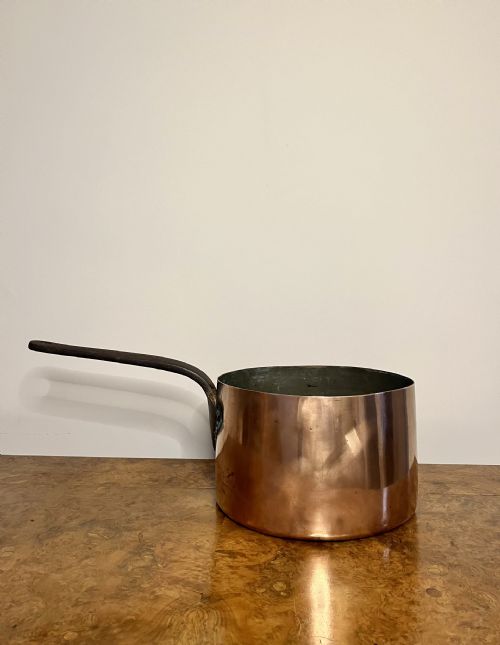


Victorian Copper Cooking Pots
These Victorian copper cooking pots are heavy, honest kitchenware built from durable metal to handle daily heat and honest work.
Victorian Copper Cooking Pots
Victorian copper cooking pots bring substantial weight and working history straight from the hearth to the modern interior. Buyers searching this phrase often look for genuine kitchenware that carries the marks of real use.
Most examples found here span the nineteenth century, including pieces marked as Victorian or Georgian alongside rustic country variations. They appear as large cooking vessels, preserve pans, lidded saucepans, and swing-handled cauldrons.
Forms range from deep preserving pots to heavy saucepans fitted with brass or iron handles. They originate from British kitchens where metalwork met daily domestic utility.
How they were made
Makers formed these items primarily from heavy sheet copper, often utilising riveted construction to join seams securely. Iron and brass were frequently incorporated for sturdy handles, mounts, and swing bails.
Surfaces often retain an original patina built up through decades of exposure to wood smoke and kitchen heat. Some vessels display hand-beaten textures or embossed brass details alongside traditional tin linings.
Current listings feature nineteenth-century kitchenware made from copper, iron, brass, and tin, spanning periods from the Georgian era through to nineteen hundred.
What varies in quality
Thickness of the metal plate largely dictates the substance of each vessel, separating heavy utility pots from lighter decorative pieces. Substantial gauge copper distributes heat evenly and maintains structural integrity under pressure.
The finish of the riveting and the method of handle attachment reveal the care put into the construction. Surviving original parts, such as fitted lids and secure iron mounts, distinguish better-preserved examples.
Hodges & Sons
The Victorian Copper Cooking Pots Glossary
- Cauldron
- A deep, round pot with a handle meant for hanging over an open hearth. These heavy metal pieces often sit on small feet or rounded bases.
- Patina
- The surface sheen and colour acquired by metal over long years of handling and oxidation. This natural layer shows the age and working history of the piece.
- Riveted
- Joined together with metal pins hammered flat at the ends. This technique held heavy seams tightly together before modern welding.
- Swing handle
- A movable metal bail attached to opposite sides of a pot. It allows the vessel to hang or tip easily during heavy kitchen tasks.
Victorian Copper Cooking Pots: Frequently Asked Questions
How were these copper pots used?
These pots served daily kitchen duties over open fires and early stoves, boiling preserves, heating water, and cooking hearty meals. Their thick metal walls held and spread heat evenly across the base.
Today they suit kitchen display or fireside decoration, bringing warmth and genuine historical character to a room.
Are these pots safe for cooking?
Most of these antique vessels are collected and displayed as decorative kitchenware rather than used for daily modern cooking. Many retain historic interior linings that require expert assessment before food preparation.
Displaying them on shelves or near a fireplace highlights their metalwork and heavy craftsmanship without disturbing the original patina.
How do I date a Victorian pot?
Dating relies on observing construction methods, handle attachments, and metal gauges characteristic of the nineteenth century. Riveted seams and heavy iron swing handles point toward earlier production periods.
Maker marks, where present, help narrow down the exact decade of manufacture within the broader Victorian era.
How do I clean antique copper?
Gentle dusting and occasional wiping preserve the aged surface and natural patina that collectors value. Avoid harsh abrasives that strip away the historic dark tones built up over generations.
Leaving the metal untouched maintains the honest character earned from decades in Victorian kitchens.