




Victorian Brass Dinner Gong
A victorian brass dinner gong brings resonant sound and striking period presence to a hall or dining room.
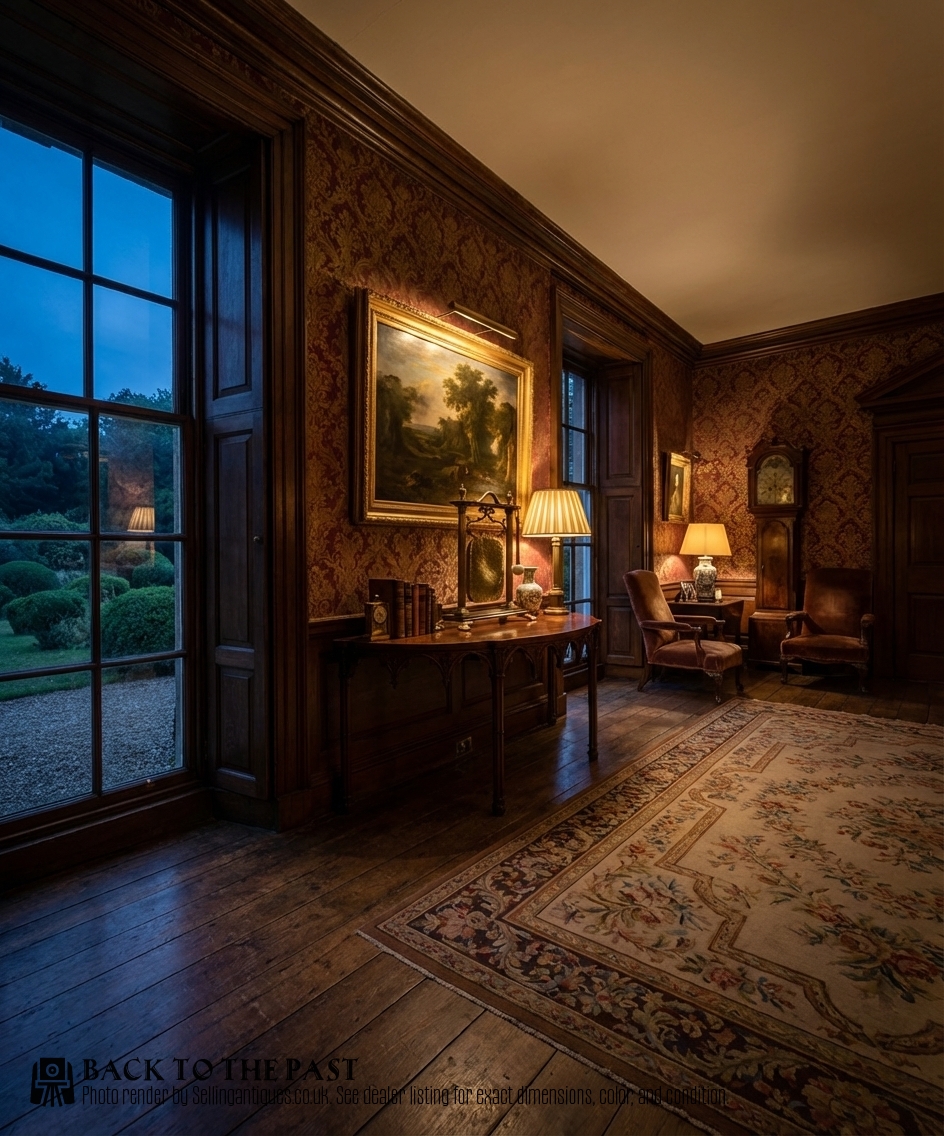
Victorian Brass Dinner Gong
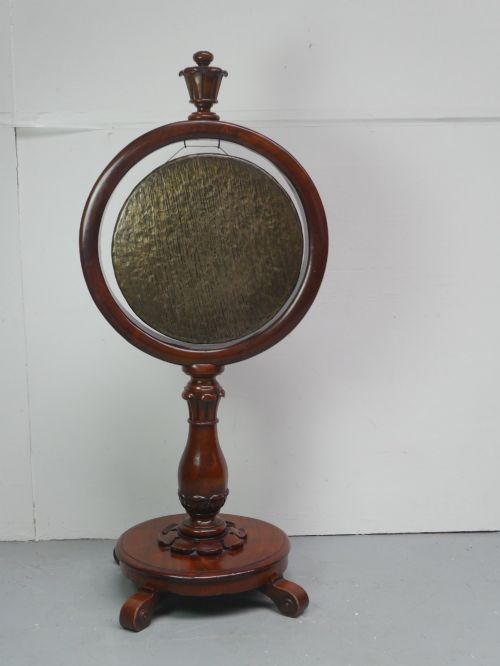
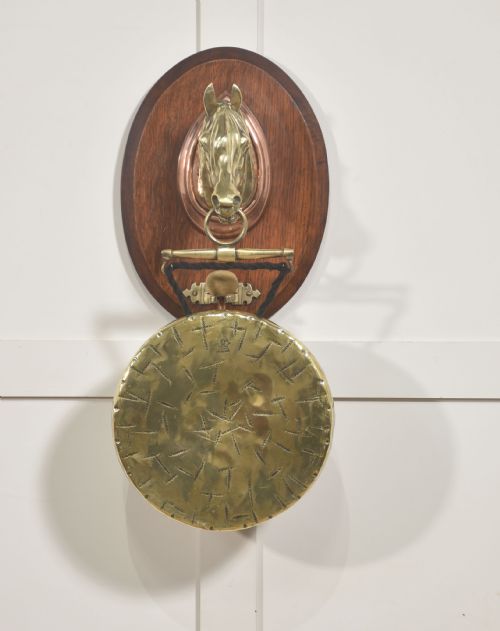
A victorian brass dinner gong comprises a suspended metal disc struck with a mallet to summon household members to meals. These pieces appear on this page in varied formats, including table models and wall-hanging variations.
Most examples encountered here combine bright brass plates with wooden frames constructed from oak or walnut. The selection also includes diverse stylistic influences such as Gothic Revival and Aesthetic Movement designs.
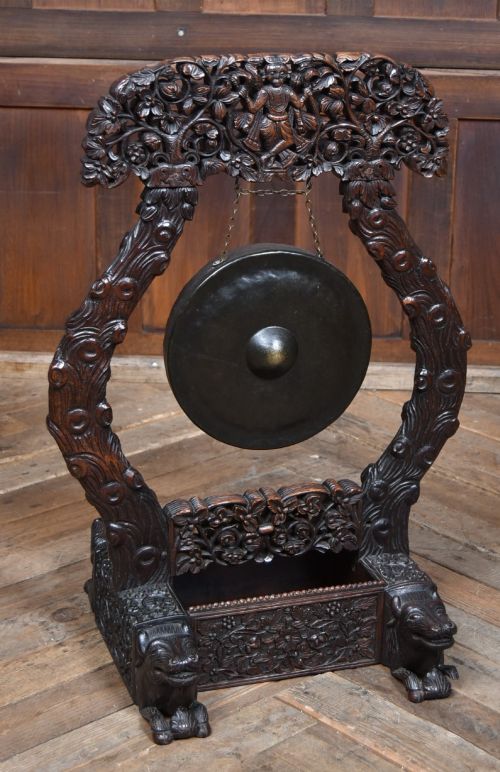
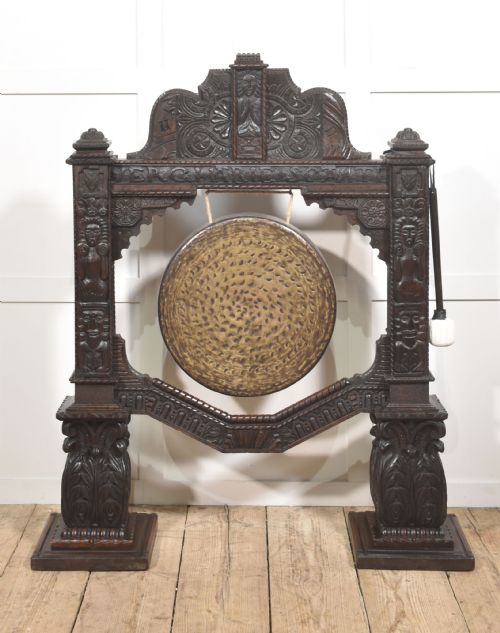
Formats range from compact table top versions to large country house installations. Oak frames frequently feature carved detailing or animal horn mounts alongside the central chime.
Materials and construction
Makers utilised resonant metal alloys, primarily brass and bronze, hammered or cast to produce clear tones when struck. These discs hang securely within sturdy timber frames fashioned from oak, walnut, or mahogany.
Structural elements frequently incorporate decorative carved wood, wrought iron supports, or natural elements like cattle horn. Cord or fabric suspension straps hold the metallic chime in place within the frame.
Several Victorian gongs incorporate actual cattle horns and horses into their frames, proving that dinner announcements once came with a distinct rustic kick.
Distinctions in quality
Superior examples display crisp casting and substantial metal thickness that sustains a deep, resonant tone upon impact. Finer frames show meticulous hand-carving in woods like oak or walnut rather than simple machine shaping.
The integration of mounting elements, from brass horse head brackets to detailed wooden joinery, separates standard production items from exceptional country house pieces. Balanced proportions between the hanging chime and its supporting frame dictate visual harmony.
Townshend And Co
The Victorian Brass Dinner Gong Glossary
- Dinner Gong
- A resonant metallic disc suspended in a frame and struck with a mallet to announce meals. These instruments served both practical and decorative functions in large households.
- Gothic Revival
- A design style drawing inspiration from medieval architecture and ornamentation. Pieces in this manner display pointed arches, heavy tracery, and dark woods.
- Aesthetic Movement
- A late nineteenth-century design current emphasising visual beauty over narrative content. Objects from this tradition often incorporate stylised natural motifs and polished surfaces.
- Table Gong
- A scaled-down version designed to sit upon furniture rather than hang from a wall. These compact items function well in smaller interior spaces.
Victorian Brass Dinner Gong: Frequently Asked Questions
How were dinner gongs used?
These chimes sounded through large country houses and shooting lodges to signal that dinner was served. Servants struck the suspended brass disc with a mallet to carry the tone across multiple rooms.
Today they function primarily as decorative architectural items or functional door chimes in period homes. Their resonant ring still serves its original purpose effectively.
Where should I place a wall gong?
Hallways, entrance lobbies, and dining rooms provide traditional settings for hanging these pieces securely. Ensure the wall structure supports the combined weight of the timber frame and metal chime.
Allow enough clearance around the frame for the mallet to swing freely without striking nearby furniture or walls. Position the piece at a comfortable height for daily use.
How do I care for the brass?
Dust the metal surface gently with a soft cloth to prevent accumulation without disturbing the aged patina. Avoid harsh chemical cleaners that strip away historical character and finish.
Maintain the wooden frame with appropriate beeswax or furniture polish suited to oak or walnut. Keep the piece away from direct heat sources to prevent timber splitting.
What woods were used for frames?
Oak remains the predominant timber found in these frames, often featuring heavy carving or Gothic Revival detailing. Walnut and mahogany also appear frequently in table and wall models.
Unusual supporting materials include bamboo, wrought iron, and cattle horn. These varied framing elements reflect the diverse stylistic influences popular during the period.