

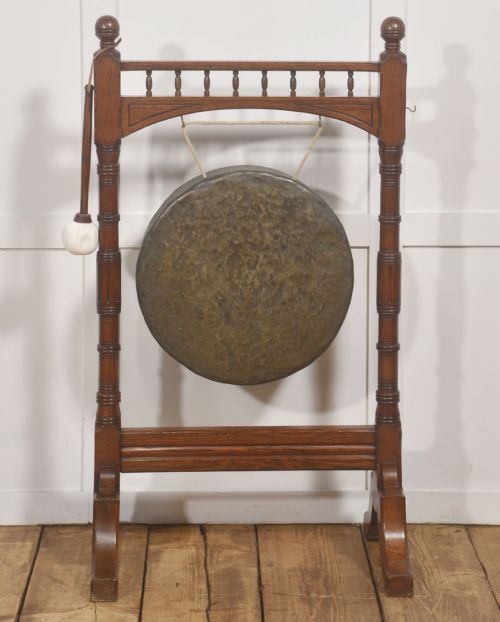
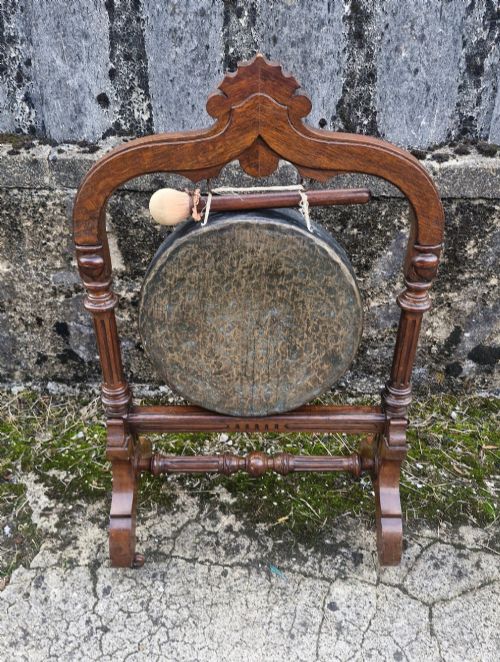
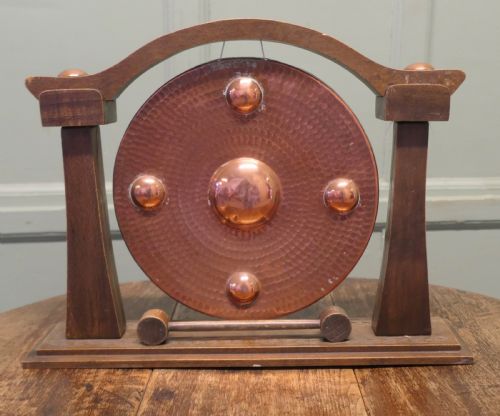

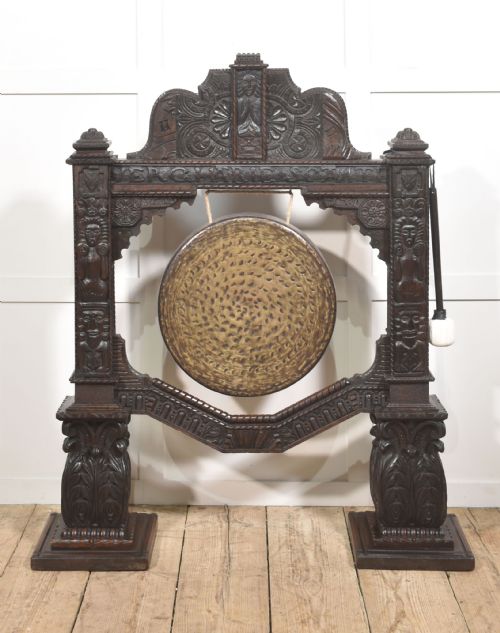


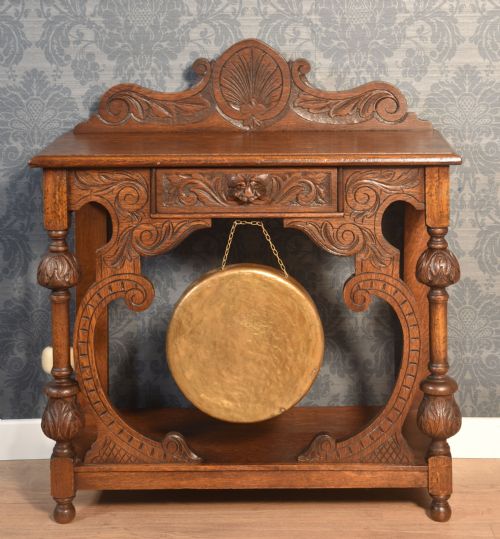


Carved Oak Brass Gong
A carved oak brass gong brings weight and resonance to a hallway, drawing the household together with a single, deep note.
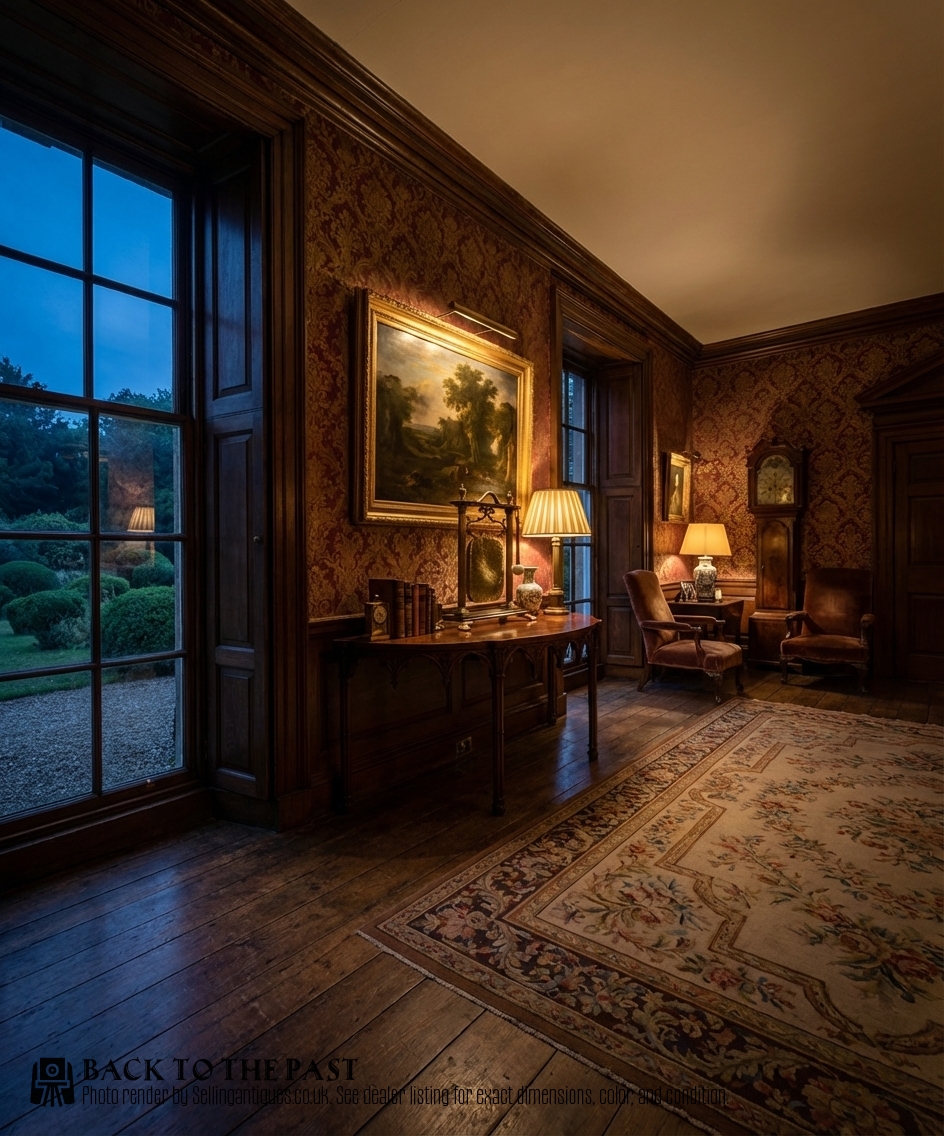
Carved Oak Brass Gong
When you search for a carved oak brass gong, you encounter robust domestic instruments designed to summon guests to the table. Most examples on this page date from the nineteenth century into the early twentieth century, spanning Victorian and Arts and Crafts sensibilities.
The dominant form pairs a resonant metal disc suspended from a substantial wooden frame. You will frequently find dinner gongs and table gongs, alongside related pieces such as hall tables and clocks that share the same material language.
How they were made
The makers built these frames from solid timber, predominantly utilising oak, often enhanced with carved ornamentation. Artisans shaped the metal components from brass, incorporating copper and leather elements alongside rope suspensions.
Joinery techniques relied on sturdy construction methods suited to supporting swinging heavy metal discs. Carvers applied Gothic revival motifs and rustic details directly into the wood grain by hand.
Carved Oak Brass Gong Retail Price Guide 2026
Typical asking prices for carved oak brass gong among the pieces listed under this phrase on Sellingantiques today, from the lower quarter to the upper quarter. They describe what is for sale here now, not the wider market.
Some adventurous makers incorporated cattle horn into the frame, ensuring the dinner bell echoed with unexpected pastoral flair.
What varies in quality
Quality rests upon the depth of the carving and the architectural ambition of the frame. Simpler pieces rely on plain timber uprights, whereas superior examples display intricate Gothic tracery and figural work.
The resonance of the metal disc and the integrity of the suspension system determine the overall success of the piece. Well-proportioned frames balance the heavy brass without tipping, maintaining both visual and acoustic poise.
Winterhalder and Hofmeier
The Carved Oak Brass Gong Glossary
- Dinner gong
- A hanging metal disc struck with a mallet to announce meals. It serves as both a practical household clockwork alternative and a decorative hall centrepiece.
- Gothic Revival
- An architectural and decorative style drawing on medieval forms. It appears here through pointed arches, trefoils, and deep relief carving.
- Arts and Crafts
- A design movement valuing honest construction and visible handcraft. Pieces from this tradition emphasise straightforward materials like copper and oak.
- Bracket clock
- A portable table timepiece designed to sit on a shelf or bracket. While distinct from a gong, shared maker hands occasionally span both forms.
Carved Oak Brass Gong: Frequently Asked Questions
How do you clean a brass gong?
Dust the oak frame gently with a dry cloth to preserve the wax finish and prevent moisture damage. Clean the brass disc sparingly with a soft cloth, avoiding harsh chemical polishes that strip the historic patina.
Allow the metal to age naturally over time, as a mellow surface is characteristic of nineteenth-century pieces. Ensure no liquid cleaner seeps into the wooden joints or rope suspensions during maintenance.
Where should I hang a dinner gong?
These pieces traditionally sit in entrance halls, corridors, or dining rooms where the sound carries clearly through the house. Place the frame on a stable surface or mount it securely against a wall to bear the swinging weight.
Keep the gong away from direct heat sources and damp environments to protect the structural integrity of the oak. Position the accompanying mallet within easy reach on a nearby table or integrated rack.
How old is my oak gong?
Dating relies on stylistic clues, such as the presence of Gothic revival motifs or Arts and Crafts framing details. The materials listed across these examples point predominantly to the nineteenth century and the early nineteen-hundreds.
Examine the back of the timber and the method of metal fastening for signs of period hand-tooling. Variations in the brass alloy and the wear on the leather suspension straps also offer hints regarding age.
What is the mallet made from?
Mallets typically feature a wooden handle matching the frame, paired with a striking head covered in leather, metal, or dense fabric. The material of the striking head directly influences the warmth and volume of the tone produced.
Original strikers are often replaced over decades of household use due to wear on the striking surface. Look for period-appropriate materials that complement the weight of the specific brass disc.