
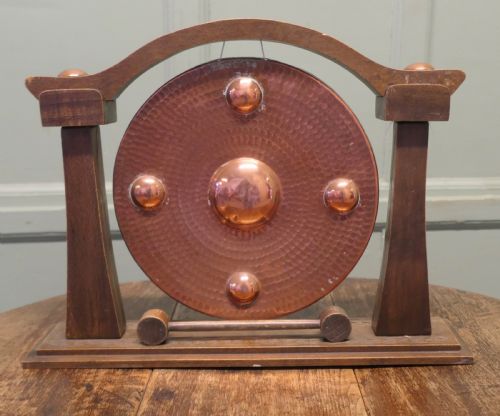
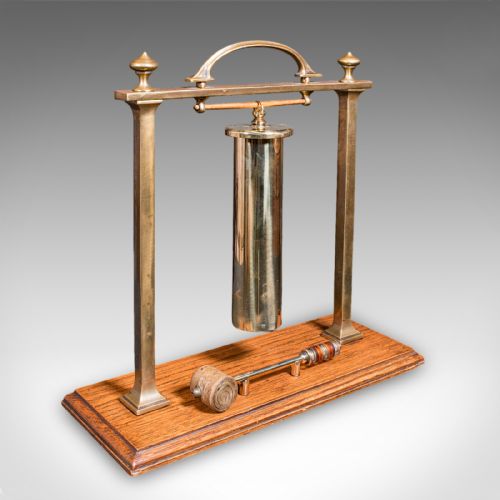
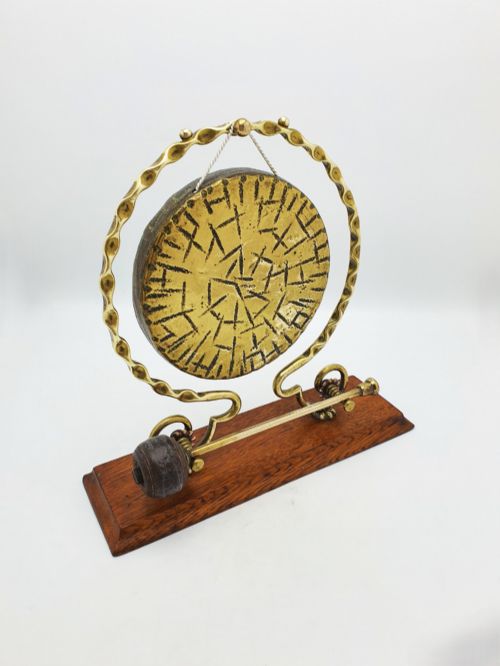
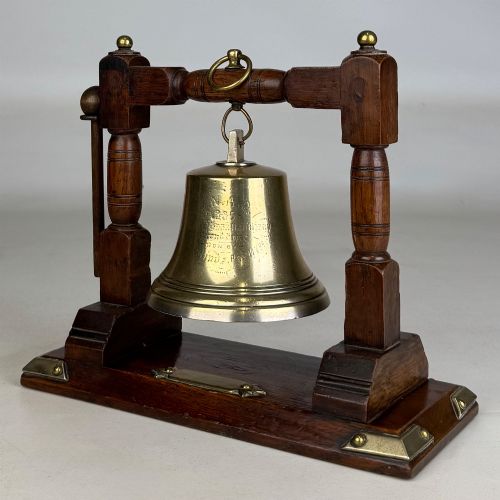
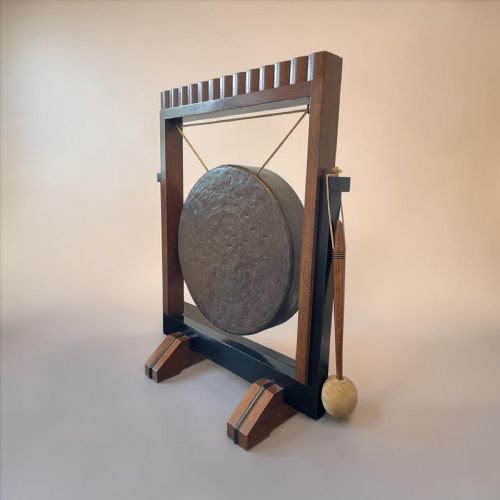
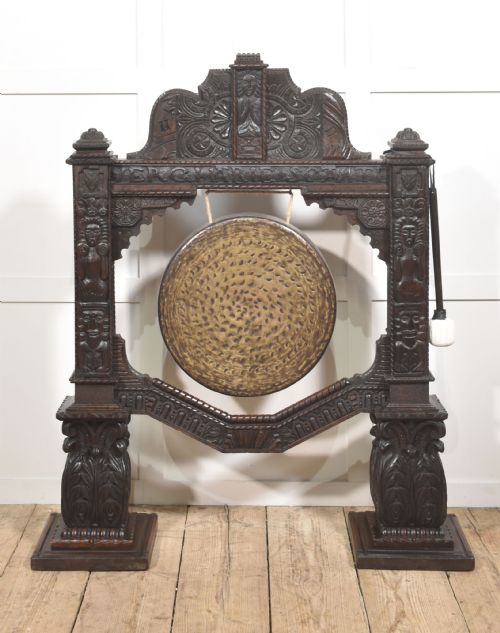
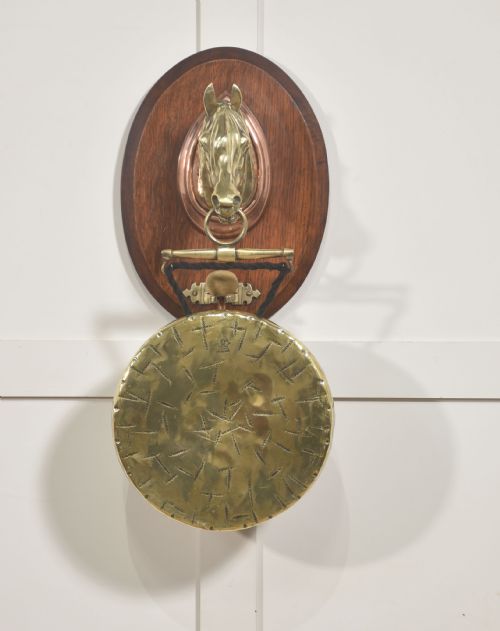


Brass Oak Dinner Gong
A brass oak dinner gong calls households to the table with resonant metal suspended in carved wood, combining function and domestic theatre.
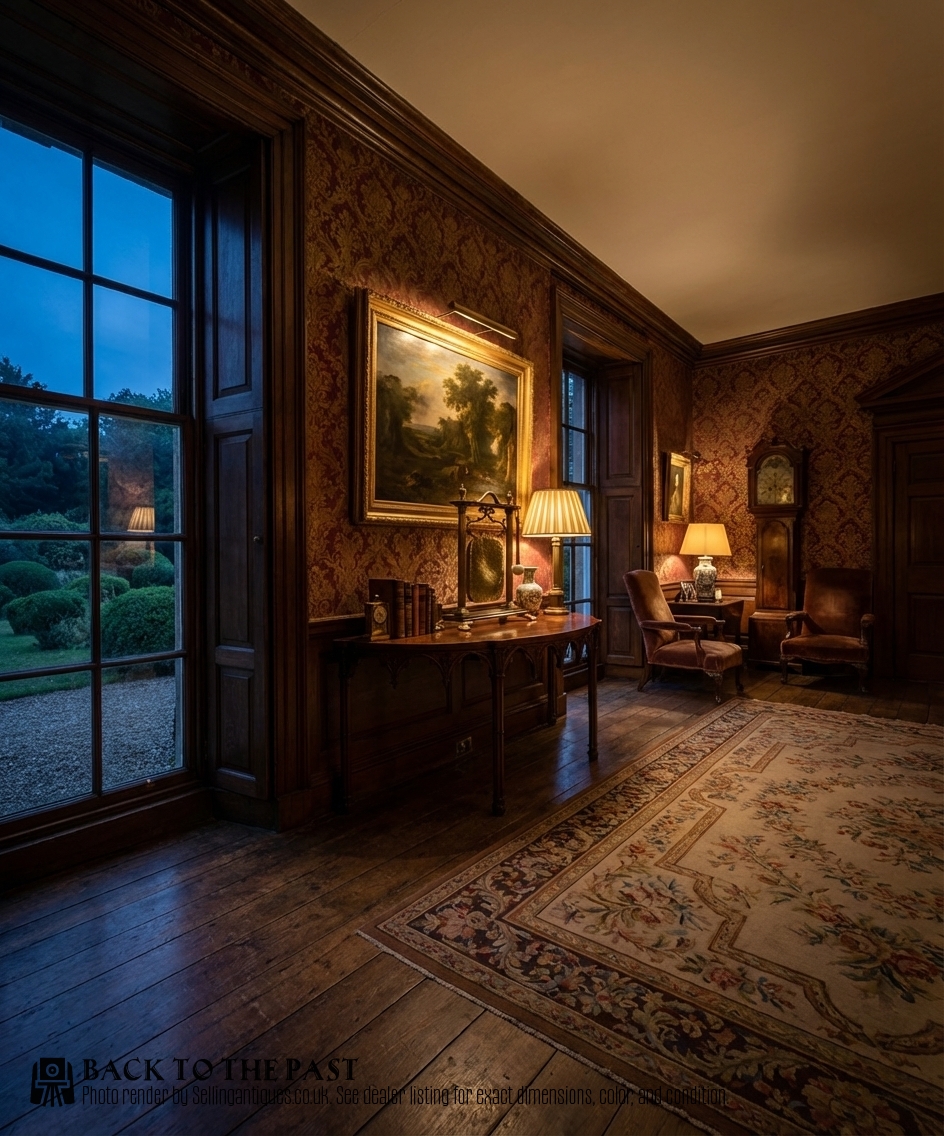
Brass Oak Dinner Gong
When you search for a brass oak dinner gong, you encounter a domestic object designed to summon guests to meals with a deep, echoing chime. These pieces span the nineteenth century, the Victorian and Edwardian eras, through to the 1920s and 1930s, reflecting changing domestic rituals. The most common form on this page is a table-top or wall-hanging mount made of oak supporting a polished brass disc or chime.
Makers utilised various formats, ranging from simple table gongs to monumental carved oak frames and wall chimes featuring horse head mounts or cow horn elements. Styles stretch from rustic Victorian and Gothic Revival to Arts and Crafts and Art Deco. They were placed in hallways, verandas, and dining rooms to regulate the daily household schedule.
Assessing quality and finish
Quality rests upon the depth of the metal casting and the richness of the oak carving on the frame. Better examples display crisp detailing in mounts, such as figural elements or horse heads, and substantial timber joinery that supports heavy metallic chimes without strain.
Proportion and acoustic resonance separate standard production pieces from finer studio or workshop items. A superior gong delivers a clear, sustained tone when struck, rather than a dull thud, demonstrating proper alloy composition and tension in the hanging cord.
Listings feature oak and brass alongside alternative materials including copper, leather, bronze, rope, and cattle horn.
William Tonks
The Brass Oak Dinner Gong Glossary
- Dinner Gong
- A suspended metal disc or chime struck with a mallet to announce meals in large houses. It served as both a practical household clock substitute and a decorative hall feature.
- Gothic Revival
- An architectural and decorative style popular during the nineteenth century that mimics medieval pointed arches and heavy carved tracery. It frequently appears on oak gong frames of the Victorian period.
- Arts and Crafts
- A design movement valuing handcrafting and simple, honest materials over mass production. Pieces from this era often show exposed joinery and hand-hammered copper or brass surfaces.
- Striker
- The handheld mallet or beater used to sound the gong. These typically feature wooden handles with leather, padded, or solid heads designed to draw a clean tone from the metal.
Brass Oak Dinner Gong: Frequently Asked Questions
Where were dinner gongs placed?
These pieces sat on hallway tables, hung on walls near dining spaces, or stood on verandas to ensure the sound carried through the house.
Their placement allowed the chime to reach every room when meals were served.
How do I care for the oak and brass?
Dust the carved oak regularly with a dry cloth and avoid harsh chemical polishes that strip the historic patina from the timber.
Keep the brass clean with gentle maintenance, taking care not to let cleaning agents stain the surrounding wood frame.
What periods do these pieces date from?
The selection includes Victorian, Edwardian, and later twentieth-century examples running through the 1920s and 1930s.
Design styles shift from heavy Gothic Revival carvings to cleaner Arts and Crafts lines as tastes changed over the decades.
Are the strikers original?
Many surviving pieces retain their handheld strikers, though some matched mallets are later replacements due to loss over time.
Check whether the striker material matches the period style of the hanging gong frame.