
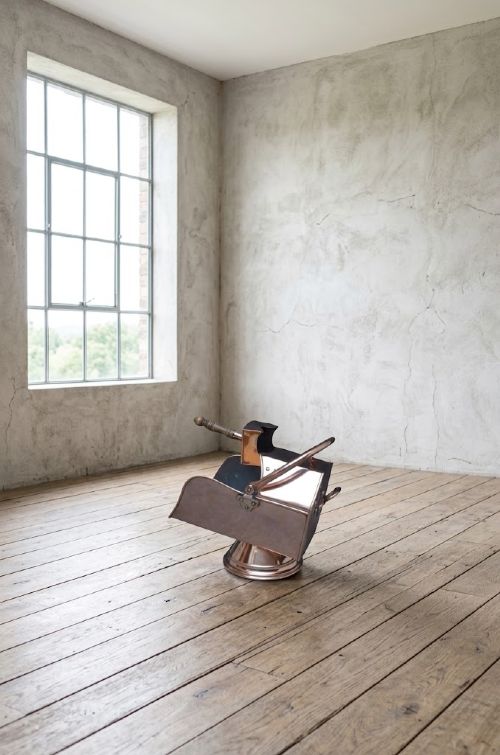
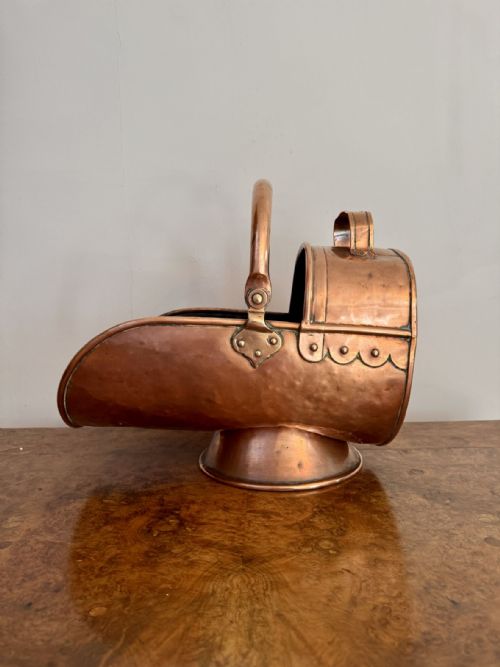


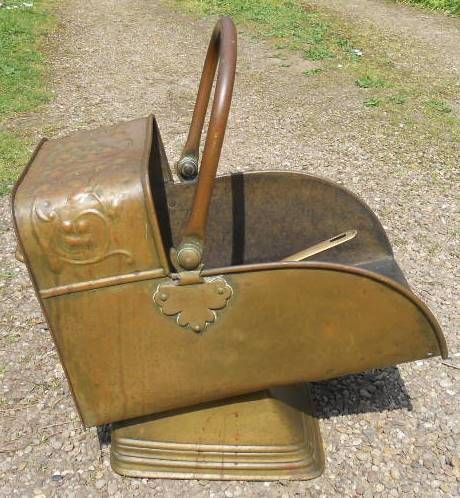
Victorian Brass Coal Scoop
These Victorian brass coal scoop examples are sturdy hearth containers that bring bright metal warmth to a fireplace.

Victorian Brass Coal Scoop
A victorian brass coal scoop is a practical fireside accessory designed to hold and transfer fuel to the hearth. Most examples on this page date from the nineteenth century, specifically the Victorian era, incorporating traditional forms like coal helmets and scuttles.
The inventory includes related items such as coal hods, buckets, and matching shovels, alongside Arts and Crafts and Art Nouveau variations. These functional vessels formed an essential part of period heating arrangements, combining utility with decorative metalwork.
Materials and construction
Makers fashioned these pieces primarily from sheet brass, cast brass, and copper, occasionally incorporating wood or iron elements for strength. Metalworkers utilised spinning and beating techniques to shape the helmets and scuttles from sheet metal.
Handles, rims, and shovels were often cast separately and attached securely to the main body. Surface finishes range from polished brass to painted toleware, reflecting the period preference for durable domestic metalware.
Listings feature items from the 19th Century, including specific dates like 1860, 1880, 1900, and 1910.
Judging quality and character
Quality rests in the thickness of the metal gauge and the firmness of the handle attachments. Heavier vessels maintain their shape better under regular use, while lighter ones show more easily dents and wear.
Detailing on handles, feet, and associated shovels distinguishes standard utility items from finer workshop pieces. Original matching shovels elevate a piece, as does clean, purposeful hand-forming in Arts and Crafts and Art Nouveau examples.
BENHAM AND FROUD
The Victorian Brass Coal Scoop Glossary
- Coal helmet
- A tall, bucket-shaped container with a high back and a sloping front spout designed for pouring fuel onto the fire. This shape mimics traditional coal scuttles with an ergonomic handle placement.
- Toleware
- Enamelled or painted sheet metal used for domestic vessels and decorative containers. It offers a contrasting surface finish to polished brass or copper.
- Arts and Crafts
- A design movement focusing on traditional craftsmanship and simple forms. Pieces from this style often display honest construction and hand-hammered details.
- Art Nouveau
- A style characterised by flowing, organic lines and floral motifs. This aesthetic appears on later nineteenth and early twentieth century fireside boxes.
- Coal hod
- A deep container used specifically for storing coal beside the fireplace. It generally includes a sturdy carrying handle for transport from the cellar.
Victorian Brass Coal Scoop: Frequently Asked Questions
How were these coal scoops used?
These vessels sat beside the fireplace to store coal ready for burning. Owners used the matching shovel to transfer fuel cleanly into the grate.
They bridged the gap between heavy storage scuttles kept in cellars and the daily management of the hearth fire.
How do I clean a brass scoop?
Warm soapy water and a soft cloth remove everyday dust and soot accumulation without harming the metal. Avoid harsh abrasive cleaners that strip away the aged surface.
Many collectors prefer leaving a natural dark patina rather than polishing the brass to a bright shine.
Are these items safe for modern fires?
These historical containers serve well for holding logs, kindling, or bagged coal beside a contemporary hearth. Their original metal construction remains robust for everyday domestic use.
Inspect the interior base to ensure the metal holds together securely before loading heavy fuel.
How do I date a brass coal scuttle?
Look to the overall design style, such as the curved lines of Art Nouveau or the hammered surfaces of Arts and Crafts. Construction marks like hand-beating or cast rivets also point towards nineteenth-century manufacturing methods.
Maker stamps on the base, when present, provide a direct link to specific workshops and production years.