


Helmet Shaped Coal Bucket
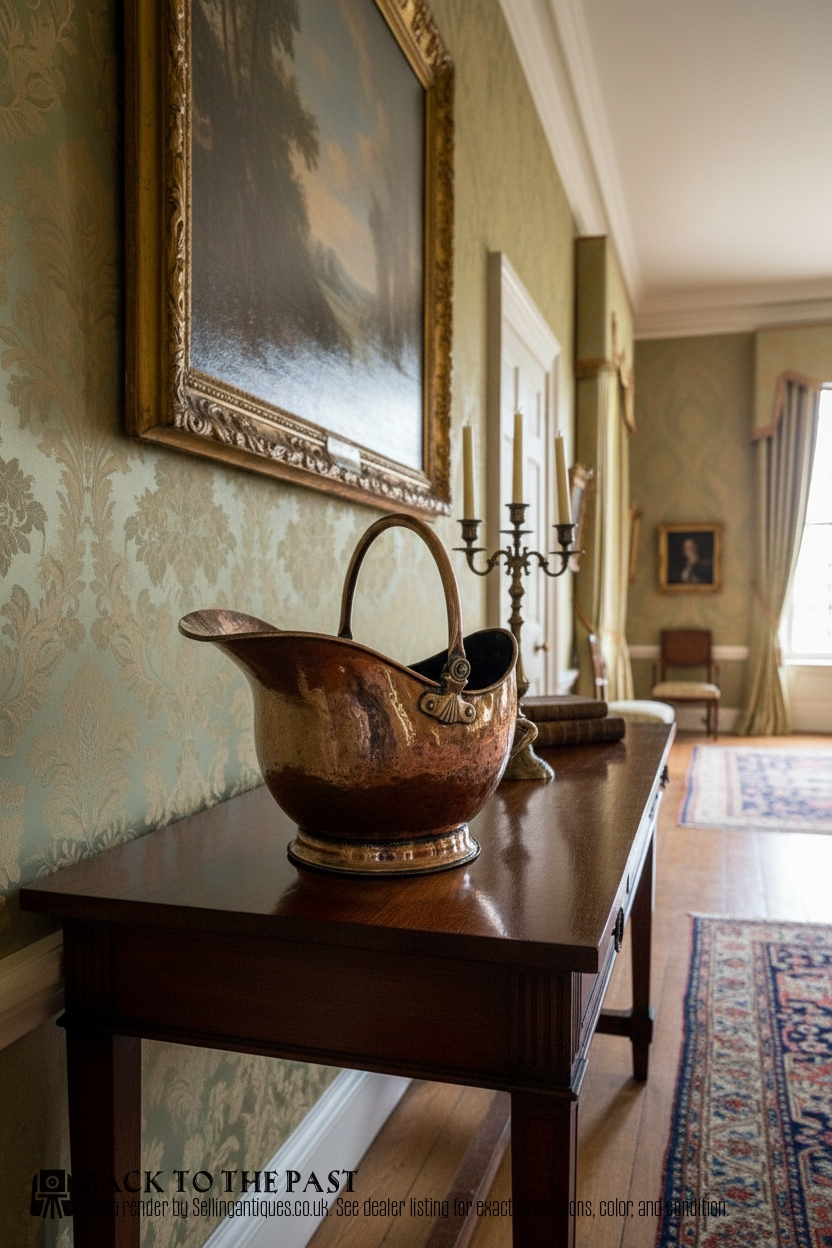
These heavy metal containers are built to carry fuel to the hearth with a sweeping flared brim, and a helmet shaped coal bucket brings practical fireside utility with distinctive period character.
Helmet Shaped Coal Bucket
A helmet shaped coal bucket is a fireside accessory designed with a sloping mouth reminiscent of a traditional helmet, balancing stability with a wide opening for loading coal onto fires. You will most frequently encounter Victorian examples alongside Edwardian and George III iterations.
The prevailing styles span the Victorian and Edwardian eras, with occasional George III pieces appearing in copper. These items function primarily as coal scuttles and coal buckets, frequently accompanied by matching shovels.
Materials and construction
These vessels utilise robust metals including brass and copper, sometimes combined with wood and iron components for handles and structure. Metalworkers shaped the sheet copper and brass into the characteristic silhouette.
Certain pieces exhibit hammer beaten surfaces, displaying the direct hand of the maker across the metal body. Handles and fittings are secured to withstand heavy daily use by the hearth.
Materials are strictly limited to brass, copper, wood, and iron, reflecting authentic nineteenth-century domestic metalware production.
Defining quality
Quality rests in the weight of the metal and the integrity of the construction, where thicker gauge brass and copper maintain their shape better under regular use. The precision of the form and the finish of the handle attachments distinguish finer examples from standard utility items.
Makers such as Henry Loveridge produced identifiable work that marks a distinct tier of craftsmanship within the Victorian period. The presence of hand-beaten detailing and coordinated shovels further elevates the standard of a piece.
Henry Loveridge
The Helmet Shaped Coal Bucket Glossary
- Helmet coal scuttle
- A fireside container featuring a flared brim and elevated back, shaped like a medieval helmet to facilitate pouring fuel. This form dominates the available selection.
- Hammer beaten
- A surface texture created by manual hammering, leaving subtle facets across the copper or brass body. This technique adds visual depth to the metal.
- Fireside accessories
- Functional metalware and tools kept near the fireplace for maintenance and fuel handling. These items combine utility with domestic display.
- Edwardian
- The period spanning the early twentieth century, represented here by copper and brass buckets dating around nineteen hundred. Pieces from this era often blend traditional forms with simpler lines.
Helmet Shaped Coal Bucket: Frequently Asked Questions
What is a helmet shaped coal bucket used for?
These vessels were designed to hold coal beside the fireplace and transport fuel cleanly to the grate using the flared spout. Their distinctive shape allows the user to tilt the contents forward with minimal spill.
Today they serve primarily as decorative fireside accessories or storage vessels for logs and kindling in traditional and contemporary rooms alike.
How do I tell Victorian and Edwardian pieces apart?
Victorian examples often display heavier cast brass mounts, robust proportions, and rich patination developed through decades of domestic use around nineteenth-century hearths. They frequently date to the eighteen-eighties.
Edwardian pieces, dating around nineteen hundred, sometimes introduce lighter hammer-beaten finishes and combined brass and copper construction reflecting Arts and Crafts sensibilities.
Are George III coal buckets authentic?
George III pieces date from around eighteen hundred and represent earlier metalworking traditions with distinct hand-hammered copper construction and simpler, robust lines.
They are less common than Victorian variants and offer a glimpse into Georgian domestic interiors where utility met refined metal craft.
How do I clean brass and copper buckets?
Most collectors prefer to leave a warm, aged patina on antique copper and brass rather than polishing the metal to a bright shine. Gentle dusting and occasional wiping with a dry cloth will protect the surface.
Avoid harsh chemical abrasives that strip away the historical character and softening tones acquired over a century of fireside service.