



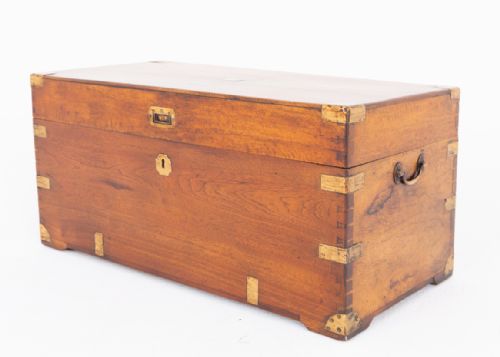
Victorian Brass Campaign Box
A victorian brass campaign box brings the rugged adaptability of nineteenth-century military travel directly into modern domestic interiors.
Victorian Brass Campaign Box
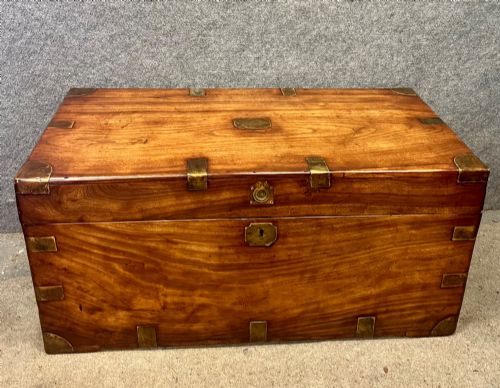
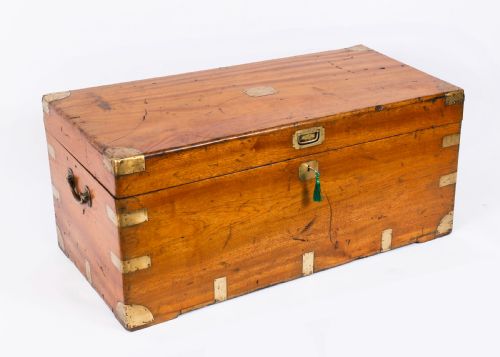
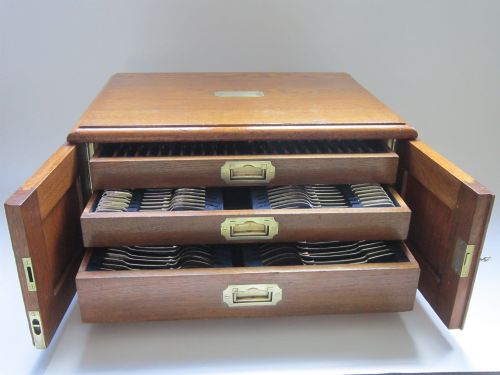
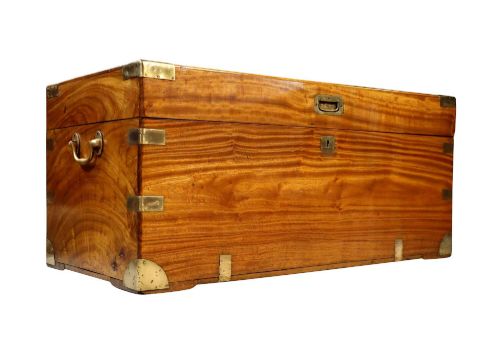
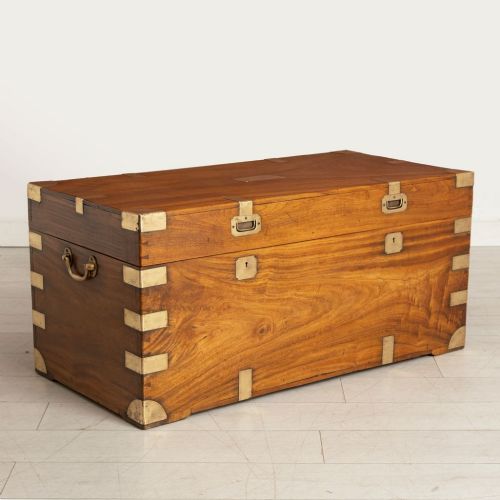
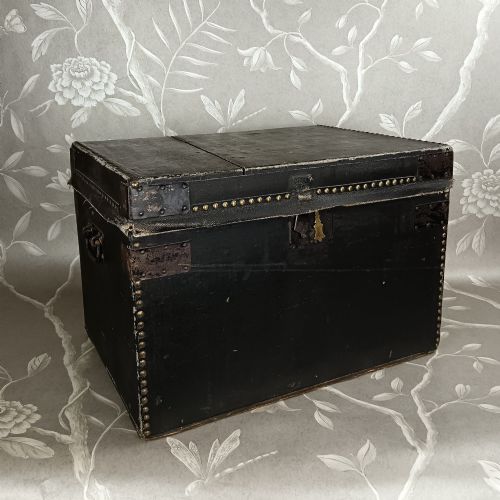
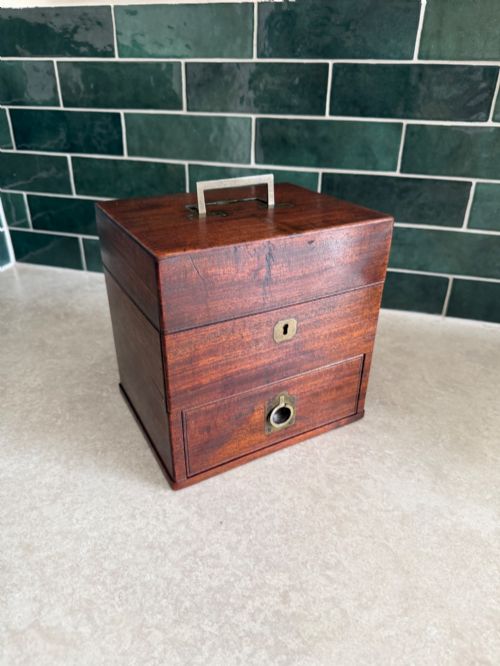
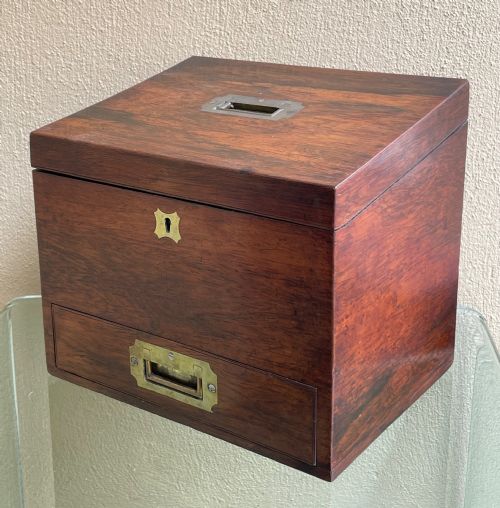
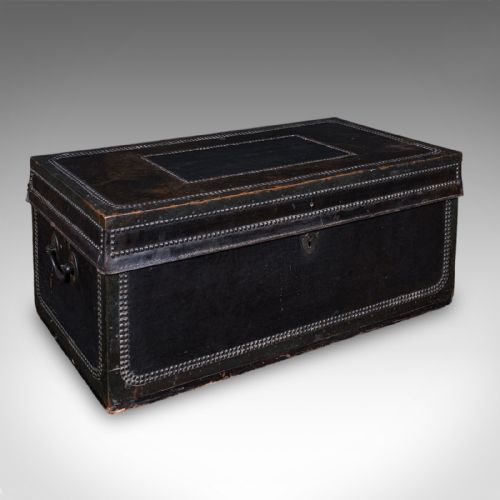
A victorian brass campaign box encompasses a wide array of portable containers constructed for officers and travellers on the move during the nineteenth century. These objects include large storage trunks, heavy chests, writing slopes, and smaller correspondence boxes designed to withstand arduous journeys.
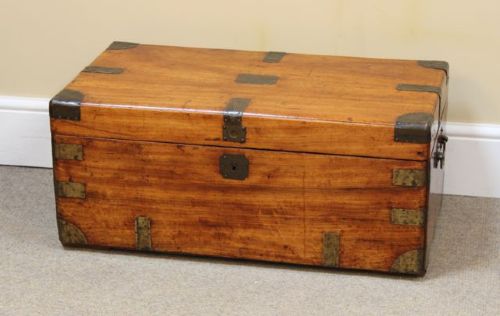
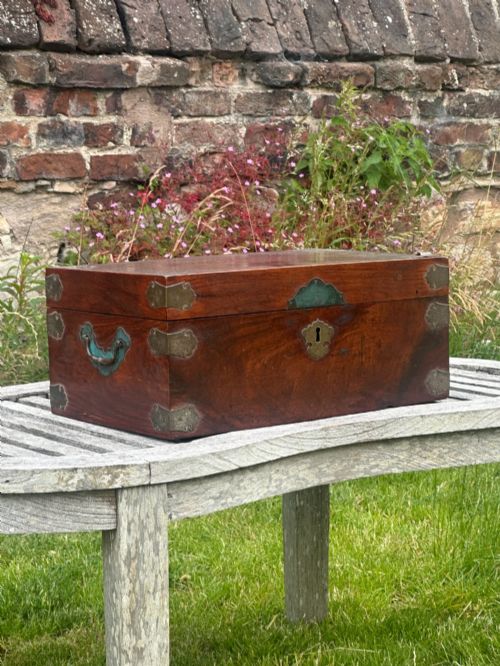
The versions most frequently encountered on this page span the Victorian era, alongside specific examples from the wider nineteenth century. They combine sturdy timber frames with inset brass hardware to protect corners and edges from heavy impacts during transport.
How They Were Made
Craftsmen utilised dense hardwoods such as camphor wood, teak, and mahogany to build these travel containers, ensuring stability in fluctuating climates. These timbers were often selected for their natural resistance to moisture and insects during colonial service.
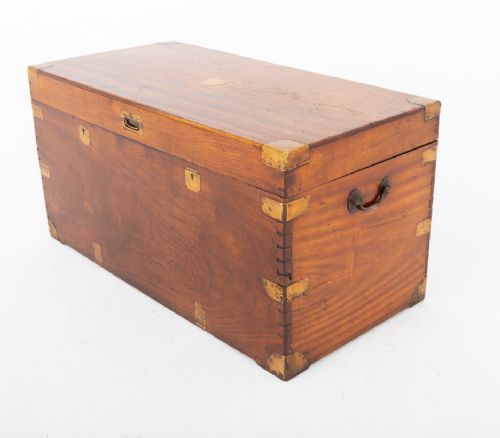
Heavy brass corners, strapwork, and flush-fitting drop handles were screwed directly into the wood to reinforce the structure without adding awkward projections. Internal fitted compartments in writing slopes and boxes frequently incorporated leather writing surfaces and secret drawers.
What Varies in Quality
Superior examples distinguish themselves through the precision of their brass inlay and the weight of their hardware mounts. Finer pieces retain original working locks, keys, and integrated internal mechanisms rather than later replacements.
The selection of timber grain also dictates the standing of a piece, with well-figured camphor wood, burr walnut, or dense mahogany elevating standard utility chests into decorative furnishings. Dovetail joinery executed with exceptional tightness marks the distinction between ordinary field equipment and high-grade officer commissions.
Wm Insall of Bristol
The Victorian Brass Campaign Box Glossary
- Campaign chest
- A heavy storage trunk built in sections to separate for travel. These chests use flush brass handles and corner brackets to endure rough handling.
- Writing slope
- A portable desk featuring an angled writing surface that folds flat when closed. Inside, compartments store stationery, inkwells, and nibs.
- Flush handle
- A recessed metal grip set level with the wood surface. This design prevents snags during loading and transport.
- Brass bound
- Furniture edged and reinforced with flat strips of brass. This technique protects vulnerable corners from impact.
- Camphor wood
- An aromatic timber frequently utilised for military chests. Its strong scent helped deter insects in tropical climates.
Victorian Brass Campaign Box: Frequently Asked Questions
What is a campaign box?
A campaign box is a portable piece of furniture built for military officers or travellers on active service during the nineteenth century.
These items were constructed to endure long journeys by sea and land, featuring protective brass fittings and durable hardwoods.
How were these boxes used?
Officers utilised these containers to transport uniforms, valuable documents, writing materials, and personal effects across colonies and battlefields.
Writing slopes served as portable desks for correspondence in the field, while larger chests accommodated heavier gear and clothing.
How do I identify a Victorian piece?
Nineteenth-century construction methods, such as hand-cut dovetails and heavy cast brass hardware, typically point toward the Victorian era.
Materials like camphor wood and teak, combined with specific colonial styles, further help confirm the period of origin.
Where should I place one?
These boxes function well as coffee tables, side tables, or desktop storage within modern living spaces and studies.
Their robust timber construction and storage capacity allow them to blend practical utility with historical character.