

Victorian Bobbin Table
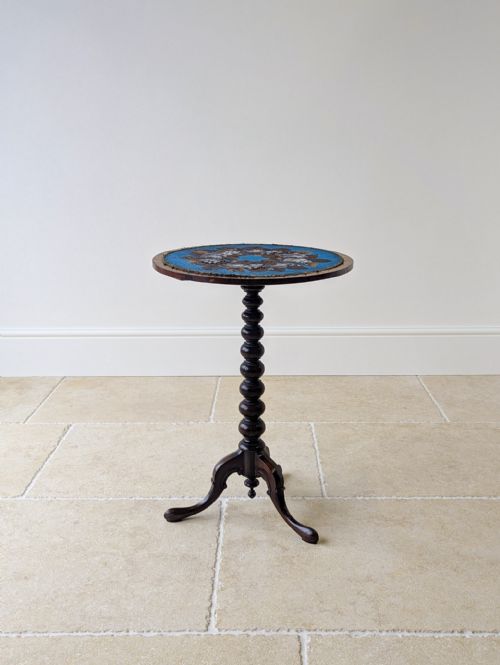
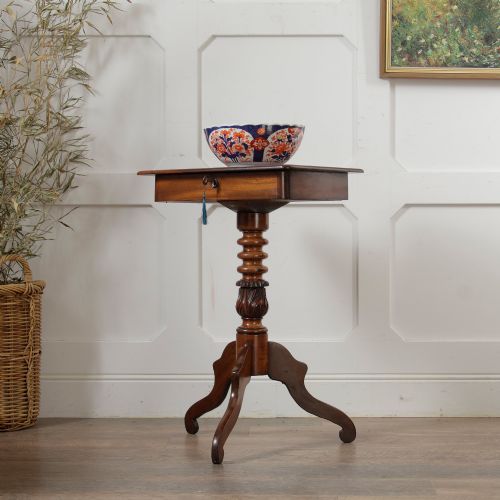
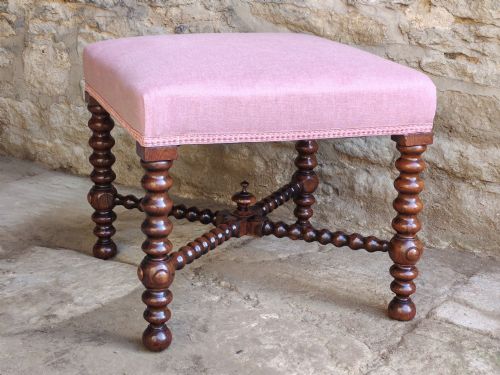
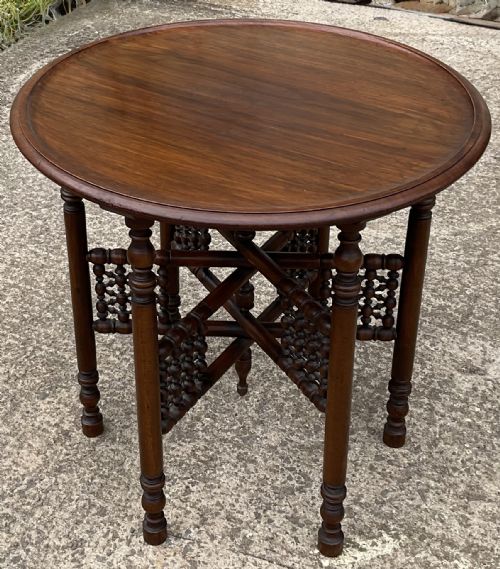
A victorian bobbin table brings distinct turned spindle framing to side, occasional, and lamp tables across nineteenth-century rooms.

Victorian Bobbin Table
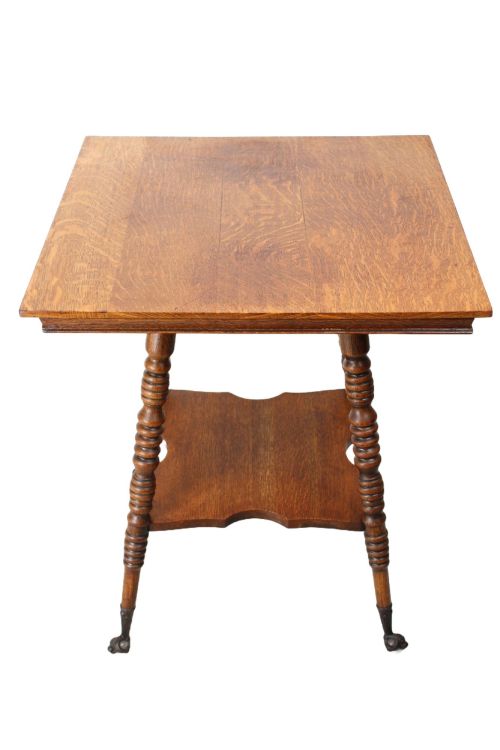
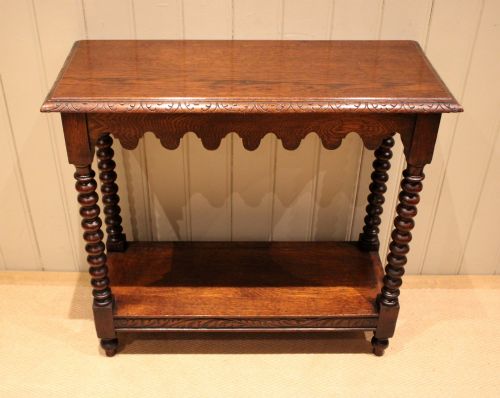
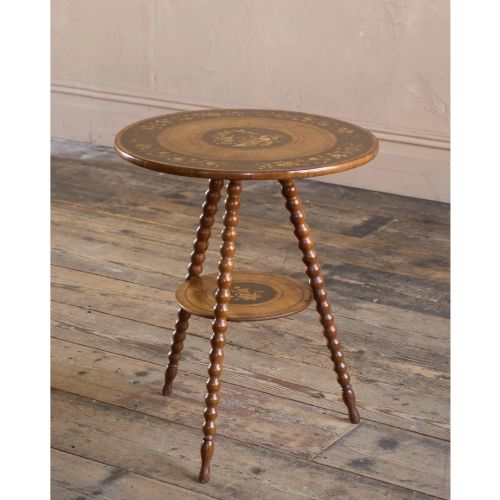
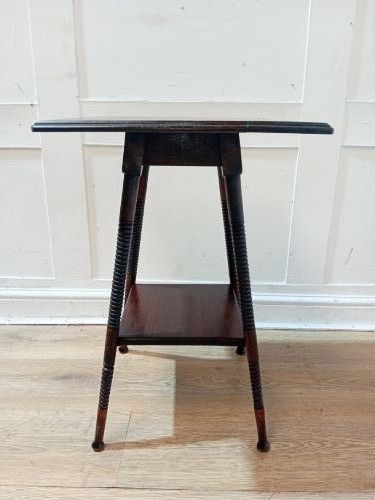
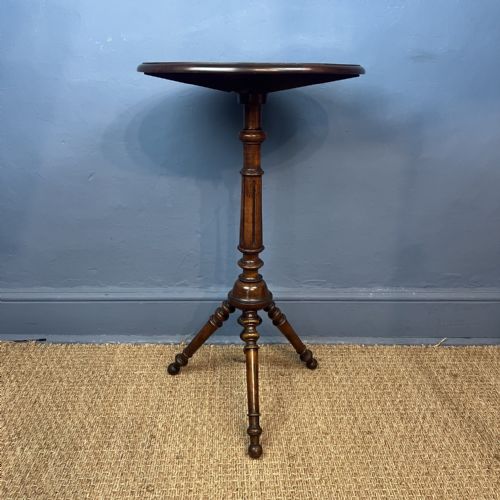
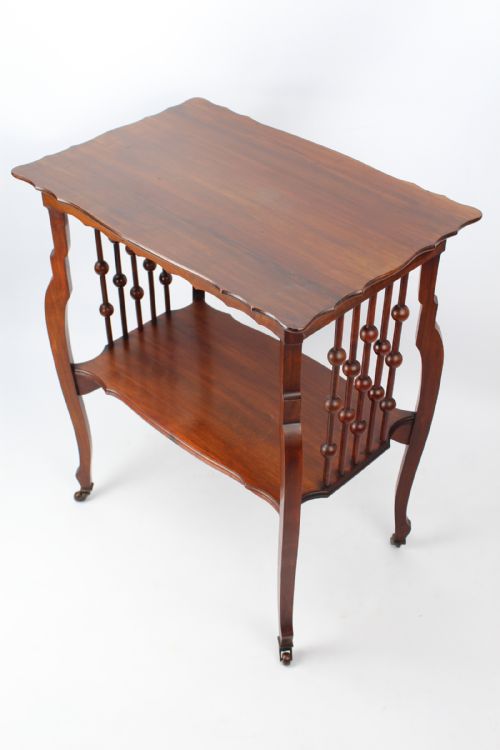
A victorian bobbin table takes multiple everyday forms, appearing most frequently as side tables, occasional tables, and compact lamp tables supported by distinctive spool-turned legs.
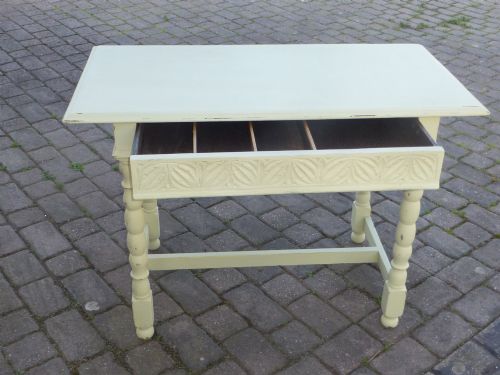
Makers of the period applied these turned spindle supports to diverse domestic formats, including small writing desks, drop-leaf gateleg dining tables, chess tables, and folding gipsy tables.
Originating largely within nineteenth-century British workshops during the Victorian era, these pieces reflect broader stylistic revivals alongside Arts and Crafts and Aesthetic Movement preferences.
Materials and Turning Technique
Cabinetmakers constructed the main framework using dense hardwoods such as oak, walnut, mahogany, and rosewood, occasionally employing ebonised finishes or fruitwood.
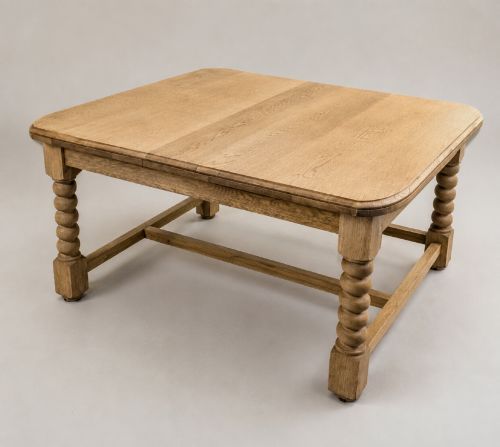
The defining bobbin decoration was produced on a lathe, shaping solid lengths of timber into repeating rounded spool segments joined by straight collars.
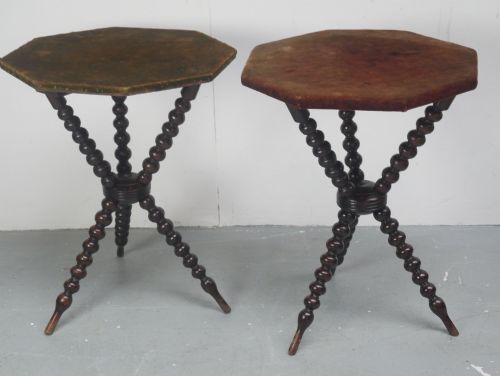
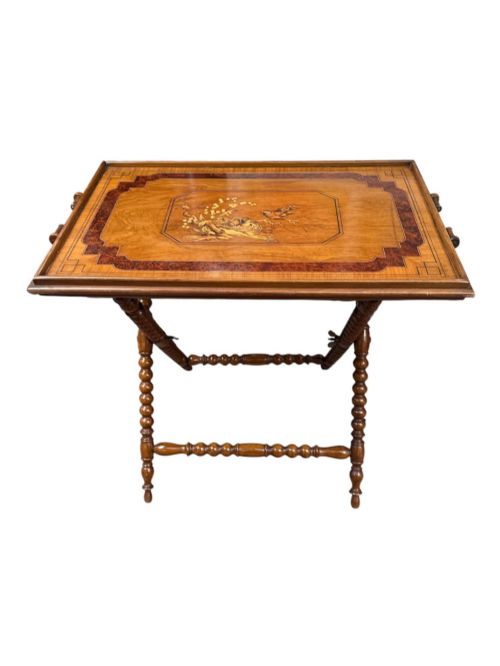
Surfaces frequently integrated secondary elements like brass fittings, ceramic inserts, leather tops, velvet or fabric upholstery, and intricate marquetry or beadwork.
Victorian Bobbin Table Retail Price Guide 2026
Typical asking prices for victorian bobbin table among the pieces listed under this phrase on Sellingantiques today, from the lower quarter to the upper quarter. They describe what is for sale here now, not the wider market.
Listings demonstrate that oak and walnut remain the predominant timbers for nineteenth-century bobbin tables, frequently configured as side and occasional tables.
Assessing Craftsmanship and Material Selection
Quality rests upon the precision and uniformity of the lathe turning across all four legs and stretchers, separating sharp, cleanly profiled spools from soft or uneven hand-carved imitations.
The choice of primary timber dictates durability and finish, with richly figured walnut, dense mahogany, and quartersawn oak representing superior cabinetmaking compared to plain utility pine.
Structural integrity relies on traditional joinery methods rather than modern fasteners, ensuring that the slender turned supports remain rigid under everyday weight.
William Birch·Liberty of London
The Victorian Bobbin Table Glossary
- Bobbin turning
- A form of lathe turning that creates a series of rounded, spool-like shapes along the length of a wooden leg or stretcher. This repetitive profile defines the entire visual character of the furniture.
- Gipsy table
- A lightweight occasional table featuring three splayed legs, frequently draped with fabric or velvet. These tables gained immense popularity during the late nineteenth century.
- Gateleg table
- A drop-leaf table with hinged flaps supported by legs that swing outward like a gate. When opened, the swinging legs provide firm support to the extended tabletop.
- Sutherland table
- A narrow drop-leaf table featuring exceptionally slender folding leaves and a low-slung stretcher. They were designed to occupy minimal floor space when fully closed.
- Marquetry
- The art of applying small pieces of veneered wood to a structure to form decorative patterns or pictures. Craftsmen utilised contrasting timbers to create geometric or floral imagery on tabletops.
Victorian Bobbin Table: Frequently Asked Questions
What is a bobbin table?
A bobbin table is a nineteenth-century piece of furniture characterised by legs and stretchers shaped on a lathe to resemble a succession of wooden bobbins or spools. These turned elements provide both structural support and distinct decorative texture.
They appear primarily as small domestic items such as side tables, lamp stands, and occasional tables designed for parlour or drawing-room use.
Which woods were commonly used?
Cabinetmakers relied heavily on durable domestic and imported hardwoods to construct these tables. Oak, walnut, and mahogany appear most frequently across surviving examples, sometimes treated with ebonised finishes to mimic more expensive materials.
Rosewood and fruitwood also occur, particularly on smaller occasional or specialist sewing tables from the mid-nineteenth century onward.
How do you date a bobbin table?
Dating relies on examining the timber species, construction joints, and associated design movements such as the Arts and Crafts style or the Aesthetic Movement. Pieces from the middle of the nineteenth century often display solid walnut or mahogany frames with hand-cut joinery.
Later Victorian and Edwardian examples from the eighteen-eighties onward frequently incorporate lighter oak framing and factory-assisted turning techniques.