

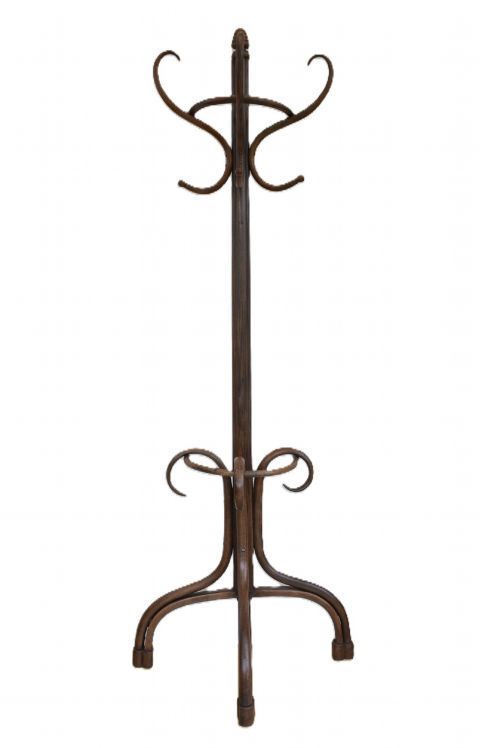


Victorian Bentwood Coat Stand
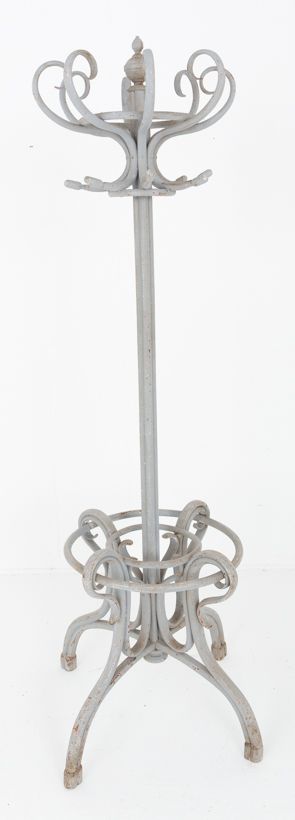
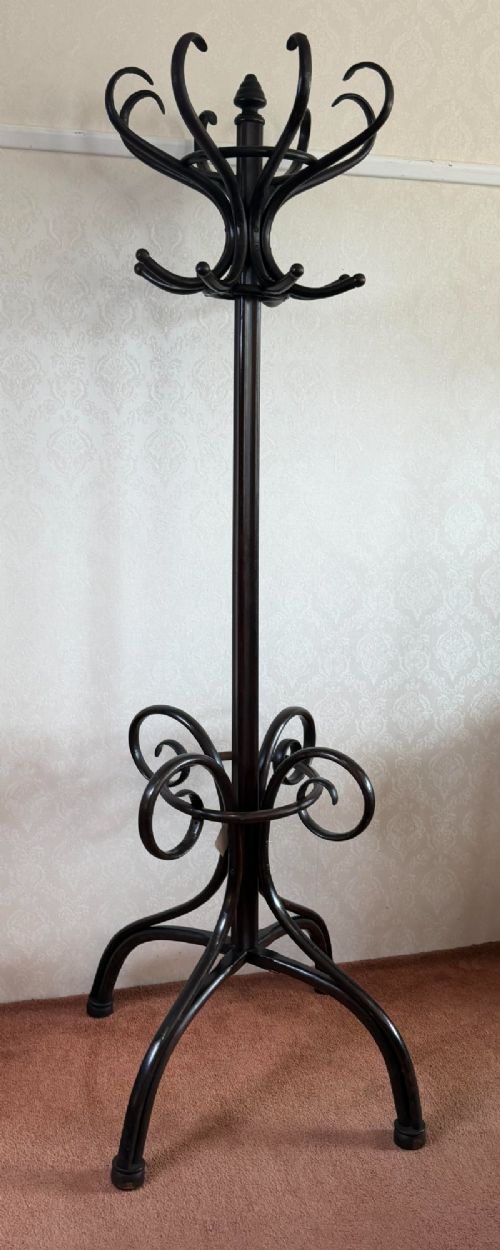
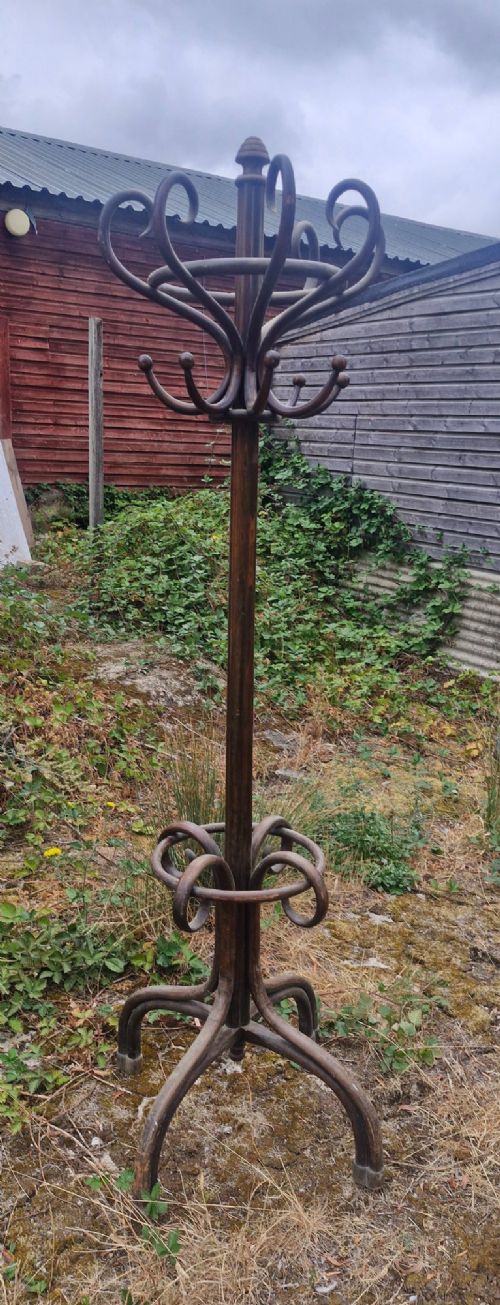
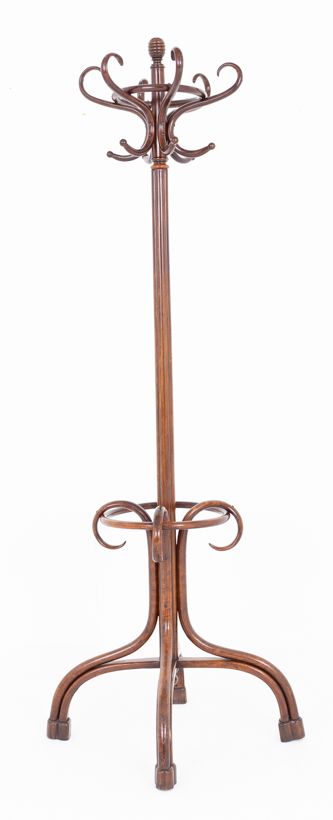
A victorian bentwood coat stand brings lightness and curve to an entrance hall, combining practical storage for hats and coats with organic form.
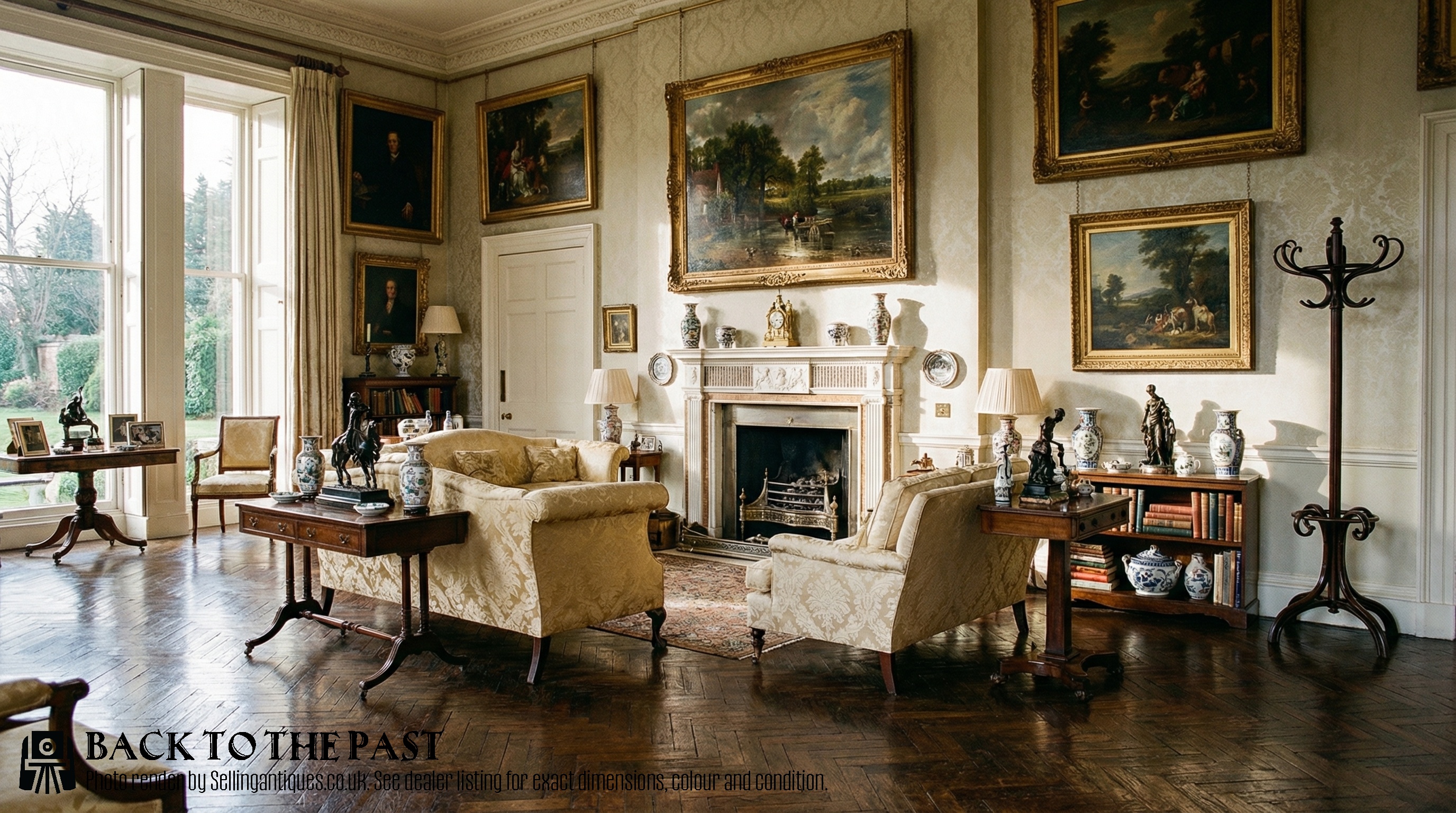
Victorian Bentwood Coat Stand
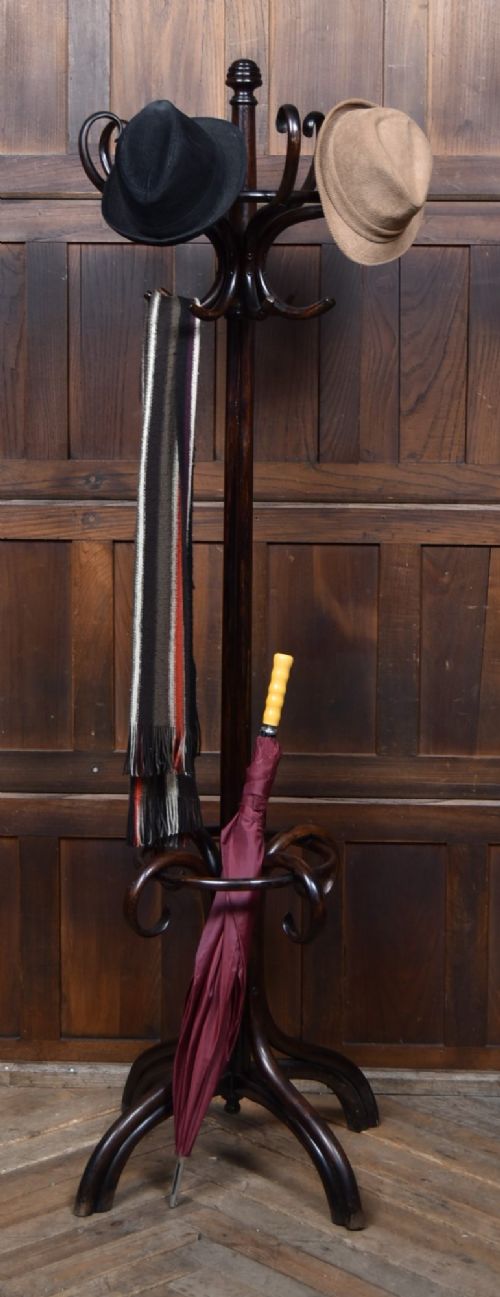
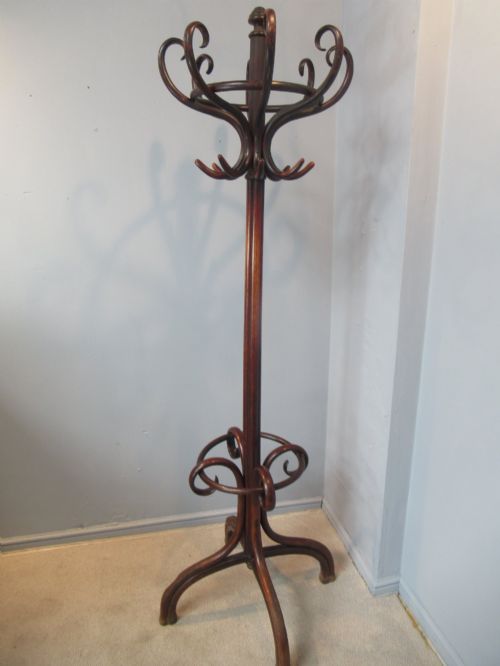
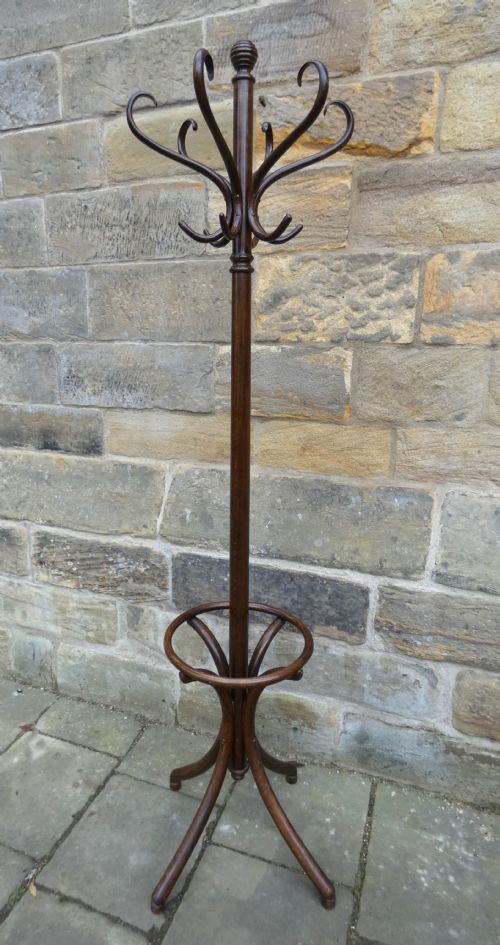
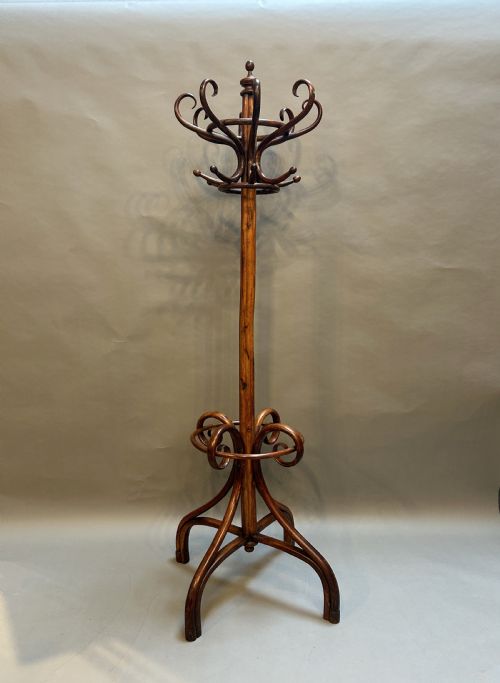
A victorian bentwood coat stand is a tall, vertical hall furniture piece designed to hold garments, hats and sometimes umbrellas, appearing frequently in nineteenth-century and early twentieth-century contexts. The examples gathered here span from the 1880s through the Edwardian era and into the 1920s, showing consistent forms such as half-round wall stands, revolving stands and large double-top designs.
Makers such as Thonet and Fischel dominate the origins of these pieces, which are rooted in Austrian and Viennese manufacturing traditions. Buyers encounter variations that range from simple coat racks to elaborate hall stands incorporating umbrella rings and mirror elements.
Materials and Technique
These stands rely entirely on beech and beechwood, selected for its tensile strength and responsiveness to steam processing. Steamed beechwood is subjected to controlled heat and moisture, allowing craftsmen to bend the timber into the characteristic smooth curves that define bentwood furniture.
Wood stain is applied to finish the surface, enhancing the natural grain of the wood while providing a durable protective layer. Metal components occasionally appear in hardware fittings and umbrella retainers, complementing the continuous wooden framework.
Victorian Bentwood Coat Stand Retail Price Guide 2026
Typical asking prices for victorian bentwood coat stand among the pieces listed under this phrase on Sellingantiques today, from the lower quarter to the upper quarter. They describe what is for sale here now, not the wider market.
Some revolving stands let you spin your winter overcoat like a carousel horse.
Judging Quality
Quality in these pieces rests in the integrity of the curved joints and the fluidity of the steamed timber lines. A superior stand maintains its structural tension and vertical balance without distortion in the main upright shaft.
The sophistication of the top tier, such as double-top configurations or revolving mechanisms, distinguishes finer examples from standard utilitarian models. Maker labels from firms like Fischel or Thonet further elevate the standing of a piece.
Thonet·Fischel
The Victorian Bentwood Coat Stand Glossary
- Bentwood
- A furniture-making technique involving the steaming of solid wood to make it pliable for bending into curved shapes. This method creates strong, lightweight frames without traditional heavy joinery.
- Beech
- A hard, dense timber native to temperate regions and favoured for its excellent bending properties. It takes stain evenly and provides the structural backbone for most nineteenth-century hall stands.
- Hall Stand
- A multi-functional piece of hallway furniture designed to accommodate coats, hats, sticks and umbrellas. Examples often integrate hooks, rails and base trays for water runoff.
- Revolving
- A design feature allowing the upper hat and coat tier to rotate independently around the central shaft. This mechanism provides easier access to garments in tight hallway spaces.
Victorian Bentwood Coat Stand: Frequently Asked Questions
Where should I place a bentwood coat stand?
These pieces suit entrance halls and vestibules where vertical height can be utilised without crowding floor space. Half-round variants sit flat against walls, making them practical for narrow corridors.
Freestanding and revolving designs require clearance on all sides so garments hang freely and rotating tiers function properly.
How do I care for stained bentwood?
Dust the wooden frame regularly with a dry cloth and avoid placing the stand in direct sunlight or beside intense heat sources. Excessive temperature changes can affect the moisture balance in steamed timber.
Apply a traditional wax polish occasionally to nourish the stained finish and maintain the sheen of the beechwood.
Are all bentwood stands Victorian?
While many examples date from the nineteenth century and Victorian period, production continued through the Edwardian era into the 1920s and 1930s. Design characteristics and maker labels help distinguish period pieces from later twentieth-century iterations.
Materials and construction techniques remained consistent, relying on steamed beechwood across these adjacent decades.
What is the purpose of the double top?
A double-top configuration provides an additional tier of hooks, increasing the capacity for hanging hats and smaller garments. This feature appears on larger stands intended for busy households.
The extra ring of bentwood also adds architectural presence and structural balance to taller pieces.